AMD strategically reintroduces the popular Ryzen 7 5800X3D at $349 and launches the new Ryzen 7 7700X3D at $329, providing cost-effective gaming CPU options amid rising DDR5 prices and limited AM4 supply.
AMD has made a significant move in the CPU market by reintroducing the Ryzen 7 5800X3D 10th Anniversary Edition and launching the new Ryzen 7 7700X3D, both positioned under $350 to combat rising component prices. This strategic pricing comes as DDR5 memory costs for the AM5 platform continue to climb, and supply of AMD's sought-after AM4 options has largely dried up, with resellers previously demanding as much as $800 for the Ryzen 7 5800X3D.
Ryzen 7 5800X3D 10th Anniversary Edition: A Nostalgic Value Proposition
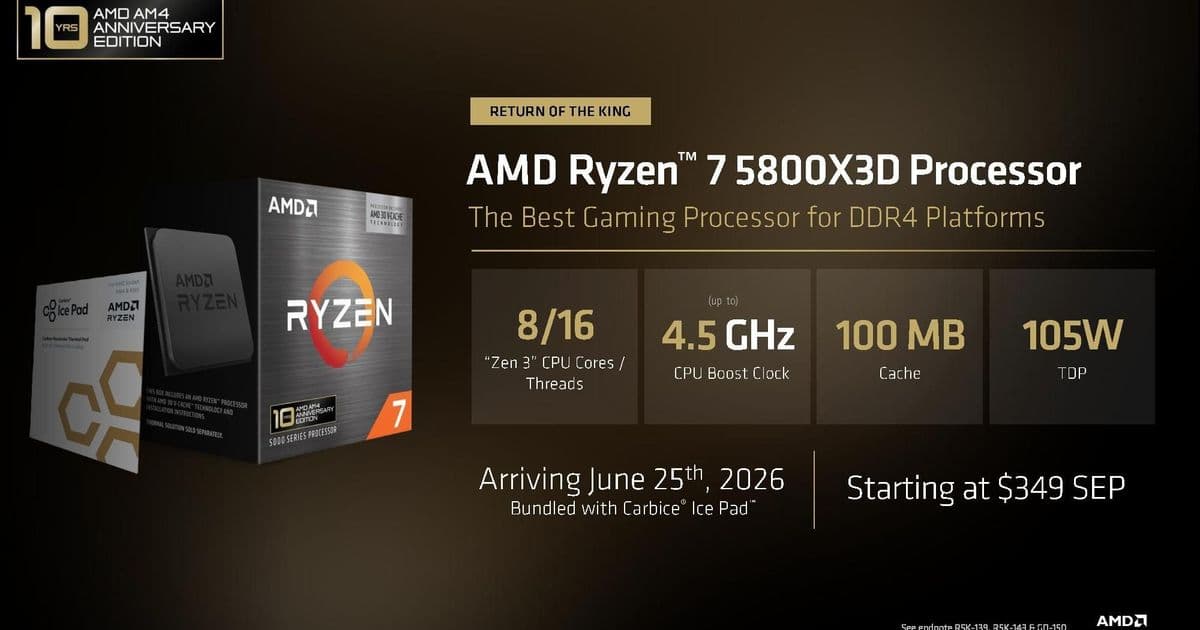
The Ryzen 7 5800X3D 10th Anniversary Edition represents AMD's return to the AM4 platform with a familiar yet refreshingly affordable option. Launching on June 25 at $349, this CPU marks a dramatic price reduction compared to its original launch and the current resale market. The specifications remain unchanged from the original model:
- Architecture: Zen 3
- Cores/Threads: 8/16
- Maximum Boost Clock: 4.5 GHz
- Cache: 100 MB (combined L2 and L3)
- TDP: 105W
- Multiplier: Locked (no overclocking capability)
What makes this CPU particularly interesting is AMD's 3D V-Cache technology, which stacks SRAM directly on top of the CPU cores. This design, first introduced with the original Ryzen 7 5800X3D, has proven exceptionally effective for gaming workloads, providing substantial performance gains despite being based on the older Zen 3 architecture.
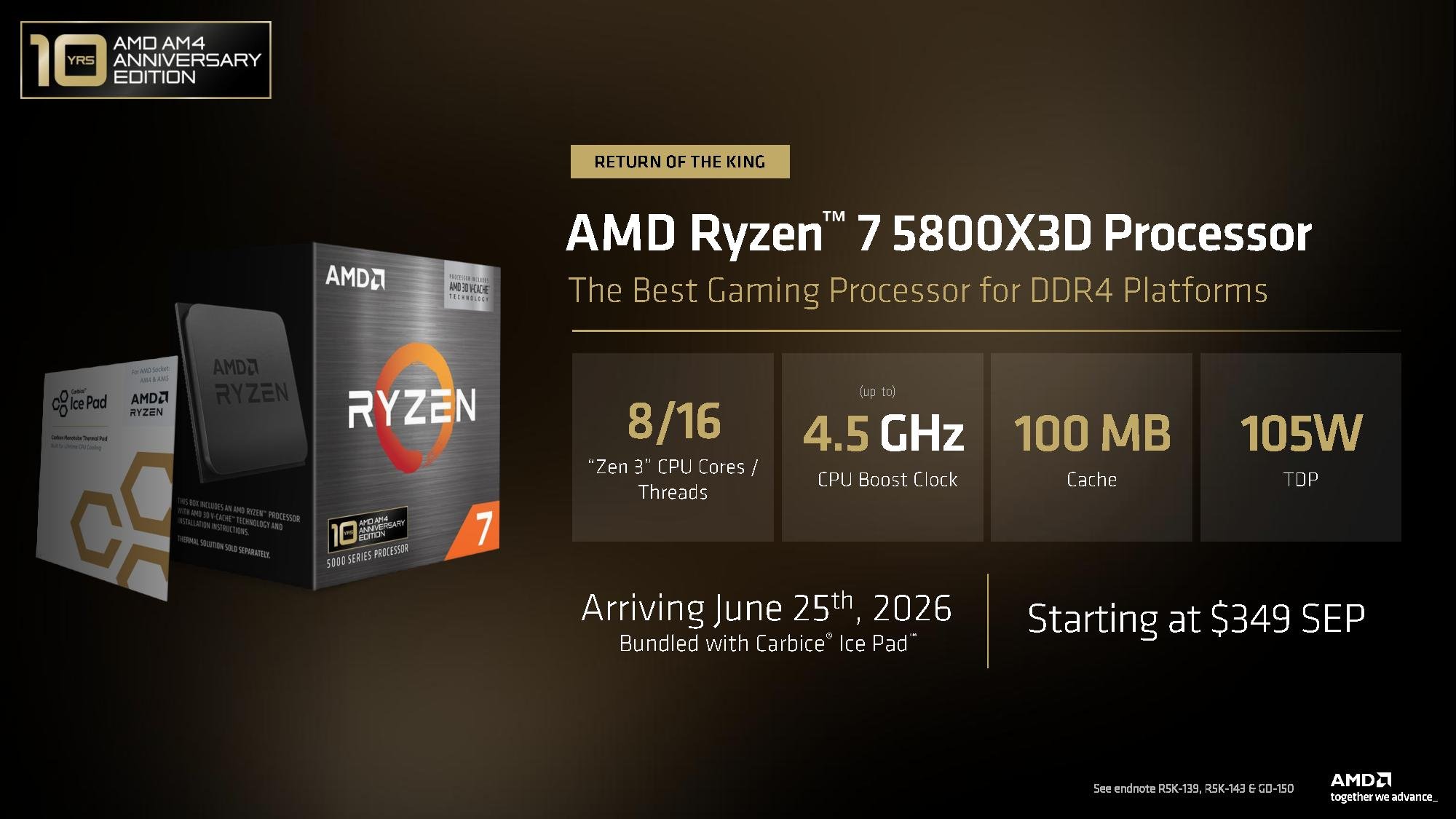
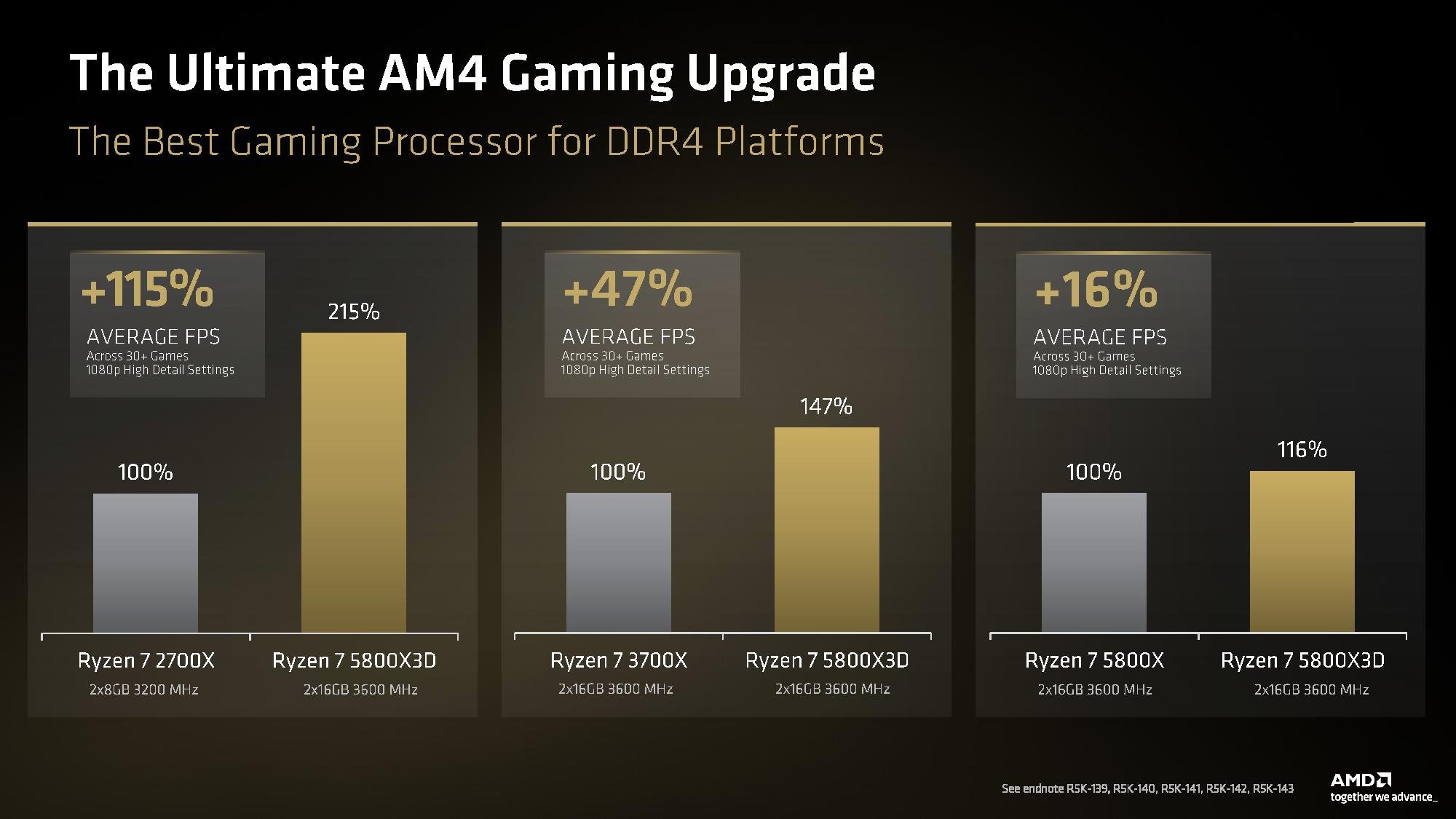
AMD provided comparative benchmarks demonstrating the Ryzen 7 5800X3D's performance against several predecessors:
- 115% improvement over the Ryzen 7 2700X
- 47% jump compared to the Ryzen 7 3700X
- 16% average uplift versus the standard Ryzen 7 5800
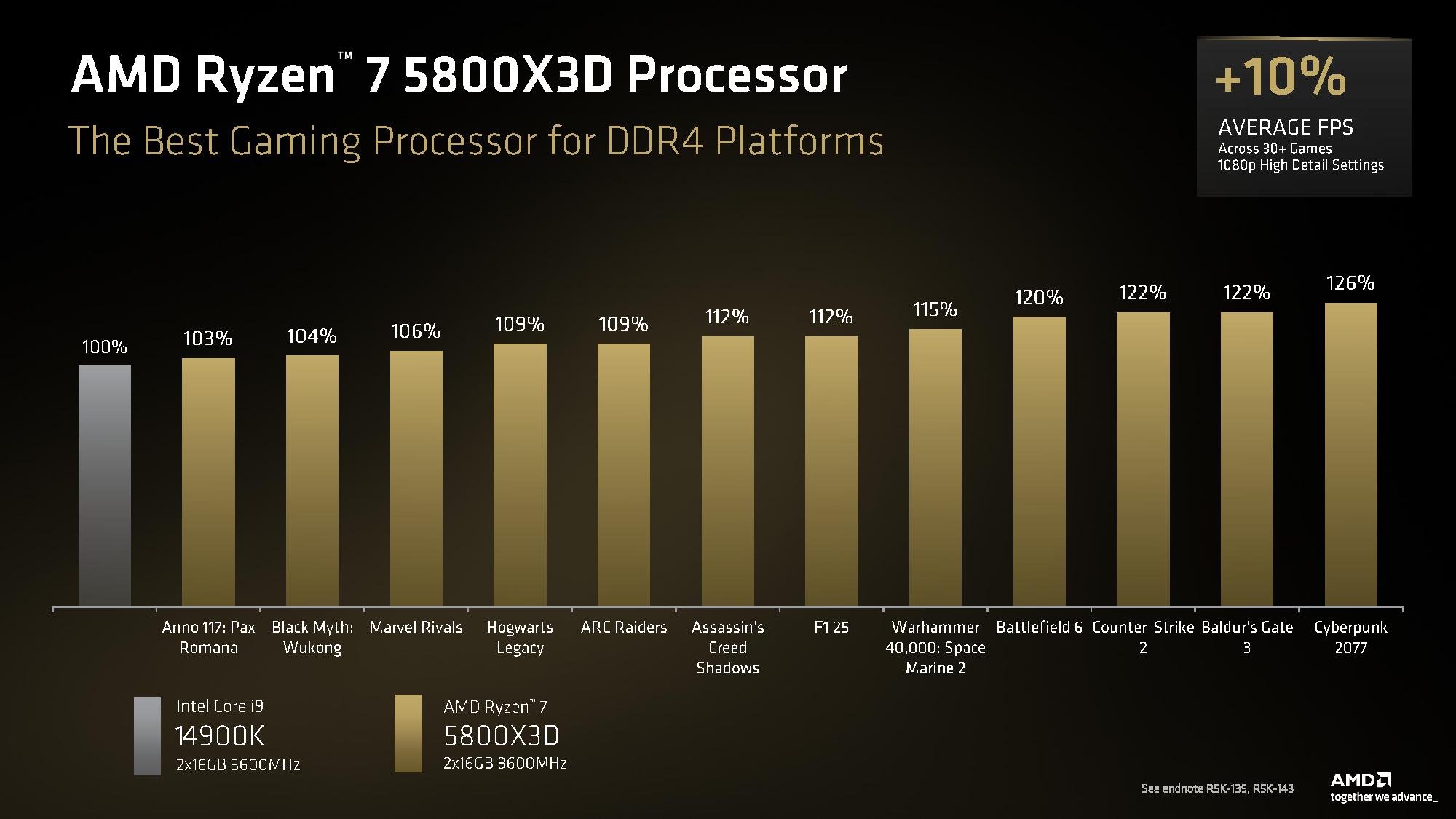
Perhaps most notably, AMD claims the Ryzen 7 5800X3D delivers 10% better average performance than Intel's Core i9-14900K at 1080p resolution when both systems use DDR4 memory running at 3600 MT/s. These claims warrant independent verification, especially considering that with DDR5, even Intel's previous-generation Core i9-13900K has shown superior performance to the Ryzen 7 5800X3D in comprehensive CPU benchmark hierarchies.
The 10th Anniversary Edition includes a special commemorative box and comes bundled with a Carbice Ice Pad—a thermal pad created with carbon nanotubes technology that's typically only available through CyberPowerPC's build configurator. This bundle adds tangible value to an already competitively priced product.
Ryzen 7 7700X3D: AM5 Entry Point with Gaming Focus
Complementing the reintroduced AM4 option, AMD has announced the Ryzen 7 7700X3D, a new CPU designed specifically for the AM5 platform. This chip launches later on July 16 at $329, positioning it as an accessible entry point to AMD's latest architecture with 3D V-Cache technology.
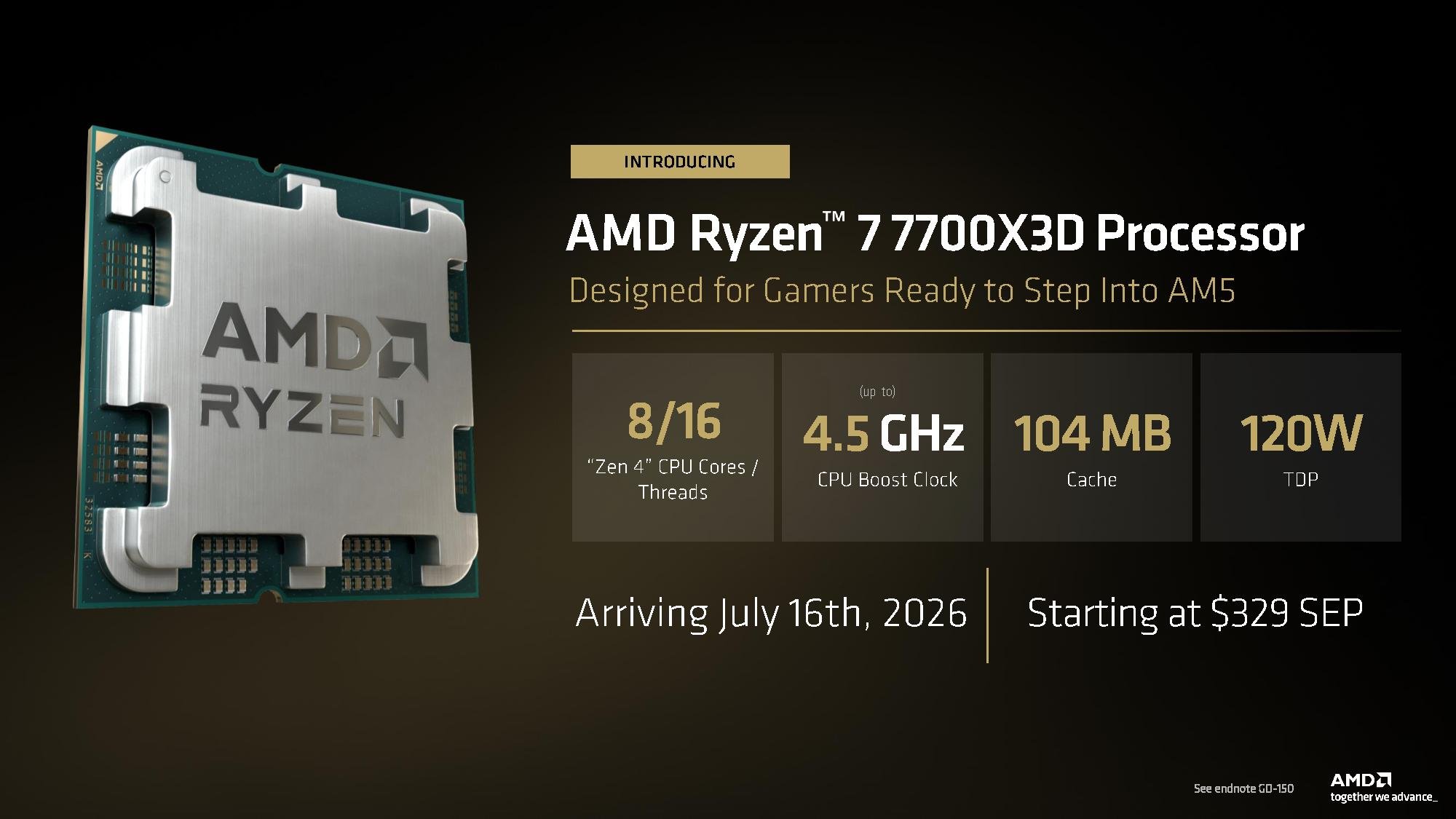
The Ryzen 7 7700X3D shares its core architecture with the Ryzen 7 7800X3D but features slightly reduced clock speeds:
- Architecture: Zen 4 X3D
- Cores/Threads: 8/16
- Base Clock: 4.0 GHz (down from 4.2 GHz in the 7800X3D)
- Boost Clock: 4.5 GHz (down from 5.0 GHz in the 7800X3D)
- Cache: 104 MB (same as the 7800X3D)
- TDP: 120W (identical to the 7800X3D)
This strategy of rebranding a downclocked version of an existing CPU at a lower price point mirrors AMD's approach with the Ryzen 7 5700X3D. Given the current market conditions with elevated component pricing, this approach makes strategic sense, allowing AMD to offer competitive gaming performance at a more accessible price point.
While AMD hasn't shared specific performance data for the Ryzen 7 7700X3D yet, historical evidence suggests that clock speed differences have minimal impact on gaming performance for X3D CPUs. As detailed in our Ryzen 7 9850X3D review, even significant clock speed variations result in negligible gaming performance differences when 3D V-Cache is present.
Market Implications and Competitive Positioning
The timing of these CPU releases reflects AMD's response to several market pressures. The rising cost of DDR5 memory has made the AM5 platform less attractive for budget-conscious builders, while the diminishing supply of high-performance AM4 CPUs like the Ryzen 7 5800X3D created a vacuum in the sub-$350 gaming CPU segment.
The Ryzen 7 7700X3D will occupy an interesting position in AMD's current lineup. It's expected to deliver gaming performance comparable to the Ryzen 7 7800X3D while being priced between the Ryzen 5 7600X3D ($230) and the Ryzen 7 7800X3D (which has consistently sold above $350 despite a listed MSRP of $380). The Ryzen 5 7600X3D already delivers approximately 95% of the gaming performance of the Ryzen 7 7800X3D at a significantly lower price point, making the Ryzen 7 7700X3D a logical middle option for gamers seeking marginal performance gains without substantial cost increases.
In the broader competitive landscape, the Ryzen 7 7700X3D will directly compete with Intel's Core Ultra 7 270K Plus, which is priced similarly at $329. While Intel's chip currently trails AMD's best gaming CPUs by approximately 10%, it compensates with application performance that's more than twice as fast as AMD's offerings. This creates a clear market segmentation where AMD maintains its gaming performance advantage while Intel leads in productivity and content creation workloads.
The reintroduction of the Ryzen 7 5800X3D at $349 further complicates the competitive dynamics. For budget-conscious gamers with existing AM4 platforms or unwilling to invest in DDR5 memory, this CPU offers exceptional value. The performance claims against Intel's latest flagship processor suggest that even with its older architecture, the Ryzen 7 5800X3D remains highly competitive in gaming scenarios, particularly at 1080p and 1440p resolutions where GPU rather than CPU performance typically becomes the limiting factor.
From a supply chain perspective, these moves demonstrate AMD's flexibility in responding to market conditions. By reintroducing an established product with minimal changes while simultaneously introducing a deliberately downclocked variant of a newer architecture, AMD can address multiple market segments without significant manufacturing retooling. This approach maximizes production efficiency while providing consumers with options that match their specific platform preferences and budget constraints.
The bundled Carbice Ice Pad with the Ryzen 7 5800X3D 10th Anniversary Edition also represents a clever value-add that doesn't significantly impact production costs while enhancing the product's appeal. This thermal pad, utilizing carbon nanotube technology, provides better heat dissipation than traditional thermal pads, potentially helping to mitigate some of the thermal challenges associated with the dense 3D V-Cache architecture.
As the CPU market continues to evolve with competing architectural innovations and fluctuating memory pricing, AMD's strategy of offering multiple options across different platforms and price points appears well-calibrated to address diverse consumer needs. The Ryzen 7 5800X3D and Ryzen 7 7700X3D together span both legacy and cutting-edge platforms while maintaining a consistent focus on gaming performance through AMD's 3D V-Cache technology.
Comments
Please log in or register to join the discussion