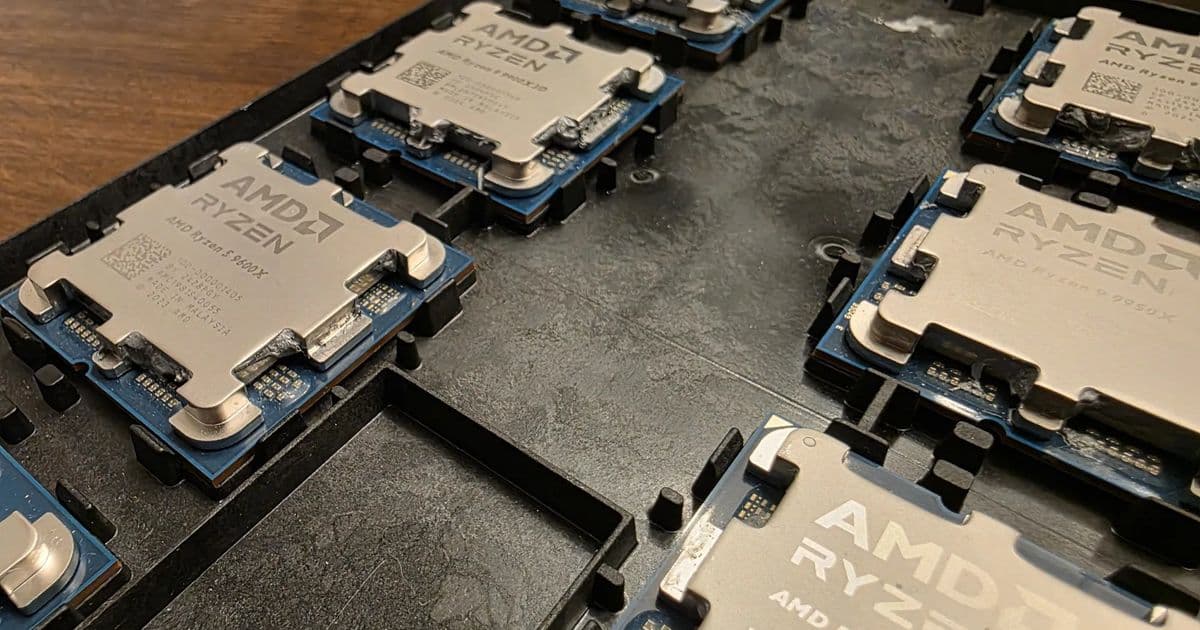
The AMD P-State driver for Linux 7.1 introduces CPPC Performance Priority, Dynamic EPP, and Raw EPP features, giving administrators unprecedented control over Ryzen and EPYC CPU power management.
The AMD P-State driver, which handles CPU frequency scaling and power management for modern AMD Ryzen and EPYC processors, is receiving significant upgrades in the upcoming Linux 7.1 kernel. These new features, queued for mainline inclusion by AMD's Mario Limonciello, arrive at an opportune time with AMD's next-generation Zen 6 processors on the horizon.
CPPC Performance Priority: Core-Specific Power Management
The most notable addition is the CPPC (Collaborative Processor Performance Control) Performance Priority feature. This allows user-space applications to assign different floor performance levels to individual CPU cores, providing granular control over power management that wasn't previously possible.
When the system encounters power or thermal constraints, the platform firmware will interpret these floor performance levels and adjust CPU throttling accordingly. This means administrators can prioritize certain cores for performance-critical tasks while allowing others to operate at lower power states.
The implementation exposes two new sysfs attributes: floor_freq and floor_count. These allow administrators or user-space configuration daemons to dynamically adjust power management settings based on workload requirements. For example, a database server could ensure its transaction processing cores maintain higher minimum frequencies while background maintenance tasks run on cores with lower floor settings.
Dynamic Energy Performance Preference (EPP)
Another significant enhancement is Dynamic Energy Performance Preference, which automatically adjusts the EPP profile based on the system's power source. When a Ryzen laptop switches between AC and DC power, the EPP values can be dynamically modified to balance performance and power consumption appropriately.
This feature can be enabled or disabled through the Linux kernel Kconfig, or configured at boot time via kernel parameters. The dynamic adjustment happens automatically in response to power plug-in and plug-out events, eliminating the need for manual configuration when switching between mobile and desktop usage scenarios.
Raw EPP: Fine-Grained Control Beyond Presets
Currently, EPP values are limited to integers between 0 and 255, but user-configurable options typically offer only four preset values. The new Raw EPP feature removes this limitation by allowing administrators to specify any value between 0 and 255 directly through a sysfs file.
This granular control is particularly valuable for performance tuning and workload optimization. Rather than being constrained to predefined profiles, system administrators can now fine-tune the energy performance balance to match specific application requirements or environmental conditions.
Real-Time Kernel Support and Bug Fixes
Beyond the new features, the AMD P-State driver for Linux 7.1 includes important fixes for real-time "PREEMPT_RT" kernel builds. These patches address compatibility issues that could affect systems requiring deterministic timing behavior, such as industrial control systems or high-frequency trading platforms.
Additional bug fixes round out the update, improving overall stability and reliability of the power management subsystem.
Context and Timing
These enhancements arrive as AMD prepares to launch its Zen 6 processor architecture. The timing suggests AMD is positioning Linux power management to fully leverage the capabilities of its next-generation CPUs, which are expected to offer improved performance-per-watt characteristics.
The AMD P-State driver has evolved significantly since its introduction, moving from basic frequency scaling to sophisticated, firmware-aware power management that can coordinate with platform-level constraints. These Linux 7.1 features represent another step toward more intelligent and adaptable CPU power management.
For system administrators and power users, these features provide new tools for optimizing performance and power consumption. Whether running high-performance computing workloads, managing server farms, or squeezing maximum battery life from a laptop, the enhanced AMD P-State driver offers more precise control over how AMD processors balance performance and efficiency.
The full set of patches is available in the pull request submitted by Mario Limonciello, marking another milestone in AMD's ongoing collaboration with the Linux kernel community to deliver robust, feature-rich support for their processor architectures.
Comments
Please log in or register to join the discussion