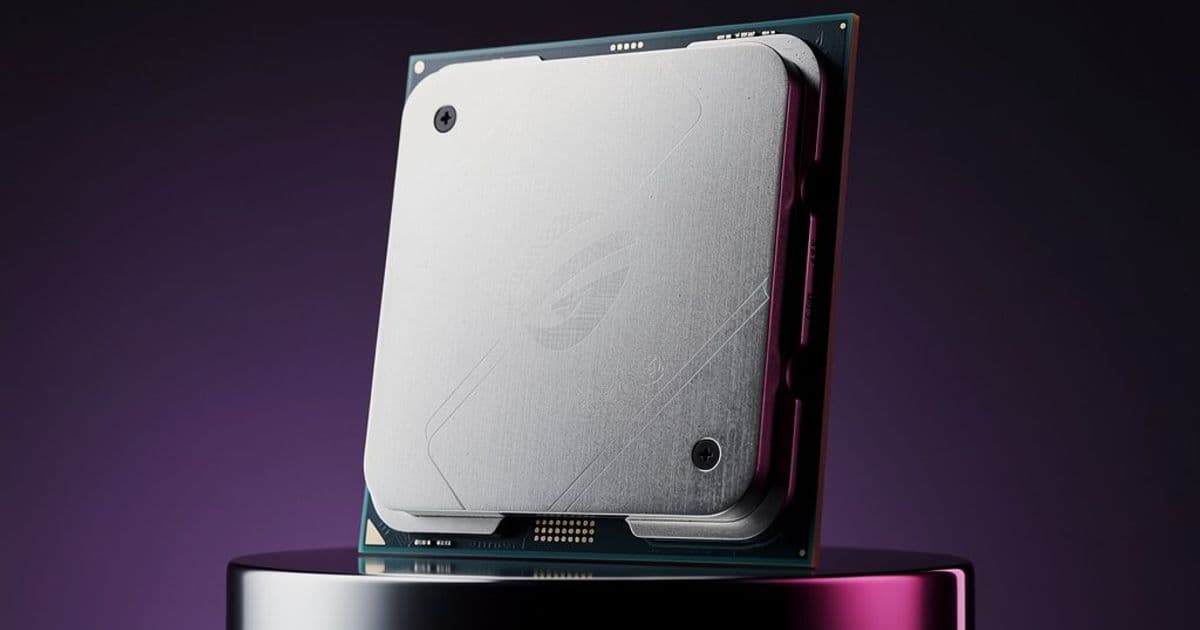
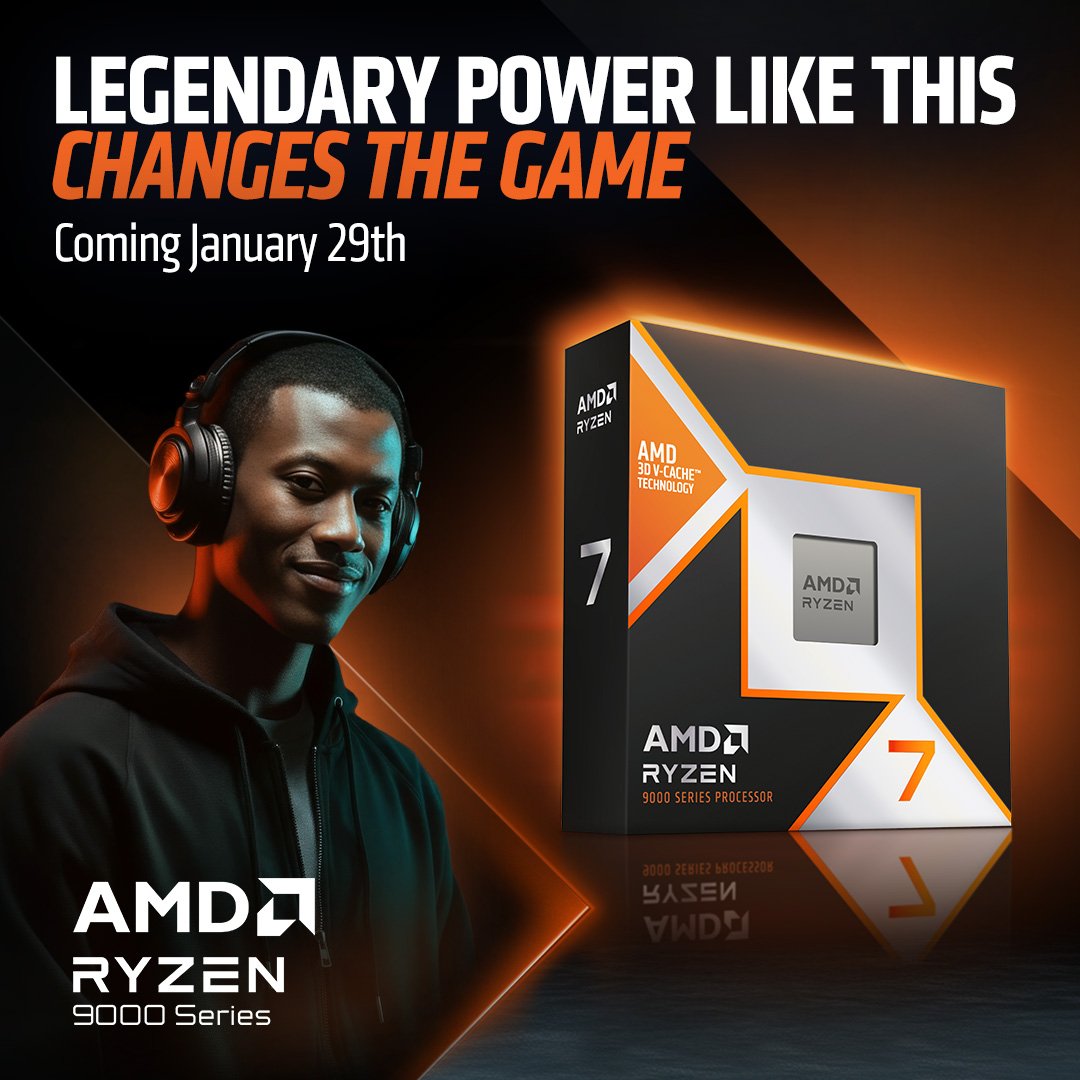
AMD has officially launched the Ryzen 7 9850X3D, its first gaming-centric CPU release for CES 2026. Priced at $499 with a January 29 release date, this new chip represents a higher-binned version of the popular 9800X3D, offering improved boost clocks for enthusiasts seeking maximum gaming performance.
AMD has confirmed the pricing and release date for its latest gaming-focused processor, the Ryzen 7 9850X3D. The chip will hit retail shelves on January 29, 2026, with a manufacturer's suggested retail price of $499. This positions the new processor at a $30 premium over the existing Ryzen 7 9800X3D, which currently sells for $469, and a substantial $140 above the Ryzen 7 9700X that frequently drops to around $300.
What's New: Higher Clocks Through Better Binning
The Ryzen 7 9850X3D is not a architectural departure from the 9800X3D. Both chips share the same Zen 5 core design and feature AMD's signature 3D V-Cache technology, which stacks an additional 64MB of L3 cache directly on the processor die. This cache stacking is what gives X3D processors their gaming advantage, reducing memory latency and improving frame rates in CPU-bound scenarios.
The key difference lies in silicon quality. The 9850X3D is essentially a better-binned version of the 9800X3D, meaning AMD has selected chips that can sustain higher frequencies at the same voltage. This translates to a 5.6 GHz maximum boost clock, a 400 MHz improvement over the 9800X3D's 5.2 GHz rating. Base clock remains identical at 4.7 GHz.
To put this in context, the standard Ryzen 7 9700X (without 3D V-Cache) boosts to 5.5 GHz, but the 9850X3D surpasses it while retaining the massive cache pool. For gamers, this means the best of both worlds: higher clock speeds for raw performance and the cache advantage for gaming workloads.
How It Compares: The Price-Performance Equation
The real question for buyers is whether that 400 MHz boost justifies the price premium. AMD's own marketing claims the 9850X3D delivers "triple the performance" of the 9700X in gaming scenarios, though this figure likely reflects cache-sensitive titles rather than a universal average.
Against its direct predecessor, the value proposition is more nuanced. The 9800X3D already sits at the top of gaming CPU benchmarks, and a 400 MHz frequency bump represents roughly a 7-8% improvement in theoretical performance. In practice, this might translate to single-digit percentage gains in average frame rates, with more meaningful improvements in 1% low FPS that smooth out stuttering.
For context, the 9800X3D typically delivers 15-25% better gaming performance than the 9700X in cache-sensitive titles like Cyberpunk 2077, Starfield, and competitive shooters. The 9850X3D pushes that gap slightly higher, but the $140 price difference between it and the 9700X remains substantial.
Retail availability already reflects this dynamic. Amazon listed the chip briefly before going out of stock, suggesting initial demand from enthusiasts who want the absolute best gaming CPU regardless of price. However, the 9700X remains widely available at discount prices, making it the pragmatic choice for budget-conscious builders.
Who Should Buy It: Enthusiasts and Competitive Gamers
AMD is positioning the 9850X3D for two distinct buyer profiles:
Hardcore gamers who demand maximum frame rates in CPU-bound scenarios. This includes players running high-refresh-rate monitors (240Hz+) at 1080p or 1440p, where the processor becomes the limiting factor. In titles like Valorant, CS2, and Overwatch, that extra cache and higher clock speed can push average FPS from 300 to 330, potentially matching your monitor's refresh rate more consistently.
Content creators who game and stream simultaneously will benefit from the improved cache, which helps maintain smooth performance while running background applications like OBS or Discord.
Upgraders from older X3D generations (5800X3D or 7800X3D) looking for a drop-in replacement on AM5 motherboards. The 9850X3D offers a clear performance uplift without requiring a full platform change.
For everyone else, the math gets murkier. If you're building a new system and already considering a 9800X3D, the extra $30 might be worth it for the peace of mind of having the fastest chip. But if you're debating between a 9700X at $300 and a 9850X3D at $499, that $199 difference could be better spent on a faster GPU, which typically delivers more consistent gaming gains across a wider range of titles.
The integrated Radeon graphics, a 2-core unit clocked at 2.2 GHz, remains unchanged from other Zen 5 octa-core chips. It's suitable for basic display output and troubleshooting but not for meaningful gaming workloads.
The Bottom Line
The Ryzen 7 9850X3D is AMD's statement piece for 2026: a no-compromise gaming processor for buyers who want the absolute best, regardless of cost. It delivers exactly what enthusiasts expect—slightly higher clocks on an already proven design—but asks for a premium that may be hard to justify on pure performance metrics.
Most gamers will find the 9800X3D offers nearly identical real-world performance at a lower price, while budget builders should look to the 9700X and invest the savings in a better graphics card. The 9850X3D's true value lies in its status as the pinnacle of AM5 gaming silicon, a halo product for those who want to future-proof their build and maximize every last frame.
The chip goes on sale January 29, 2026. For more details, visit AMD's official product page at AMD.com.
Comments
Please log in or register to join the discussion