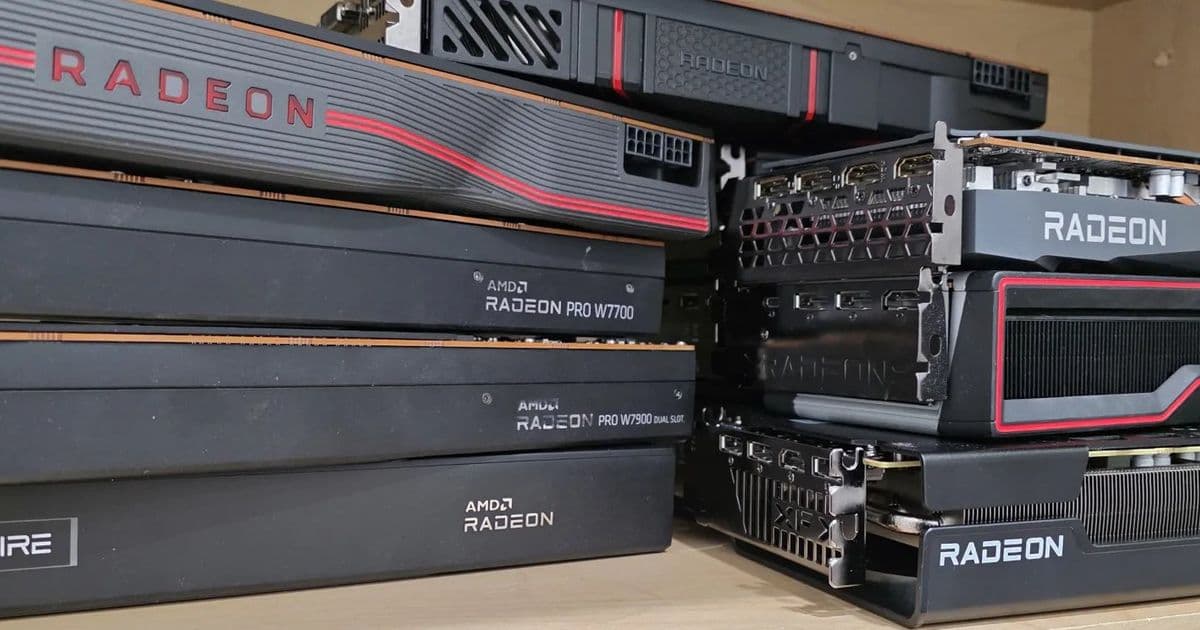
Ahead of the Linux 6.20~7.0 merge window, AMD has submitted a significant batch of fixes for its AMDGPU and AMDKFD drivers, targeting stability issues with RDNA 4 and RDNA 3.5 hardware, display connectivity, and compute queue management.
AMD's Linux graphics driver team is in a final stabilization push before the next major kernel merge window. This week, the company submitted a substantial set of patches to the Linux kernel's DRM-Next branch, focusing squarely on bug fixes and stability improvements for the AMDGPU and AMDKFD drivers. The timing is critical, as these changes are queued for integration into the Linux 6.20 kernel, which will form the basis for the long-term support Linux 7.0 release.
The patch set is notable for its breadth, addressing issues across the entire driver stack from display handling to compute scheduling. While the preceding kernel cycles have seen AMD enable new hardware IP blocks like RDNA 3.5 and RDNA 4's GFX12.1, this latest submission represents a consolidation phase, ensuring the existing support is robust before the next wave of hardware launches.
Technical Breakdown of the Fixes
The fixes can be categorized into several key areas, each targeting specific hardware generations and functional blocks within the driver.
1. RDNA 4 (GC 12) and User-Queue Stability A primary focus is on the next-generation RDNA 4 architecture, identified by its Graphics Core (GC) 12.0 and 12.1 IP blocks. The patches include a "GC 12 fix" and specific "UserQ fixes," which are crucial for managing user-space queues. In modern GPU drivers, user queues are the mechanism by which applications and APIs like Vulkan or OpenCL submit command streams to the hardware. Instabilities here can lead to application crashes, graphical glitches, or system freezes, especially under heavy computational load. The fixes aim to harden the queue management logic for the upcoming hardware.
2. Display and Connectivity Improvements Display handling receives significant attention, with fixes for HDMI and DisplayPort (DP) connectivity. The patches list includes "HDMI fixes," "Panel replay fixes," and "Panel type handling fixes." Panel Replay is a feature that allows the GPU to refresh only the parts of the screen that have changed, reducing power consumption. The fixes suggest refinements to this feature and better handling of various display panel types, which is essential for laptop and embedded system compatibility. Improved support for "DP-HDMI dongles" is also mentioned in the broader context of the driver's changes, addressing a common pain point for users connecting to external displays.
3. Video and Compute Engine Resets The Video Core Next (VCN) blocks, responsible for video encoding and decoding, are receiving critical updates. The patches specifically target "VCN 4.0.3 queue reset fix" and "VCN 5.0.1 queue reset fix." A queue reset is a recovery mechanism; if the video engine encounters an error, the driver must be able to reset the command queue and resume operation without requiring a full GPU reset, which would disrupt all other processes. These fixes ensure that video playback and encoding tasks are more resilient to transient errors.
On the compute side, the AMDKFD driver, which handles the Heterogeneous System Architecture (HSA) for GPU compute, has updates for the "MQD fix for GC 9.4.3 and 9.5" (likely referring to RDNA 2 and RDNA 3 variants) and "GC 12.1 trap handler fixes." Trap handlers are essential for managing exceptions and errors during compute shader execution, making these fixes vital for stability in scientific computing and machine learning workloads.
4. Under-the-Hood and System-Level Fixes The patch set also includes numerous low-level improvements. "IP discovery fixes" ensure the driver can correctly identify and initialize all hardware components. "GPUVM TLB flush fix" addresses the Translation Lookaside Buffer for the GPU's virtual memory system, which is critical for managing memory access across multiple processes. "RAS fixes" (Reliability, Availability, and Serviceability) improve the driver's ability to report and recover from hardware errors. "DCN 3.1.x fixes" and "DC analog display fix" target the Display Core Next block, which manages the display pipeline.
Context: The Linux 6.19 Regression and Upcoming 7.0 Cycle
This wave of fixes comes alongside an important regression revert in the current Linux 6.19 kernel cycle. The revert was necessary to work around several recent bug reports, highlighting the dynamic and sometimes unstable nature of kernel development. This context underscores the importance of the fixes being submitted now; they are not just new features but essential corrections to prevent similar regressions in the upcoming 6.20 and 7.0 kernels.
The Linux 7.0 kernel is a significant milestone, often marking the start of a new long-term support (LTS) series. The code merged during the 6.20 merge window will be the foundation for this release. Therefore, the stability of the AMDGPU driver in Linux 7.0 will heavily depend on the fixes submitted in this and subsequent rounds.
Market and User Implications
For end-users, particularly those running Linux on systems with AMD Radeon graphics (from discrete cards to integrated APUs), these fixes translate to a more reliable experience. Gamers will see fewer crashes and graphical artifacts, especially with new RDNA 4 hardware. Professionals using GPU compute for tasks like video editing, 3D rendering, or machine learning will benefit from more stable compute queues and better error recovery. The improved display handling will ensure compatibility with a wider range of monitors and adapters.
For system integrators and OEMs, a stable driver in the mainline kernel is paramount. It reduces the need for custom patches and backports, simplifying the deployment of Linux-based systems. The focus on fixes rather than new features at this stage in the kernel cycle is a sign of maturity and a commitment to quality.
Looking Ahead
While this patch set is focused on stability, the groundwork for future hardware is also being laid. The earlier enablement of RDNA 3.5 and RDNA 4 GFX12.1 IP blocks in DRM-Next indicates that AMD is preparing the driver for a new generation of products. The fixes submitted this week ensure that this new hardware support is built on a solid foundation.
The full list of patches is available in the AMDGPU/AMDKFD pull request submitted to the Linux kernel mailing list. As the 6.20 merge window approaches, these changes will be reviewed and integrated, setting the stage for the Linux 7.0 kernel and the next chapter of AMD's open-source graphics driver development.
Comments
Please log in or register to join the discussion