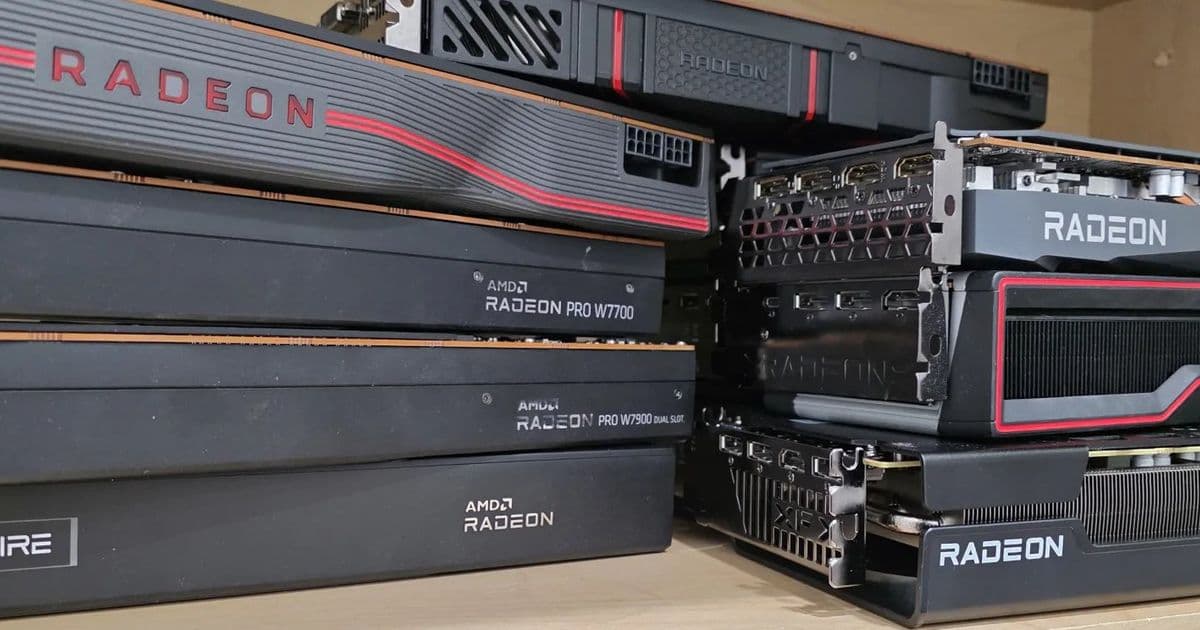
AMD submits critical kernel driver enhancements including HDMI clock fixes for DP adapters, SMU optimizations, and ARM64 server compatibility improvements.
AMD has delivered another significant batch of updates to its open-source Linux graphics stack ahead of the upcoming Linux 6.20~7.0 kernel merge window. This week's pull request builds upon previously queued changes targeting next-generation hardware while resolving long-standing compatibility limitations.
The driver improvements span three critical areas:
- Display Pipeline Enhancements
The standout change elevates HDMI clock support from 165MHz to 340MHz, finally aligning with the HDMI 1.3 specification ratified nearly two decades ago. This rectifies a persistent limitation affecting DisplayPort-to-HDMI dongles, enabling higher resolutions (4K+) and refresh rates (120Hz+) that were previously bottlenecked. The fix addresses real-world user frustrations with multi-monitor setups and HDMI capture devices.
System Management Unit Refinements
Engineers expanded the SMU 15 power management infrastructure introduced earlier, adding stability patches for upcoming RDNA 3.5 and GFX12.1 (RDNA4) IP blocks. Simultaneously, they backported reliability fixes to SMU 14 controllers powering current-generation Radeon RX 7000 series GPUs. The patchset also reworks mailbox communication protocols between the kernel driver and power management firmware.Compute & Enterprise Readiness
For data center deployments, the AMDKFD compute driver receives crucial memory leak patches and enhanced large-page support. The 64K page size compatibility specifically benefits ARM64 servers running Instinct accelerators, removing performance barriers on platforms like Ampere Altra. Additional fixes target SR-IOV virtualization, user queue stability, and the Micro Engine Scheduler's hardware arbitration logic.
These changes culminate in measurable user impact: desktop users gain expanded display connectivity options, while enterprise customers see improved reliability in heterogeneous computing environments. The patches are now undergoing review in the DRM-Next tree before final integration into the 6.20~7.0 kernel cycle beginning in February.
Comments
Please log in or register to join the discussion