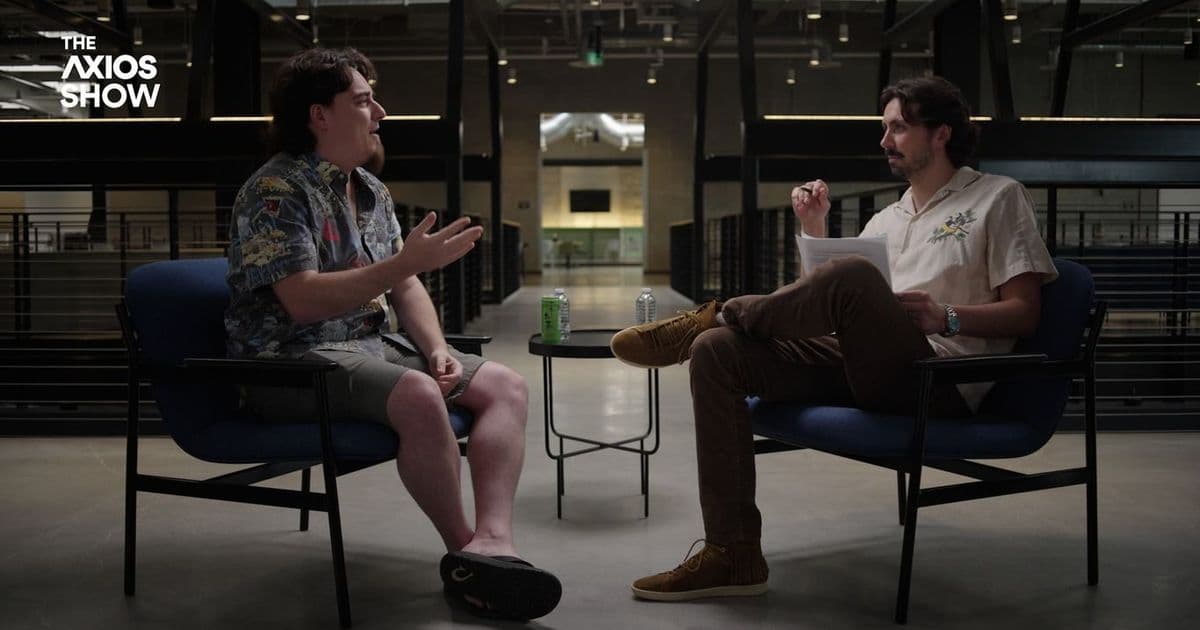
Anduril founder Palmer Luckey discusses AI's role in nuclear deterrence, Iran's drone capabilities, and the future of autonomous weapons systems in a revealing Axios interview.
Anduril founder Palmer Luckey recently appeared on "The Axios Show" to discuss some of the most pressing issues in defense technology today, from artificial intelligence's role in nuclear deterrence to the growing threat of Iranian drone capabilities. The interview provides rare insight into how Silicon Valley's approach to defense is evolving in response to global security challenges.
AI and Nuclear Deterrence: A New Paradigm
One of the most striking aspects of Luckey's discussion centered on how artificial intelligence is reshaping nuclear deterrence strategies. "The calculus of nuclear deterrence is changing," Luckey explained, noting that AI systems are increasingly being integrated into early warning and decision-support systems.
He emphasized that while AI won't be making launch decisions, it's becoming crucial for processing the vast amounts of data needed to assess threats in real-time. "When you're talking about decisions that need to be made in minutes, not hours, AI becomes an essential tool for human operators," he said.
This represents a significant shift from traditional nuclear command structures. The integration of AI aims to reduce human error and response times, though it raises new questions about system reliability and the potential for AI-driven escalation.
Iran's Drone Capabilities: The Asymmetric Threat
The conversation turned to Iran's growing drone capabilities, which Luckey described as "one of the most significant asymmetric threats facing Western militaries." He detailed how Iranian-designed drones have been used effectively in conflicts from Yemen to Ukraine, often overwhelming traditional air defense systems.
"What makes Iranian drones particularly concerning is their combination of sophistication and proliferation," Luckey noted. "These aren't just basic UAVs—they incorporate advanced features like swarming capabilities and electronic warfare resistance."
Anduril has been developing counter-drone systems specifically designed to address this threat. Luckey revealed that their systems use a combination of AI-powered detection, electronic countermeasures, and kinetic interceptors to neutralize drone swarms.
The Business of Defense Tech
Beyond the technical aspects, Luckey addressed the business dynamics of defense technology. He argued that traditional defense contractors have been too slow to adopt commercial technology practices, creating an opening for companies like Anduril.
"The defense industry has been operating on five to ten-year development cycles," he said. "We're trying to bring the speed and innovation of consumer tech to national security."
This approach has attracted significant investment, with Anduril recently achieving a valuation of over $8 billion. The company's products range from autonomous underwater vehicles to advanced surveillance towers, all designed with AI at their core.
Ethical Considerations and Autonomous Weapons
The interview didn't shy away from the ethical implications of autonomous weapons systems. Luckey acknowledged the concerns but argued that the technology is inevitable and that the focus should be on ensuring it's developed responsibly.
"The question isn't whether autonomous systems will be used in warfare—it's whether they'll be developed by countries that adhere to international law and human rights standards," he stated.
He emphasized that Anduril's systems include human oversight and are designed to operate within established rules of engagement. However, he predicted that fully autonomous weapons systems would likely be deployed within the next decade.
Looking Ahead: The Future of Defense Innovation
Luckey's vision for the future of defense technology is one where AI, robotics, and advanced sensors create a new paradigm of warfare. He sees traditional platforms like aircraft carriers and fighter jets becoming less relevant compared to distributed, AI-driven systems.
"The future battlefield won't be dominated by a few expensive, high-profile platforms," he explained. "It will be a network of intelligent systems working together, with humans in the loop but not necessarily in control of every decision."
This perspective aligns with broader trends in military thinking, where concepts like multidomain operations and joint all-domain command and control (JADC2) are gaining prominence.
The Silicon Valley Defense Connection
The interview also touched on the evolving relationship between Silicon Valley and the defense establishment. Luckey, who previously founded Oculus VR before selling it to Facebook, has been a controversial figure in this space, particularly given his past political activities.
He argued that the tech industry's reluctance to work with the military has been a mistake, both from a business perspective and a national security standpoint. "The best talent in AI and robotics is in the commercial sector, not in government labs," he said. "If we want to maintain our technological edge, we need to bridge that gap."
This view is gaining traction among other tech leaders, though it remains contentious within parts of the industry that have ethical concerns about military applications of their technology.
Conclusion: A New Era of Defense Tech
Luckey's appearance on "The Axios Show" underscores how defense technology is entering a new era, one where the lines between commercial and military tech are increasingly blurred. His discussion of AI, nuclear deterrence, and drone warfare provides a window into the complex challenges facing defense planners today.
As autonomous systems become more capable and AI more integrated into decision-making processes, the fundamental nature of warfare and deterrence is likely to evolve. Whether this leads to greater stability or new forms of instability remains to be seen, but as Luckey's interview makes clear, the transformation is already underway.
For those interested in the intersection of technology and national security, the full interview offers valuable insights into how Silicon Valley is reshaping the defense landscape. The transcript and video are available on Axios's website, providing a comprehensive look at one of the most influential voices in modern defense technology.
Comments
Please log in or register to join the discussion