
Anthropic gathered nearly 500 engineers in Tokyo to pitch Claude's autonomous coding tools, signaling a push into a market where it trails OpenAI. The event lands as the company files confidentially for a US IPO and builds enterprise ties with Hitachi and the University of Tokyo.
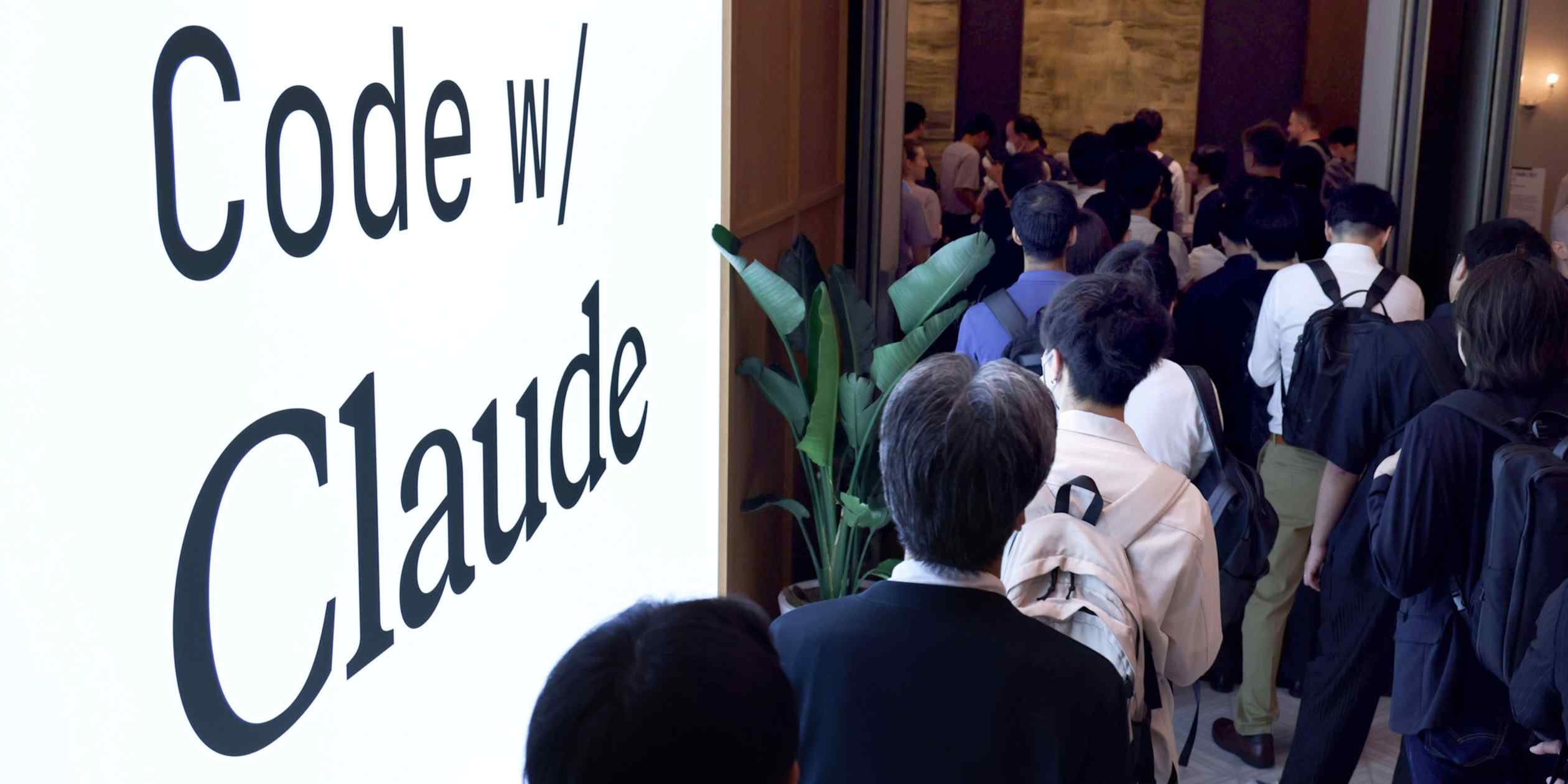
Anthropic brought its Claude artificial intelligence tools to Tokyo on June 10, hosting nearly 500 software engineers at a Code with Claude event aimed at convincing Japanese developers that autonomous code-writing programs can reshape how their teams ship software. The pitch centered on productivity, with the company arguing that its models can take on substantial portions of the coding workload rather than acting as a simple autocomplete assistant.
The Tokyo event is less a product launch than a market-entry move. Japan represents one of the larger untapped enterprise software markets where Anthropic still trails OpenAI in mindshare, and the company is treating developer adoption as the wedge. Coding has become the most commercially important use case for large language models, and it is the segment where Anthropic has carved out its clearest lead. By concentrating its Tokyo outreach on engineers rather than a general business audience, Anthropic is betting that bottom-up adoption inside development teams will pull enterprise contracts behind it.
The business context behind the Tokyo push
The timing matters. Anthropic has confidentially filed for a US initial public offering, a step that puts pressure on the company to show durable revenue growth and a credible path into large enterprise markets outside the United States. OpenAI has since followed with its own confidential filing, setting up a public-market contest between the two best-funded foundation model companies. International expansion, particularly into wealthy markets with large industrial bases like Japan, becomes a more urgent part of the growth story when investors are about to scrutinize the numbers.
Anthropic has been assembling a Japanese footprint piece by piece rather than through a single splashy announcement. The company has partnered with the University of Tokyo to study generative AI use, and it has teamed with Hitachi to apply AI to rail and power grid operations. It has also been weighed as a participant in Japan's emerging cyber defense alliance. Each of these moves targets a different layer of the market: academic credibility, heavy-industry deployment, and government-adjacent security work. The developer event slots into that strategy as the layer that drives day-to-day usage and seat expansion.
Why coding AI is the lever
The productivity argument Anthropic made in Tokyo reflects where the economics of AI coding tools have moved. Autonomous coding systems that can read a codebase, plan changes across multiple files, run tests, and iterate on errors are far more valuable to an enterprise than tools that suggest a single line at a time. They also justify higher per-seat pricing and deeper integration into engineering workflows, which translates into stickier revenue.
For a company preparing to face public markets, that stickiness is the point. Developer tools that become embedded in a team's daily process are harder to displace than chat interfaces that users can swap on a whim. If Anthropic can convert a portion of Japan's large engineering workforce into regular Claude users, it builds the kind of recurring, expandable revenue base that supports an IPO narrative.
What it means
Japan is becoming a contested front in the AI commercialization race. OpenAI already holds strong consumer and enterprise recognition there, and Nvidia's Jensen Huang has been actively cultivating relationships across Asia, including AI infrastructure deals in South Korea. Anthropic's Tokyo event signals that it intends to compete for the same enterprise budgets rather than ceding the region.
The broader pattern is that foundation model companies are shifting from research-driven positioning toward direct, market-by-market sales motions. Anthropic's combination of university research, industrial partnerships with firms like Hitachi, security-sector involvement, and grassroots developer outreach amounts to a full enterprise go-to-market playbook adapted for Japan. Whether it closes the gap with OpenAI will depend on how many of those 500 engineers, and the teams behind them, decide that Claude's coding capabilities are worth building their workflows around. For Anthropic, that conversion rate is exactly the metric that will matter when its financials become public. You can find Anthropic's developer tools and Claude documentation at anthropic.com and docs.anthropic.com.
Comments
Please log in or register to join the discussion