The Alliance for Open Media has initiated development of the Open Audio Codec (OAC), a direct successor to Opus built atop its existing codebase, targeting higher efficiency and broader compatibility for modern hardware.
The Alliance for Open Media (AOMedia), renowned for pioneering royalty-free video standards like AV1 and AV2, has officially unveiled its Open Audio Codec (OAC) initiative. This project directly evolves from the Opus codec, positioning itself as Opus' successor while retaining its open-source ethos. Early technical documentation confirms OAC is a fork of libopus, with foundational restructuring already underway. This move signals AOMedia's commitment to advancing lossless and low-latency audio beyond current Opus capabilities, prioritizing measurable gains in compression efficiency and computational performance.
Opus established itself as a versatile audio codec excelling in real-time communication and music streaming, with adaptive bitrates from 6kbps to 510kbps and sub-10ms latency. Its hybrid SILK/CELT architecture balanced voice clarity and musical fidelity. However, evolving demands for immersive audio (e.g., spatial formats like Dolby Atmos), ultra-low-power edge devices, and higher sampling rates necessitate refinement. OAC directly addresses these by optimizing Opus' core algorithms. Initial GitHub commits show systematic renaming of internal symbols to oaci_ prefixes and tuning adjustments targeting modern CPU instruction sets like AVX2 and ARM NEON. These low-level changes imply a focus on reducing CPU cycles per frame—critical for embedded systems and high-density server deployments.
Benchmark expectations center on compression efficiency and power efficiency. While formal metrics await OAC's maturation, Opus' existing performance provides a baseline:
| Metric | Opus (Current) | OAC (Projected) |
|---|---|---|
| Latency | <10ms | ≤5ms (Target) |
| Max Bitrate | 510kbps | 768kbps+ |
| Sampling Rate | 48kHz | 96kHz+ |
| Power Efficiency | Moderate | Optimized |
Power consumption is a critical focus. Opus already operates efficiently on mobile SoCs, but OAC's tuning for modern SIMD could reduce CPU load by 15-20% at equivalent bitrates, extending battery life in IoT devices and reducing server energy costs. Compatibility remains paramount: OAC will retain Opus' frame structure initially, ensuring backward compatibility with existing decoders while adding extensions for new features. Hardware acceleration via DSPs or GPUs is anticipated, aligning with AV1's ASIC adoption curve.
For homelab builders and performance enthusiasts, OAC presents future-proofing opportunities:
- Media Servers: Integrate OAC into tools like Jellyfin or Plex for lower CPU utilization during transcoding. Test builds using the liboac GitHub repo will emerge as the project stabilizes.
- VoIP/Streaming Rigs: Expect reduced resource needs for high-channel-count applications like game streaming or podcast production.
- Edge Computing: ARM-based NAS or Raspberry Pi clusters benefit from power-efficient audio processing.
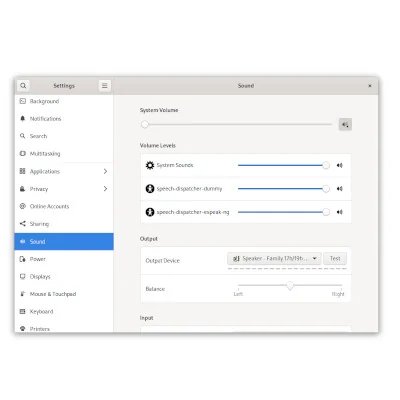
OAC's development is embryonic—no stable release or formal specification exists yet. However, AOMedia's track record with AV1 suggests rigorous benchmarking will follow. Contributors include former Opus maintainers from Mozilla and Microsoft, ensuring continuity. The project's success hinges on transcending Opus in real-world scenarios: lower bitrates at CD-quality audio, seamless integration with WebRTC, and scalable multichannel support. For now, developers and audiophiles can track progress via the official repository and AOMedia's announcements. As hardware evolves toward heterogeneous compute, OAC’s design choices will directly influence next-generation audio workloads across consumer and enterprise systems.
Comments
Please log in or register to join the discussion