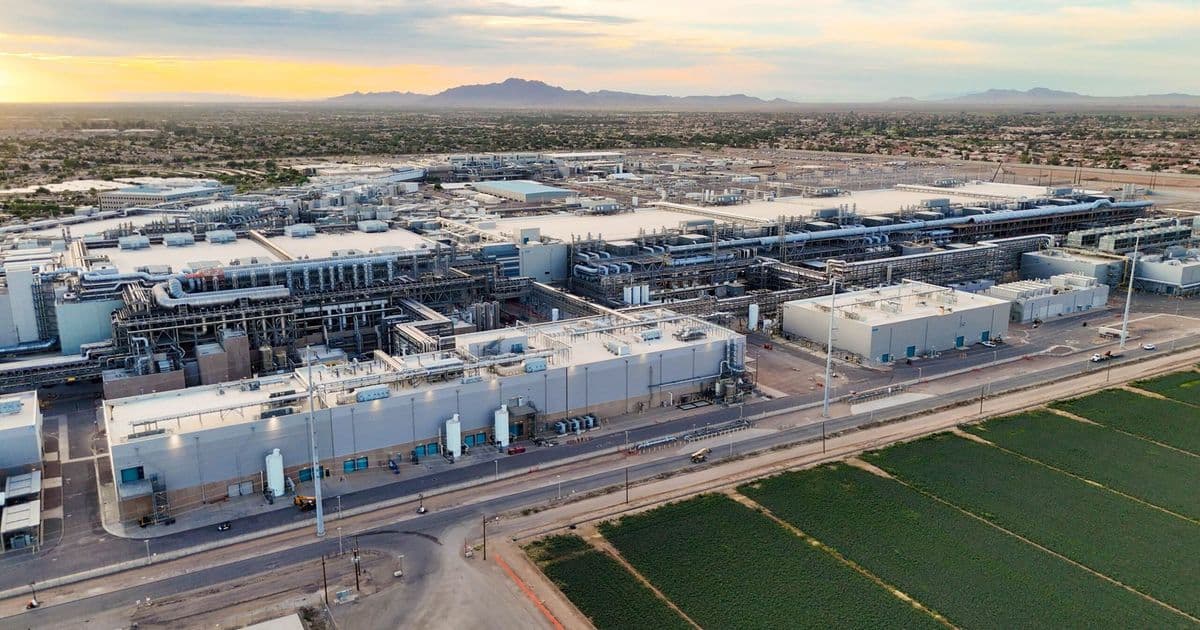
Apple and Nvidia are reportedly considering outsourcing non-core chip production to Intel in 2028, driven by U.S. tariff concerns and geopolitical pressures rather than pure technology advantages.
Apple and Nvidia are reportedly exploring the possibility of outsourcing production and packaging of some of their processors to Intel in the United States, according to a recent report from DigiTimes. The discussions, which could materialize as early as 2028, appear to be driven primarily by geopolitical concerns, potential tariffs on semiconductors produced outside the U.S., and capacity constraints rather than technological advantages.
Apple's Cautious Re-engagement with Intel
The tech giant is reportedly in talks with Intel about producing some of its entry-level M-series processors for Mac computers. These chips, currently manufactured by TSMC, represent a significant portion of Apple's product lineup, powering cost-sensitive laptops and tablets like the MacBook Air and iPad Pro.
This potential partnership marks a notable shift for Apple, which completed its transition away from Intel x86 CPUs to its own custom silicon in 2022. The renewed discussions are less about technological superiority and more about risk diversification, cost considerations, and navigating the complex landscape of U.S. semiconductor policy.
Apple's vanilla M-series processors are particularly well-suited for domestic production in the U.S. for several reasons:
- Smaller die sizes compared to high-end M Pro and M Max variants
- Lower packaging costs that make domestic production more economically viable
- Higher tolerance for yield and performance variability
- Sensitivity to cost structures that could benefit from localized production
However, a critical challenge remains: Apple must be able to port its latest micro-architectures to Intel's process nodes without significant performance degradation. The U.S. market is crucial for Apple's popular products, and any performance compromises could impact competitiveness.
Nvidia's More Complex Path Forward
Nvidia's situation presents even greater complexity. The company is reportedly considering multiple approaches to U.S. production, including:
- Manufacturing some I/O dies for its upcoming Feynman GPUs at Intel
- Packaging approximately 25% of Feynman GPUs using Intel's EMIB technology at facilities in New Mexico
The Feynman GPU, expected to consume between 5 kW and 6 kW of power, presents unique challenges that go beyond simple manufacturing considerations. At these power levels, traditional board-level voltage regulation becomes inadequate, necessitating integrated voltage regulator (IVR) solutions within the advanced packaging itself.
The Packaging Challenge
For high-power AI accelerators like Feynman, the packaging technology becomes a critical performance enabler rather than just a mechanical solution. The requirements include:
- Power delivery network (PDN) efficiency: Direct delivery of sub-1V power from motherboards leads to severe IR drop and power distribution losses
- Transient response: The need for 10x to 100x faster response than traditional on-board voltage regulator modules (VRMs)
- Current management: Handling thousands of amperes requires innovative approaches to power delivery
Intel's EMIB technology can support co-packaged IVR components, but it represents a different approach than TSMC's CoWoS-L interposer technology. While EMIB can accommodate discrete IVR chips alongside the GPU, it doesn't provide the same level of integration and performance optimization as a true embedded solution.
Foveros vs. CoWoS-L
Intel's Foveros technology, including Foveros Omni and Foveros Direct 3D, offers alternative approaches to multi-die integration. However, these technologies represent fundamentally different design philosophies:
- Foveros Direct 3D: Focuses on vertical stacking of power tiles with logic for extremely fast regulation and low inductance
- CoWoS-L: Emphasizes embedded passive volume and interposer-based integration
If Nvidia were to adopt Foveros for Feynman, it would likely require significant GPU redesign compared to the TSMC-optimized version. This redesign complexity makes it more probable that Nvidia will wait for TSMC to establish advanced packaging capabilities in the U.S. later this decade.
The Political and Economic Context
The reported discussions between these tech giants and Intel are occurring against a backdrop of increasing U.S. government pressure on semiconductor manufacturing localization. Several factors are driving this shift:
- Potential tariffs on semiconductors produced outside the U.S.
- Geopolitical tensions affecting global supply chains
- Capacity constraints at leading-edge foundries
- Government incentives for domestic semiconductor production
Both Apple and Nvidia appear willing to relax some of their typical technological demands if key strategic goals are met. The primary objective seems to be establishing domestic production capabilities that align with U.S. policy requirements while maintaining acceptable performance levels.
Intel's Opportunity and Challenges
For Intel, these potential partnerships represent a significant opportunity to regain market share in the foundry business. However, the company faces several challenges:
- Capacity constraints: Whether Intel has sufficient advanced capacity for third-party customers by 2028 remains uncertain
- Technology porting: Providing an easy path for customers to migrate designs from TSMC nodes to Intel's process technologies
- Performance parity: Delivering power and performance targets that meet the exacting standards of Apple and Nvidia
- Packaging capabilities: Expanding advanced packaging offerings to compete with TSMC's established ecosystem
Intel's recent $5 billion investment from Nvidia could facilitate closer collaboration, potentially leading to earlier wins with products like Vera CPUs or custom Xeon processors designed specifically for Nvidia's requirements.
Industry Implications
The potential shift toward U.S.-based production for non-core products could have far-reaching implications for the semiconductor industry:
- Supply chain diversification: Reducing dependence on Asian manufacturing for critical components
- Technology competition: Intensifying the rivalry between Intel and TSMC in advanced process technologies
- Cost structures: Potentially higher production costs balanced against tariff avoidance and geopolitical risk mitigation
- Innovation patterns: Possible shifts in how companies approach chip design and manufacturing partnerships
The 2028 timeline suggests these are medium-term strategic considerations rather than immediate operational changes. Both Apple and Nvidia will likely continue their primary manufacturing relationships with TSMC while exploring these alternative arrangements as part of a broader risk management strategy.
The semiconductor industry is entering a new era where geopolitical considerations are becoming as important as technological capabilities in determining manufacturing partnerships and production locations. As these dynamics continue to evolve, the traditional boundaries between design, manufacturing, and packaging are likely to become increasingly fluid.
Comments
Please log in or register to join the discussion