Apple's latest M5-powered MacBook Air models demonstrate significant performance gains while maintaining competitive pricing in the current market landscape.
Apple has introduced its M5 chip in the latest MacBook Air lineup, representing a notable advancement in the company's silicon architecture. The 13-inch and 15-inch models currently show market pricing adjustments, with the 13-inch base model available at $899 and the 15-inch variant at $1,099, reflecting a $200 reduction from their original retail prices.
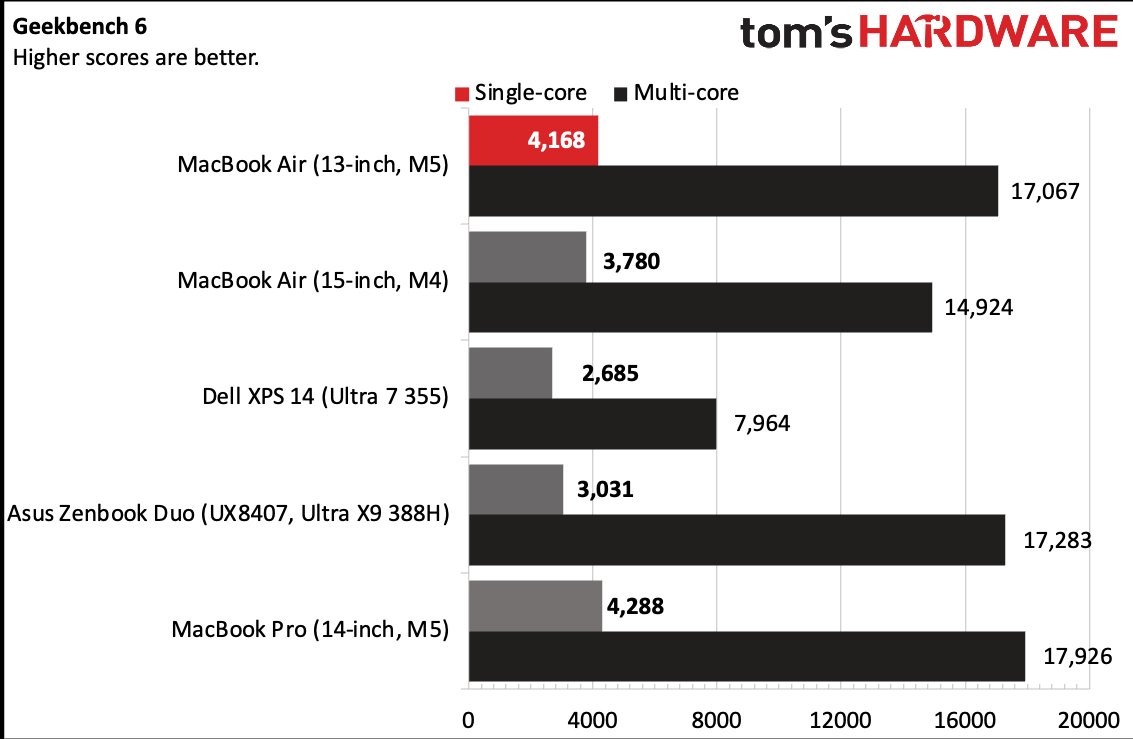
The M5 chip continues Apple's tradition of system-on-a-chip design, featuring an 8-core CPU configuration with 4 performance cores and 4 efficiency cores. This architecture delivers substantial single-core performance, outpacing current AMD and Intel processors in benchmark tests. The chip's unified memory architecture with 16GB of RAM provides efficient data handling across all components, eliminating traditional bottlenecks between CPU, GPU, and memory subsystems.
In the 13-inch model, Apple includes an 8-core GPU, while the larger 15-inch version upgrades to a 10-core GPU configuration. This GPU enhancement, combined with the increased display size, makes the larger variant particularly suitable for creative professionals who benefit from both screen real estate and graphical processing capabilities.
The thermal design presents an interesting engineering challenge. Without active cooling fans, both models rely on passive散热 (heat dissipation), which can lead to thermal throttling during sustained, intensive workloads. This design choice contributes to the MacBook Air's remarkable portability, with weights of 1.24kg for the 13-inch and 1.5kg for the 15-inch models, but imposes limitations for prolonged high-performance tasks.
From a connectivity perspective, Apple maintains a minimal port configuration with two Thunderbolt 4 USB-C ports and a 3.5mm headphone jack. The inclusion of MagSafe charging adds a practical advantage for users who may accidentally trip over power cords. The 512GB SSD storage across both models ensures adequate space for typical workloads, while the 12MP Center Stage webcam and Wi-Fi 7 support represent current premium standards in the laptop market.
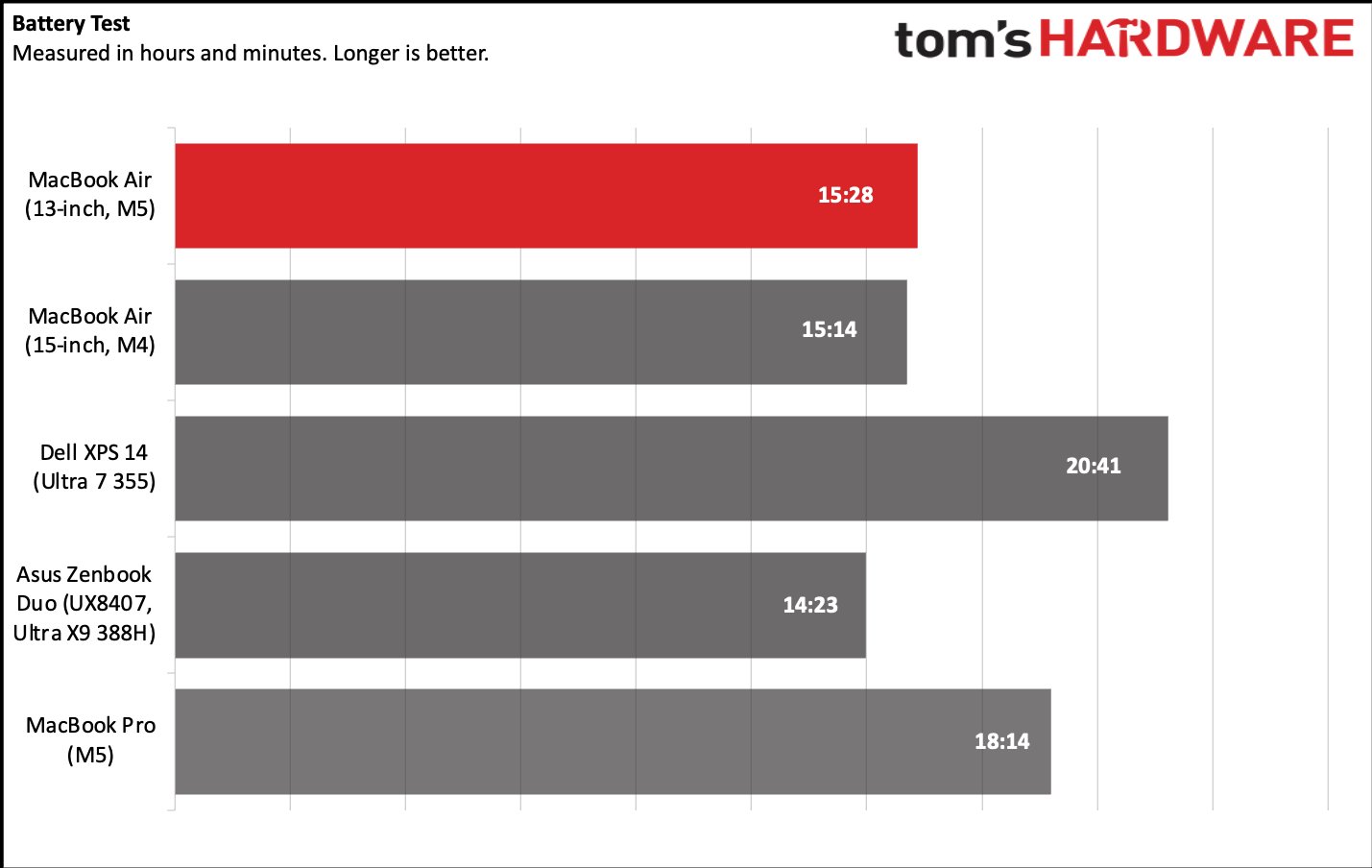
The M5 chip's performance characteristics reveal Apple's continued focus on power efficiency. While raw multi-core performance may not match some desktop alternatives, the chip delivers exceptional performance-per-watt metrics, contributing to the MacBook Air's impressive battery life that typically exceeds 15 hours for mixed usage scenarios.
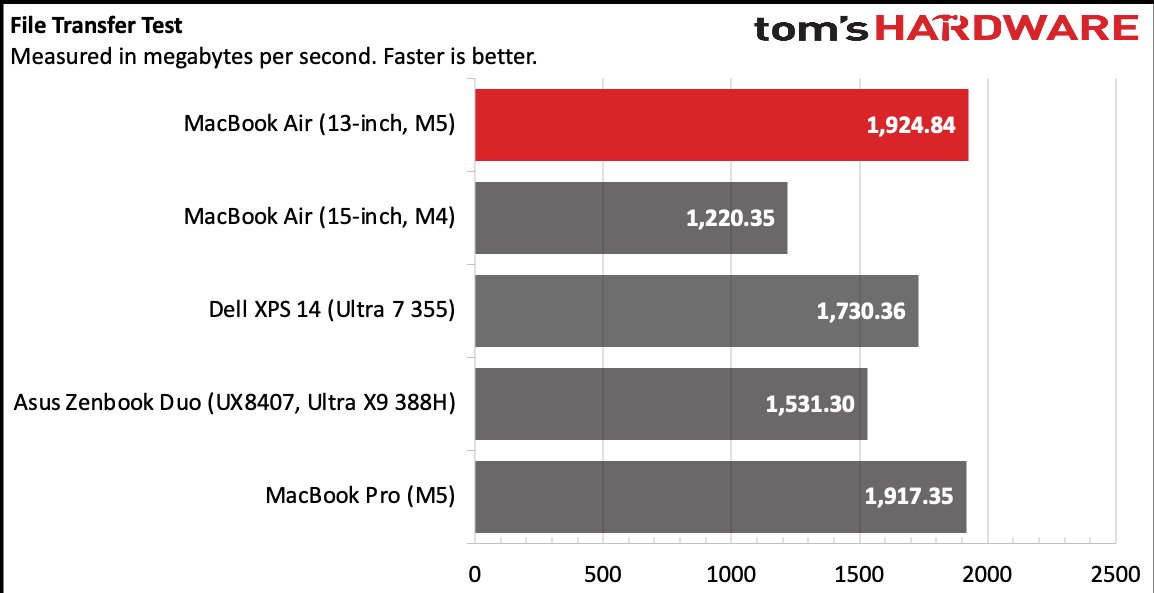
In the competitive landscape, the M5 MacBook Air positions itself against Windows alternatives by leveraging three key advantages: silicon performance, ecosystem integration, and build quality. The chip's ability to handle video editing and other creative workflows efficiently, despite its classification as a consumer device, challenges traditional segmentation between consumer and professional laptop categories.
The current market pricing adjustments reflect broader industry trends where component costs have decreased while performance capabilities have increased. This positions the M5 MacBook Air competitively against Windows alternatives that typically require more expensive components to achieve similar performance levels.
From a supply chain perspective, Apple's vertical integration allows for tighter control over the entire product lifecycle, from design to manufacturing. This control contributes to the consistent quality and performance characteristics across the MacBook Air lineup, though it also limits the upgradeability of the devices, as RAM and storage are soldered components.
The M5 chip represents approximately a 20% improvement in single-core performance and 15% improvement in multi-core performance compared to the previous M3 generation, according to Apple's internal benchmarks. These gains come despite process node constraints, suggesting Apple has optimized its chip design to extract maximum performance from the available manufacturing technology.
For potential buyers, the decision between the 13-inch and 15-inch models hinges primarily on display preferences and the need for the enhanced GPU configuration. Both models deliver exceptional performance for typical consumer and professional workflows, with the 15-inch offering slightly more headroom for graphically intensive applications.
Comments
Please log in or register to join the discussion