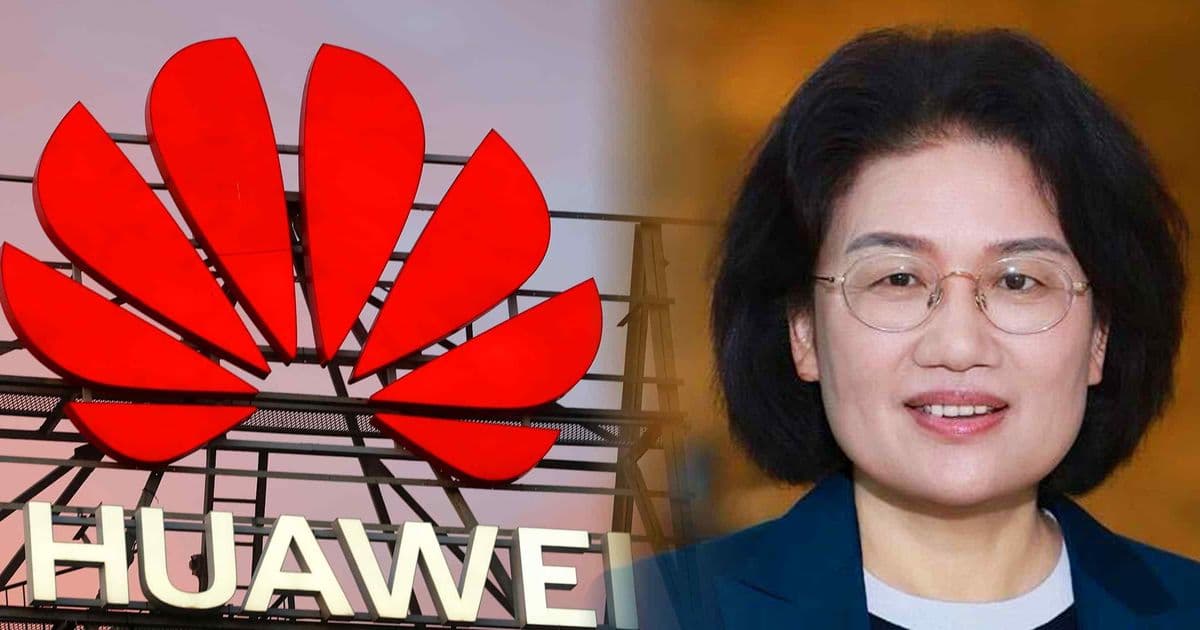
Huawei's chip chief He Tingbo has spearheaded a remarkable turnaround in the company's semiconductor capabilities, developing new chip designs and manufacturing approaches that could circumvent US export controls and narrow the technology gap with global industry leaders.
Huawei's semiconductor division, under the leadership of chip chief He Tingbo, has achieved a significant technological breakthrough that positions the Chinese tech giant to potentially overcome US export controls and compete more effectively with global semiconductor leaders like Taiwan Semiconductor Manufacturing Co. and Intel. The company's new chip design and manufacturing approach, unveiled recently, claims to make cutting-edge extreme ultraviolet (EUV) lithography tools unnecessary—a direct challenge to the current semiconductor manufacturing paradigm dominated by Western technology.
He Tingbo, who has quietly driven semiconductor development at Huawei for years, has now stepped into the spotlight to explain how the company successfully rebuilt its chip product lines following the devastating US sanctions that cut off its access to critical American technologies. Her leadership comes at a critical time when China's semiconductor industry faces unprecedented pressure from export restrictions targeting advanced chipmaking equipment and design software.
The breakthrough centers on what Huawei describes as a novel chip architecture that can achieve performance comparable to chips produced using EUV lithography without requiring the expensive and restricted EUV equipment. This development could significantly reduce Huawei's dependence on ASML, the Dutch company that holds a near-monopoly on EUV lithography systems, which have been subject to strict export controls since 2019.
"We've developed a manufacturing approach that allows us to produce advanced chips using existing deep ultraviolet (DUV) equipment in ways that were previously thought impossible," He explained in a recent interview. "This isn't just about circumventing sanctions; it's about creating a more efficient and cost-effective path to advanced semiconductor manufacturing."
The implications of this breakthrough extend beyond Huawei's immediate business needs. If successful, Huawei's approach could reshape the global semiconductor industry by offering an alternative to the current trajectory that relies increasingly on EUV technology. This could potentially democratize access to advanced chip manufacturing, particularly for countries and companies facing US export restrictions.
Market analysts estimate that Huawei has invested approximately $13.7 billion in its semiconductor division since the sanctions were imposed in 2019. The company has also strategically invested in more than 60 Chinese chip firms, creating a domestic ecosystem of suppliers and partners that can support its chip design and manufacturing needs.
The timing of this breakthrough coincides with Huawei's remarkable financial recovery. The company's revenues have nearly returned to pre-sanction levels, reaching approximately $94 billion in 2025, up from $99 billion in 2018 before the US crackdown. This resurgence has been driven by the company's strength in telecommunications infrastructure and its rapid expansion into artificial intelligence and cloud computing.
Huawei's chip strategy appears to be multi-pronged. While the new manufacturing approach addresses production challenges, the company has also focused on developing its own intellectual property for chip design. The recent unveiling of the Kirin chip for smartphones demonstrates Huawei's progress in creating indigenous designs that can compete with offerings from Qualcomm and other global chipmakers.
The global semiconductor industry is watching Huawei's developments closely. Current industry projections suggest that EUV lithography will be required for chips at 7nm and below process nodes. If Huawei can demonstrate that its approach can achieve comparable results using DUV equipment at these advanced nodes, it could force a fundamental reassessment of industry roadmaps.
From a strategic perspective, Huawei's semiconductor comeback represents China's broader effort to achieve technological self-sufficiency. The Chinese government has set ambitious targets for domestic semiconductor production, aiming for 70% use of domestically produced silicon wafers in advanced applications by 2026. Huawei's progress in this area aligns with these national objectives and could accelerate China's semiconductor capabilities.
However, challenges remain. The semiconductor industry is characterized by complex global supply chains and decades of accumulated technical knowledge. While Huawei's approach shows promise, questions persist about scalability, yield rates, and long-term reliability compared to established manufacturing processes.
He Tingbo's leadership style has been characterized by technical pragmatism and a focus on practical solutions rather than theoretical breakthroughs. Colleagues describe her as methodical and detail-oriented, with a deep understanding of both chip design and manufacturing processes. Her background in materials science and engineering has informed Huawei's approach to overcoming technical obstacles.
The competitive landscape in semiconductors remains intense. Global leaders like TSMC and Intel continue to advance their process technologies, with TSMC currently producing chips at 3nm nodes and planning 2nm production in the near future. Meanwhile, Samsung has also made significant progress in advanced manufacturing, creating a competitive environment that Huawei must navigate despite its technological constraints.
Huawei's semiconductor strategy also reflects broader shifts in the global tech landscape. The decoupling of US and Chinese technology ecosystems has accelerated, with both countries emphasizing domestic capabilities in critical technologies. This trend is likely to continue, potentially creating parallel technological standards and ecosystems in the coming years.
For Huawei, the semiconductor comeback represents not just a technical achievement but a strategic imperative. The company's ability to maintain its position in telecommunications equipment and expand into new markets like smartphones, laptops, and automotive systems depends critically on its access to advanced chips. He Tingbo's team has effectively turned a existential threat into an opportunity for innovation, potentially positioning Huawei as a more resilient and technologically independent company.
As the semiconductor industry continues to evolve, Huawei's approach may offer valuable insights into how companies can navigate complex geopolitical restrictions while maintaining technological competitiveness. The company's success—or challenges—in implementing its new manufacturing approach will likely influence strategies across the global tech industry for years to come.
Comments
Please log in or register to join the discussion