
A Mastodon thread dissecting Apple's evolving Pages app icons ignited passionate discussions about skeuomorphism versus flat design, accessibility trade-offs, and whether icons should prioritize artistry or functionality.
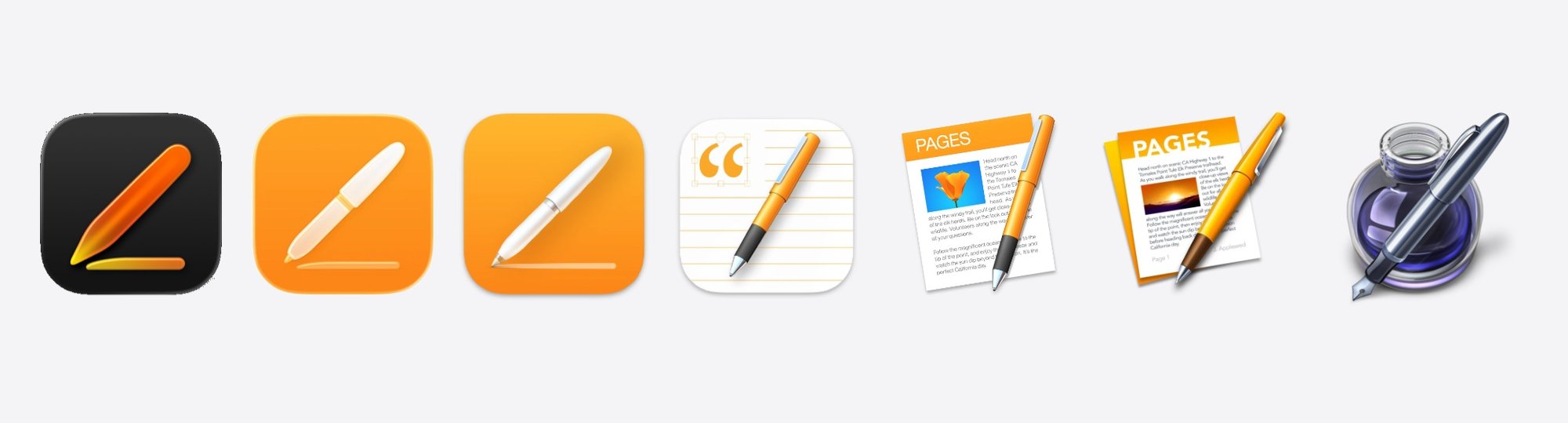
A visual observation about Apple's Pages app icons has ignited intense debate among designers and users on Mastodon. Graphic designer Héliographe noted: "If you put the Apple icons in reverse it looks like the portfolio of someone getting really really good at icon design", highlighting Apple's progression from skeuomorphic inkwells to minimalist glyphs.
The Design Debate
John Timaeus (@johntimaeus) sparked controversy by arguing: "Icons are tools. They cannot be 'great' any more than a hammer or doorknob can be great. The best icons are functional, consistent, and predictable." He criticized Apple's frequent redesigns as prioritizing aesthetics over usability, stating that forcing users to adapt to visual changes "is a great way to piss off users."
Others defended the middle-ground approach. Curioso (@jgg) countered: "The skeuomorphic inkwell struck the best balance - clear, excellent contrast, and instantly recognizable without being overly literal." Many users expressed nostalgia for Apple's pre-flat design era, with @sortius praising the "bold colour contrasts and jellybean textures" of older macOS versions.
Accessibility Concerns
Several users highlighted functional issues:
- @nazokiyoubinbou noted the leftmost icon's "bright orange/yellow against dark background helps low-vision users but fails because the pen resembles a pointy blob."
- @splendorr criticized modern uniformity: "Forced squircle shapes make all apps indistinguishable. Everything looks the same."
- NMDoerner (@cdfinder) showcased his NeoFinder app maintaining a distinctive animated icon as resistance against *"ugly squircle hell."
Cultural Perspectives
The discussion broadened to include Japanese warning sign design. @glent shared examples of illustrative warnings, prompting @soviut to clarify: "Iconography differs from illustration. Danger signs use silhouettes without details like skin tones - that's intentional design."
Core Conflict
At its heart, the debate reveals two irreconcilable philosophies:
- Functionalists (Timaeus): Icons should be optimized for instant recognition across contexts, resisting aesthetic trends
- Expressionists (Héliographe): Visual evolution demonstrates growing design mastery and brand identity
As @nazokiyoubinbou summarized: "Sensible defaults and proper design achieve usability while accommodating diverse users - but Apple leans hard toward restrictive uniformity."*
Featured image shows Apple's Pages icon evolution via Héliographe's Mastodon post.
Comments
Please log in or register to join the discussion