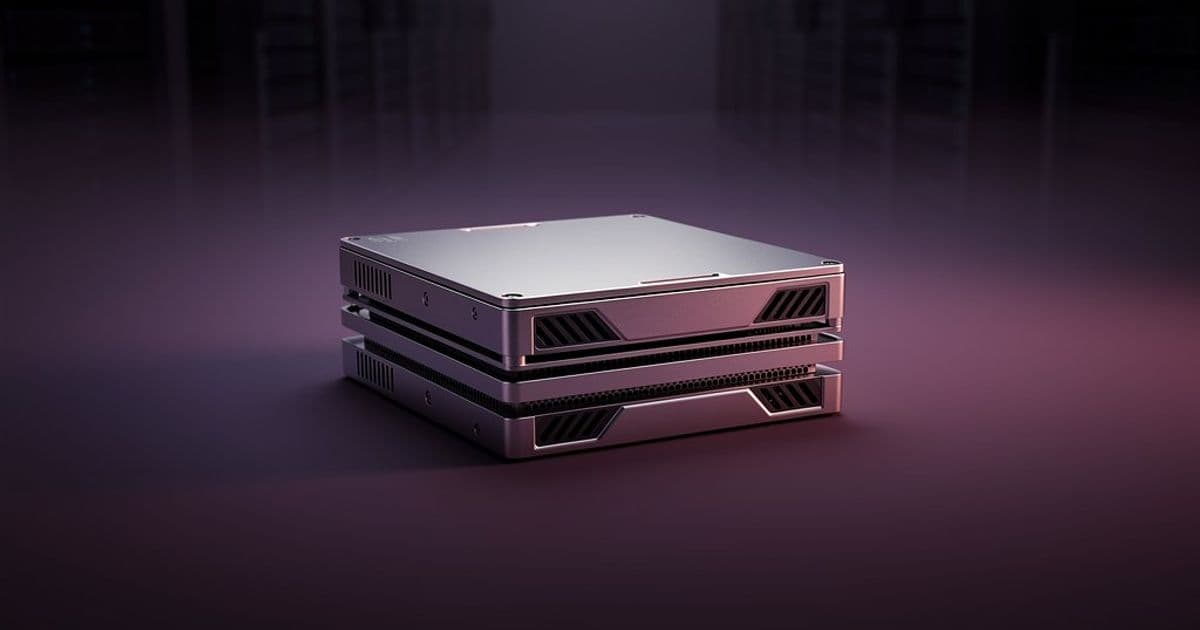
Analyst Ming-Chi Kuo reports Apple is moving to mass production of its own AI server silicon in late 2026, with dedicated data centers coming online in 2027 to support a growing on-device AI ecosystem.
Apple is preparing to mass-produce its own AI server chip in the second half of 2026, according to a new supply chain report from analyst Ming-Chi Kuo. The move signals a major expansion of Apple's silicon strategy beyond consumer devices into the infrastructure that powers its cloud-based AI services.
The timeline suggests Apple's dedicated data centers will begin construction and operations in 2027, aligning with what Kuo describes as the company's anticipation of "significant growth in on-device AI demand" that year. This infrastructure build-out represents a fundamental shift for Apple, which has historically relied on third-party cloud providers for its server needs.
Building on Silicon Success
Apple's server chip ambitions build on years of vertical integration in consumer hardware. The company's M-series chips have demonstrated impressive performance-per-watt efficiency in Macs, iPads, and the Vision Pro. The M5 chip, introduced in October 2025, already powers the Vision Pro and other devices, showing Apple's ability to iterate quickly on custom silicon.
For AI workloads, this server chip will likely follow a similar architecture to Apple's consumer processors but optimized for data center conditions. Rather than relying on generic server CPUs or GPUs from Intel, AMD, or NVIDIA, Apple can design silicon specifically tuned for its own AI models and frameworks. This approach mirrors what Google has done with its Tensor Processing Units (TPUs) and Amazon with Graviton processors.
The key advantage is efficiency. Apple's silicon team has mastered balancing performance with power consumption—a critical factor for data center operations where electricity costs dominate. A custom chip could also integrate specialized accelerators for Apple's specific AI operations, potentially offering better performance per dollar than off-the-shelf hardware.
The On-Device AI Strategy
Kuo's reference to on-device AI demand growth in 2027 points to Apple's broader ecosystem strategy. Unlike competitors pushing everything to the cloud, Apple has emphasized on-device processing for privacy and latency reasons. Features like Siri's improved contextual understanding, Live Text in photos, and real-time translation all run locally on iPhones and iPads.
However, more complex AI tasks still require server-side processing. Apple Intelligence features announced at WWDC 2024 already split workloads between device and cloud. The company's Private Cloud Compute system attempts to maintain privacy standards even when processing moves to servers.

A custom AI server chip would give Apple more control over this hybrid approach. The company could optimize data center hardware to work seamlessly with its devices, creating a unified computing fabric across the ecosystem. This could enable features that feel more responsive and integrated than what's possible with generic cloud infrastructure.
Timing and Market Context
The 2026-2027 timeline positions Apple to compete in an increasingly crowded AI infrastructure market. Microsoft is investing billions in custom AI chips for Azure. Google continues expanding its TPU lineup. Amazon has Inferentia and Trainium chips for AI workloads. Even smaller players like Meta are developing custom silicon for their AI needs.
Apple's delay in entering the AI race has been a frequent criticism. The company's initial Apple Intelligence features faced delays, and some analysts have questioned whether Apple can keep pace with more aggressive AI investments from competitors. Building its own server infrastructure could help Apple catch up by giving it complete control over the hardware and software stack.
The move also reduces dependency on external suppliers. If Apple can produce its own server chips, it avoids potential bottlenecks from chip shortages or pricing pressures from vendors like NVIDIA, whose GPUs currently dominate AI training and inference markets.
Technical Unknowns
Specific details about the server chip remain scarce. Kuo's report doesn't specify whether this will be a general-purpose processor, a dedicated AI accelerator, or something in between. Apple could potentially extend its existing M-series architecture or create an entirely new design optimized for server workloads.
The chip will likely need to handle large language model inference, image generation, and other generative AI tasks at scale. It may also include specialized security features to support Apple's privacy commitments in cloud environments.
Ecosystem Implications
For developers and users, this infrastructure could translate to more responsive AI features across Apple's ecosystem. If Apple can offer better performance and lower costs through custom silicon, it might enable more ambitious AI features in iOS, macOS, and other platforms.
The investment also suggests Apple is committed to AI as a core differentiator, not just a feature add-on. Building dedicated data centers represents a long-term commitment that goes beyond licensing third-party models or using generic cloud services.
As we approach 2026, expect more details about Apple's server chip architecture and the specific AI capabilities it will enable. For now, this report confirms that Apple is serious about controlling its entire AI stack—from the silicon in your iPhone to the servers processing your requests.
Source: Ming-Chi Kuo Supply Chain Report
Comments
Please log in or register to join the discussion