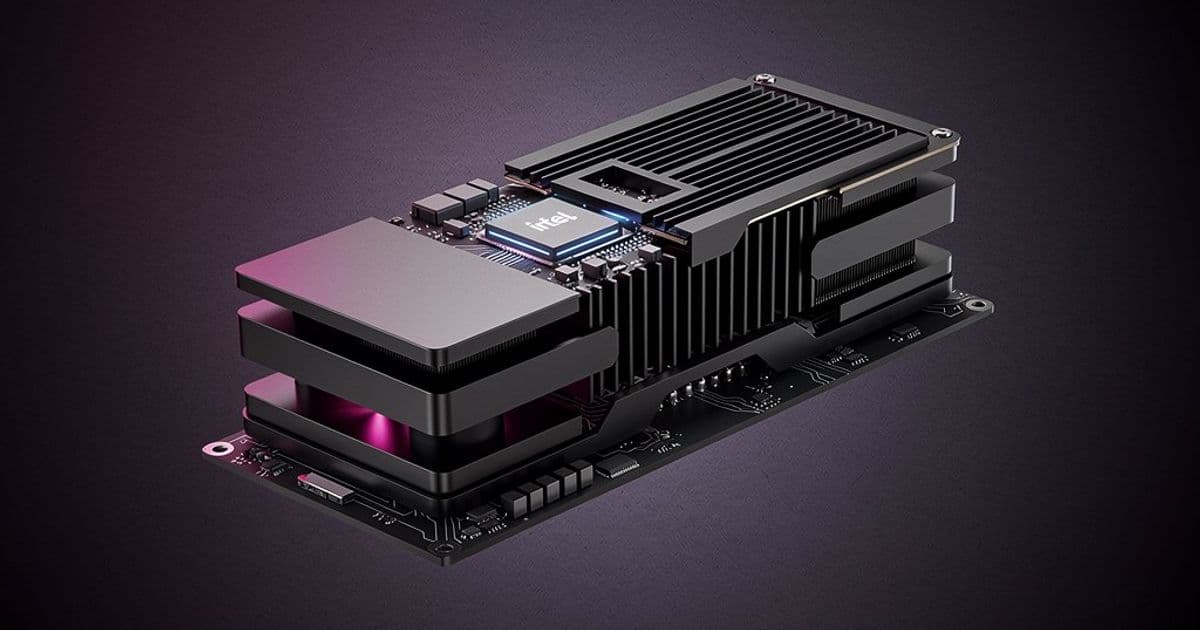
Intel's first Compute Runtime release of 2026 brings production-ready Panther Lake support and early drivers for next-gen Xe3P hardware, setting the stage for Nova Lake's integrated graphics and Crescent Island's AI inference platform.
Intel has published the Compute Runtime 26.01.36711.4, marking the project's first release in 2026 and delivering on the promised hardware support timeline that follows last week's Intel Graphics Compiler update. For homelab builders and Linux GPU compute enthusiasts, this release represents a critical milestone: production-ready support for Panther Lake alongside the first public-facing drivers for Intel's next-generation Xe3P architecture.
Production-Ready Panther Lake
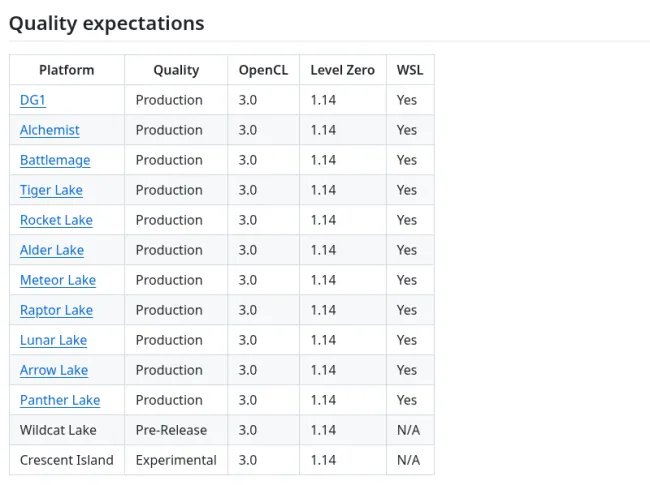
The most immediate impact for current hardware deployments is the promotion of Panther Lake support from "pre-release" to "production" quality. This change signals that Intel's open-source GPU compute stack is now stable enough for serious workload deployment on Panther Lake integrated graphics. For users running Level Zero and OpenCL applications, this means fewer workarounds and improved reliability.
Panther Lake's integrated graphics represent Intel's current-generation compute architecture, and the production status indicates that the driver stack has matured through extensive testing. The shift from pre-release to production typically involves:
- Resolved memory management issues
- Improved kernel command buffer submission
- Stable USM (Unified Shared Memory) implementation
- Verified compliance with OpenCL 3.0 and Level Zero 1.0 specifications
Early Xe3P Support: Nova Lake and Crescent Island
The headline feature is the introduction of initial support for two next-generation products built on Intel's Xe3P architecture:
Nova Lake S: Intel's upcoming desktop processor line will feature Xe3P integrated graphics that promise significant compute performance improvements. While architectural details remain under NDA, the early driver support suggests Intel is preparing the software stack well in advance of hardware launch—a departure from historical patterns where Linux support often lagged behind Windows.
Crescent Island: This is Intel's newly disclosed enterprise AI inference platform, expected to begin sampling later in 2026. Crescent Island appears to be a specialized accelerator focused on AI workloads rather than general-purpose graphics. The inclusion of Compute Runtime support indicates this will be accessible through standard OpenCL and Level Zero APIs rather than requiring proprietary drivers.
The timing is notable: Intel is seeding driver support months before hardware availability, giving developers and enterprise IT teams time to validate their software stack.
Wildcat Lake Pre-Release Support
The release also mentions "pre-release" support for Wildcat Lake, though details about this product remain sparse. Based on Intel's naming conventions, Wildcat Lake likely represents a low-power or embedded variant, possibly targeting edge computing or IoT applications where GPU compute acceleration is needed in thermally constrained environments.
Performance Optimizations in 26.01.36711.4
Beyond hardware support, this release includes meaningful performance improvements visible in the source code:
OpenCL Default Heap Size: The default heap size for OpenCL has been increased to 4MB. This change reduces the frequency of dynamic memory allocations during kernel execution, which can improve performance for memory-intensive workloads. For homelab builders running OpenCL applications, this translates to more consistent frame times and reduced CPU overhead.
Compressed Pool for cl_buffer: Intel has implemented a compressed memory pool for OpenCL buffer objects. This optimization reduces memory fragmentation and improves allocation speed, particularly beneficial for applications that frequently create and destroy buffers.
Shared System USM for Battlemage: The release enables shared system Unified Shared Memory by default for Battlemage GPUs. USM allows both CPU and GPU to access the same memory region without explicit copying, dramatically reducing latency for heterogeneous workloads. For users with Intel Arc Battlemage graphics cards, this means out-of-the-box improved performance for applications that use zero-copy memory transfers.
64-bit Semaphore Command: The addition of a 64-bit semaphore command provides better synchronization primitives for complex compute pipelines, enabling more fine-grained control over GPU work submission.
Impact for Homelab Builders
For Linux-based GPU compute deployments, this release offers several practical benefits:
- Future-Proofing: Early driver support means you can begin porting and testing applications before next-gen hardware arrives.
- Stability: Production-quality Panther Lake drivers reduce the maintenance burden for existing deployments.
- Performance: The heap size and USM improvements directly benefit real-world workloads.
- Standardization: Crescent Island's inclusion in standard Compute Runtime rather than a proprietary stack suggests Intel is committed to open standards for AI acceleration.
Getting Started
The Intel Compute Runtime is available on GitHub with detailed installation instructions for various Linux distributions. The runtime requires:
- Intel Graphics Compiler (IGC)
- Level Zero loader
- OpenCL ICD loader
For users building from source, the build system has been updated to handle the new hardware targets automatically.
What This Means for the Ecosystem
Intel's aggressive pre-release driver strategy reflects the increasing importance of the Linux open-source stack for hardware adoption. By ensuring day-one Linux support for next-generation products, Intel is addressing a key pain point for enterprise and research deployments that standardize on Linux.
The Crescent Island AI inference platform's inclusion is particularly significant. If Intel can deliver competitive AI acceleration through open APIs rather than proprietary frameworks, it could disrupt the current GPU compute landscape dominated by CUDA-locked ecosystems.
For homelab builders who measure everything, the Compute Runtime 26.01.36711.4 provides a solid foundation for benchmarking next-generation Intel graphics hardware when it becomes available. The performance optimizations alone make this release worth deploying on existing Battlemage and Panther Lake systems.
Comments
Please log in or register to join the discussion