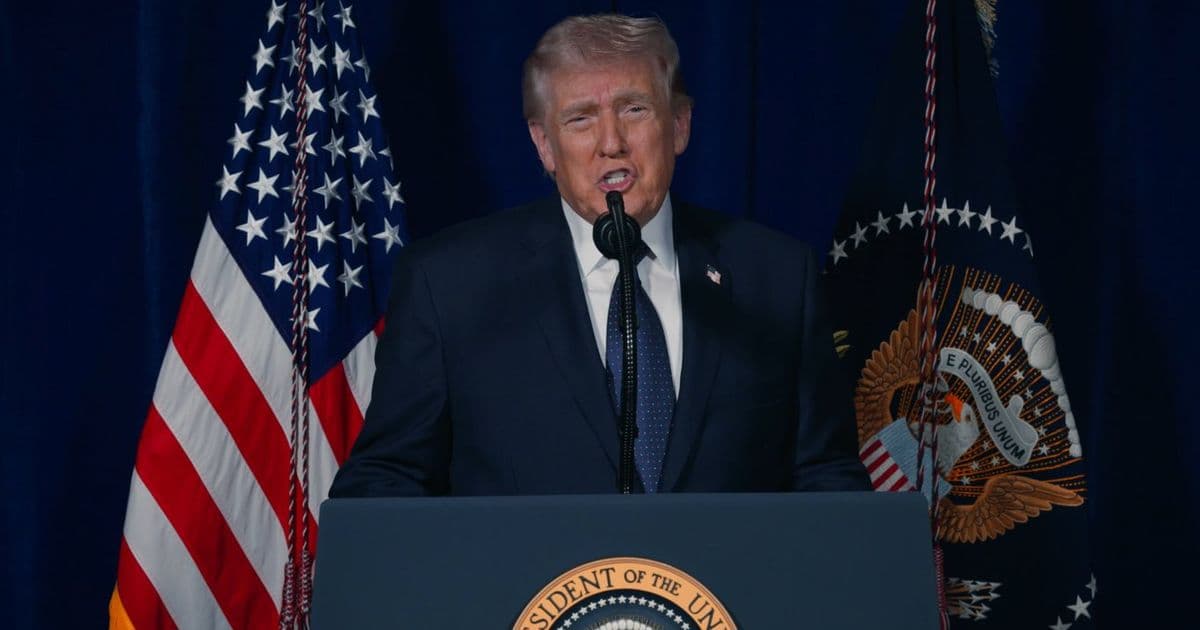
Former President Trump predicts more American military deaths in ongoing Iran attacks, signaling continued regional instability and potential escalation of hostilities.
Former President Donald Trump has issued a stark warning that more U.S. troops will "likely" die in ongoing attacks by Iran and its proxies, marking a significant escalation in rhetoric surrounding the Middle East conflict.
In a post on Truth Social, Trump stated that the United States should expect additional casualties as tensions between Washington and Tehran continue to simmer. The warning comes amid a series of attacks on American forces stationed in the region, particularly in Iraq and Syria.
Context of the Conflict
The current situation stems from a complex web of geopolitical tensions that have intensified since the U.S. withdrawal from the Iran nuclear deal in 2018. Since then, Iran has progressively reduced its compliance with the agreement, while the U.S. has maintained a maximum pressure campaign through economic sanctions.
Iran has increasingly relied on proxy forces across the Middle East to challenge U.S. interests. These groups, including various militias in Iraq, Syria, and Yemen, have conducted numerous attacks on American military installations and personnel over the past several years.
Recent Escalation
In recent months, there has been a notable uptick in attacks targeting U.S. forces in the region. These have included drone strikes, rocket attacks, and other forms of harassment aimed at American bases and personnel. The attacks have resulted in injuries and, in some cases, fatalities among U.S. service members.
Trump's warning appears to acknowledge the reality that these attacks are likely to continue and potentially intensify, particularly as Iran seeks to assert its influence in the region and respond to what it perceives as American aggression.
Strategic Implications
The former president's statement carries significant weight given his previous administration's approach to Iran. During his tenure, Trump pursued a policy of "maximum pressure" against Tehran, including the assassination of Iranian General Qasem Soleimani in January 2020.
This warning suggests that Trump views the current situation as a continuation of the conflict dynamics that characterized his presidency. It also implies that he believes the Biden administration's approach to Iran has been insufficient in deterring attacks on American forces.
Regional Stability Concerns
The prediction of further U.S. casualties raises serious questions about the stability of the Middle East and the potential for broader conflict. Iran's strategy of using proxy forces allows it to maintain plausible deniability while still applying pressure on American interests.
This approach complicates U.S. military planning and response options, as direct retaliation against Iran could risk a wider regional war. Meanwhile, the continued attacks on U.S. forces strain military resources and pose ongoing risks to American personnel.
International Response
The international community has expressed growing concern over the potential for escalation. European allies, who have been working to salvage the Iran nuclear deal, face increasing pressure as the situation deteriorates.
Regional powers, including Saudi Arabia and Israel, have their own complex relationships with both the U.S. and Iran, adding additional layers of complexity to the geopolitical landscape.
Military Preparedness
Trump's warning also highlights the need for continued vigilance and preparedness among U.S. forces in the region. Military commanders have been working to enhance defensive capabilities and improve early warning systems to mitigate the risks posed by Iranian proxy attacks.
However, the asymmetric nature of these threats makes complete protection difficult, and the prediction of further casualties suggests that current measures may be insufficient to prevent all attacks.
Political Ramifications
The statement is likely to influence the ongoing political debate in the United States about military engagement in the Middle East. Critics of continued U.S. presence in the region may point to the prediction of further casualties as evidence that American forces should be withdrawn.
Conversely, supporters of a strong military presence may argue that the warning demonstrates the need for continued engagement to protect American interests and deter Iranian aggression.
Economic Impact
The ongoing conflict and threat of further attacks have implications for global energy markets, given the strategic importance of the Middle East. Any significant escalation could disrupt oil supplies and lead to price volatility.
Additionally, the uncertainty created by the conflict may impact foreign investment in the region and complicate economic recovery efforts in the post-pandemic world.
Looking Ahead
As tensions persist, the international community faces the challenge of finding a diplomatic solution that addresses the concerns of all parties involved. The prediction of further U.S. casualties underscores the urgency of this task.
The coming months will be critical in determining whether the current trajectory leads to further escalation or whether diplomatic efforts can succeed in de-escalating the situation and establishing a more stable regional order.
The warning from Trump serves as a sobering reminder of the ongoing risks faced by American forces in the Middle East and the complex challenges that lie ahead in managing the U.S.-Iran relationship.
Comments
Please log in or register to join the discussion