
Apple’s migration of a security-critical TrueType font interpreter from C to Swift shows that memory safety is no longer merely a language ideal, but a practical discipline for preserving old software contracts while reducing attack surface and improving speed.
Thesis
Apple’s account of migrating its TrueType hinting interpreter from C to Swift, published on Swift.org, is less a simple language success story than a study in how mature platforms change their foundations without disturbing the visible world above them. The achievement is not only that Swift replaced C in a security-critical component, or that the new implementation is memory-safe, or even that Apple reports an average 13 percent speedup. The deeper argument is that systems software can be made safer without treating compatibility, performance, and readability as mutually hostile goals.
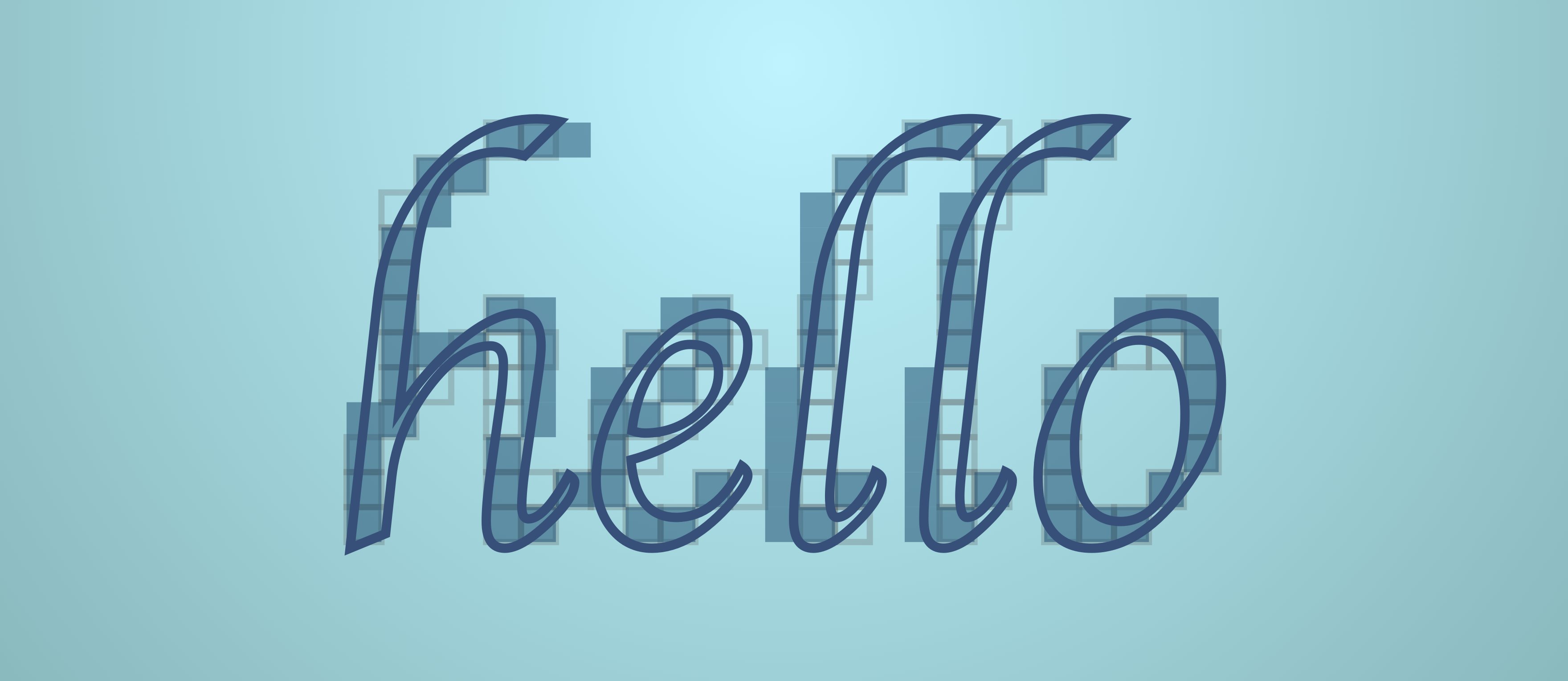
The TrueType hinting interpreter is a small piece of infrastructure with an unusually large philosophical burden. It sits beneath ordinary reading, beneath web pages, PDFs, operating system text, application interfaces, and decades of typographic expectations. A user does not ask whether a glyph was shaped by C or Swift. They only notice if the text looks wrong, renders slowly, or becomes a path for exploitation. Apple’s rewrite therefore had to succeed in a quiet way: the new implementation needed to be meaningfully different inside while remaining visually indistinguishable outside.
That is the central tension of the project. A memory-safe rewrite is easy to endorse in principle, especially after years of industry evidence that unsafe memory handling remains a major source of security flaws. But rewriting mature C code is not simply a matter of translating syntax. The interpreter had to preserve pixel-identical behavior, maintain binary compatibility, operate inside an existing Objective-C and C-family environment, and sustain the performance profile of code whose original design was shaped by hardware constraints from another era.
Key arguments
TrueType hinting is old infrastructure that still matters
TrueType was developed at Apple in the late 1980s and shipped with System 7 in 1991. Its purpose was to give font designers fine-grained control over how vector outlines became pixels, especially on low-resolution displays where outlines alone could produce blurry or misshapen text. Although high-density screens have reduced the visible need for hinting in many contexts, TrueType has not disappeared. Fonts remain embedded in PDFs, served through web pages, bundled with operating systems, and exchanged through documents created across many years and toolchains.
That history matters because TrueType hinting is not passive metadata. Fonts can contain programs, and the hinting engine executes those programs through a bytecode interpreter. In other words, a font file can drive control flow inside a renderer. When those fonts come from documents, web pages, or other external sources, the interpreter becomes part of the platform’s untrusted input boundary.
This is why the rewrite belongs in the security conversation rather than only the Swift conversation. Font parsers and rendering engines have long been attractive targets because they process complex binary formats, often in privileged or widely reachable contexts, and often with code paths exercised automatically when content is viewed. The TrueType interpreter combines input-driven execution, intricate data structures, stack operations, numeric conversions, and historical compatibility constraints. That is exactly the kind of place where memory safety has practical value.
Correctness meant exact compatibility, not approximate equivalence
Apple’s standard for correctness was unusually strict: the Swift interpreter had to match the C implementation’s observable output, down to rendered glyph bitmaps. This is a crucial point because many rewrites fail not because the new program is conceptually wrong, but because it is slightly different in ways that matter to downstream users.
Typography is especially unforgiving. Hinting can move points, align stems, alter curves, and change how the same outline lands on a pixel grid. A tiny behavioral divergence in the interpreter can become a visible change in text weight, spacing, or legibility. For a platform vendor, this is not only an aesthetic issue. Applications, documents, tests, screenshots, and user expectations may all depend on stable rendering.
Apple’s testing strategy reflects that burden. The team built a unit test suite that could target both the old C implementation and the new Swift implementation, reaching 99.7 percent code coverage. Then it used fuzzing to reduce a corpus of 10 million PDFs to 4,200 documents without losing code coverage. Those documents contained 25,572 embedded fonts and 27 million glyphs, each rendered under four transformations, with the resulting bitmaps compared against the reference interpreter.
That detail is one of the most important parts of the story. Memory safety did not replace testing. Swift did not remove the need to prove behavioral fidelity. The language changed the kinds of failures the team had to worry about, but the compatibility problem still required a large empirical argument, built from unit tests, fuzzed real-world inputs, and bitmap-level comparison.
Performance came from respecting Swift’s model, not pretending it was C
A common mistake in language migrations is to treat the target language as a safer spelling of the source language. Apple’s post suggests the opposite lesson. The Swift implementation became fast by using Swift’s own ownership, borrowing, value, and projection mechanisms carefully, while still respecting the memory layout and performance needs of the existing C boundary.
The most interesting performance work falls into four categories.
First, the team reduced runtime overhead from automatic reference counting and exclusivity checks. Swift’s safety model has costs when reference types and aliasing are used casually, especially in an interpreter where state is touched constantly. Apple’s answer was to use noncopyable value types, marked with ~Copyable, throughout the hot architecture, reserving reference types for higher-level boundaries. This matters because it shows how Swift’s memory-safety story is not only garbage collection versus manual memory management. Swift gives systems programmers a way to express ownership and borrowing so the compiler can enforce constraints while the optimizer removes overhead.
Second, Apple avoided expensive data reshaping at the C and Swift boundary. The original C representation stored glyph point data in a cache-friendly structure with arrays for coordinates and flags. A naive Swift interface could have copied that data into a more idiomatic collection of point values, then copied it back after execution. That first approach was simple and safe, but the copies accounted for about 20 percent of the interpreter’s runtime.
The final design used projection types that exposed safe Swift access to the underlying C structure. This is a subtle but powerful pattern. The code can present a more readable Swift interface while preserving the underlying memory organization that made the C code efficient. Unsafe operations still exist, but they are concentrated at the interop boundary and documented with safety invariants. That is a more disciplined form of unsafe code, not an absence of unsafe code.
Third, Apple reduced short-lived allocations. In interpreter code, small allocations can become death by repetition. Operations such as map, filter, and returning newly allocated arrays are pleasant to write, but if they occur in hot paths they can dominate runtime. Apple describes replacing an allocation-heavy stack pop operation with a continuation-passing interface that lends a span of stack elements to the caller before removing them. Swift’s compile-time exclusivity checks then prevent the stack from being modified inside the operation.
That example is philosophically interesting because it turns an API shape into a safety property. Rather than asking every caller to behave carefully, the interface makes the efficient and safe behavior the natural behavior. The caller can inspect the borrowed elements. It cannot accidentally retain or mutate the stack in a conflicting way. Performance emerges from better structure, not from sprinkling low-level tricks across the code.
Fourth, the team managed dynamic dispatch by avoiding unnecessary generic abstraction and helping the optimizer see enough to specialize hot paths. Swift’s protocols and generics are expressive, but in tight loops the cost of unspecialized generics or protocol witness table calls can matter. Apple’s answer was not to abandon abstraction, but to constrain it where the interpreter did not need extra generality and to encourage inlining where visibility was required.
This is where the phrase “zero-cost abstractions” has substance rather than marketing weight. Fixed-point numeric types could hide awkward rounding and shifting rules. Stack element types could encode supported conversions. Projection types could make C-shaped data easier to use from Swift. When optimized, these abstractions added readability without measurable runtime cost in the hot paths Apple cared about.
The result reframes Swift as a systems language in practice
Apple’s conclusion is direct: the Swift interpreter is memory-safe except for a small set of verified unsafe statements at the language boundary, it has received no reported bugs since being enabled, and it is faster than the C interpreter it replaced. The reported average performance improvement is 13 percent across the tested workloads.
That does not mean Swift automatically beats C. The article is careful, and the engineering record supports a more precise reading. Swift can match or exceed C in a systems component when the code is written with Swift’s ownership model, optimizer, data layout constraints, and interop boundaries in mind. The result depends on tests, profiling, and disciplined API design. The language opens possibilities, but it does not remove the need for systems engineering.
Apple also says it has published the interpreter source code as production reference code, linked from the Swift.org announcement. That matters because examples of real memory-safe migrations are more valuable than abstract claims. Developers evaluating similar work can study how Swift code uses noncopyable types, Span, projection wrappers, safety comments, and module-private architecture to replace C while preserving low-level control.
Useful background resources include the main Swift project site, the Swift documentation, the Swift GitHub organization, and WebKit’s Safer C++ and Swift guidance, which reflects the broader Apple ecosystem’s effort to narrow unsafe code into auditable boundaries.
Implications
The first implication is that memory safety is becoming a migration strategy for existing systems, not only a property of new programs. For years, advocates of safer languages have faced the same objection: the vulnerable code is already written, already integrated, already performance-tuned, and already surrounded by compatibility obligations. Apple’s TrueType project addresses that objection directly. It shows a path for replacing a dangerous component without demanding that the whole platform be rewritten at once.
The pattern is incremental but serious. Identify an attack-facing subsystem. Define correctness in terms of the old implementation’s behavior. Build cross-implementation tests. Use fuzzing and real-world corpora to protect compatibility. Keep unsafe code at the boundary. Use the target language’s ownership and type system to make internal invariants explicit. Profile only after correctness is established. Optimize according to measured hot paths rather than suspicion.
The second implication is that old formats will remain with us, and safety work must respect that reality. TrueType is not a fashionable new system. It is infrastructure inherited from earlier computing constraints, later expanded into the web and document ecosystems. Removing support for hinted fonts would be simpler in theory, but platforms cannot casually discard old content. The work, then, is not to pretend history can be erased. The work is to build safer machinery underneath it.
The third implication is that readability and performance can reinforce each other when types carry meaning. In C, performance often depends on conventions that exist outside the compiler’s full understanding: which pointer is valid, which buffer has which length, which stack slice may be used after mutation, which numeric conversion is allowed. Swift can move some of those conventions into types and function signatures. The result is not merely prettier code. It is code whose allowed states are narrower.
That narrowing has practical value for human teams. Refactoring becomes less frightening when internal boundaries are well defined. Performance tuning becomes more systematic when unsafe behavior is not spread throughout the implementation. Code review becomes sharper when every unsafe expression must explain its invariants. The compiler becomes a participant in maintaining architectural intent.
The fourth implication is that AI-assisted migration may become more credible when paired with strong tests and strong types. Apple briefly mentions that after completing this migration, the team distilled lessons into instructions for LLM coding assistants and used them in other C and C++ to Swift efforts. The cautious interpretation is the right one: LLMs are useful for mechanical transformation and repeated code reshaping when there is a test harness capable of detecting behavioral drift. They are not a substitute for the compatibility definition, the fuzz corpus, the profiling loop, or the safety review. In this model, AI helps accelerate the boring and repetitive parts, while tests and type systems constrain the damage that a plausible but wrong transformation might cause.
Counter-perspectives
There are limits to the lesson. Apple has unusually deep control over its platform, toolchains, internal test infrastructure, performance measurement, and Swift expertise. Many organizations considering a similar migration will not have a 10 million document corpus, deep compiler knowledge, or direct ownership of the surrounding rendering stack. The method is portable, but the resources behind it may not be.
There is also a risk that readers interpret the 13 percent speedup too broadly. This result belongs to a specific interpreter, workload, implementation strategy, and toolchain. It does not prove that rewriting C in Swift will usually make software faster. It proves something narrower and more useful: when a C component carries security risk, a carefully engineered Swift replacement can preserve compatibility and still satisfy demanding performance constraints.
Another counterpoint is that memory safety at the language level does not eliminate all vulnerability classes. Font interpretation can still contain logic bugs, denial-of-service risks, algorithmic complexity traps, malformed input edge cases, and specification ambiguities. Apple’s testing strategy acknowledges this. The rewrite removes or reduces entire categories of memory corruption risk, but it does not make the interpreter magically correct. Correctness remains an empirical and architectural achievement.
Finally, Swift’s interop story still requires unsafe code when touching C-shaped memory. Apple’s design does not avoid that fact. Instead, it makes a claim about containment: unsafe expressions can be few, explicit, reviewed, and surrounded by safe projection types. For teams trained to think of safety as all or nothing, this is an important adjustment. In real systems, progress often looks like shrinking the dangerous surface until it is small enough to reason about.
Conclusion
Apple’s TrueType hinting rewrite is compelling because it treats memory safety as part of the craft of maintaining civilization-scale software. The web, PDFs, operating systems, and applications all carry old formats forward. Some of those formats include interpreters, binary encodings, and assumptions made for machines that no longer exist. The security problem is not merely that the old code was written in C. The problem is that the old code still sits in the path of new inputs.
By moving the TrueType hinting interpreter to Swift, Apple changed the material from which that path is built. The visible contract stayed the same: glyphs render as before. The internal contract changed: ownership is stricter, unsafe access is localized, abstractions encode more meaning, and tests defend compatibility at scale. That is the kind of progress mature platforms can actually use. It does not ask users to notice. It asks the foundations to become less fragile while the text on the screen remains exactly where it was.
Comments
Please log in or register to join the discussion