A modern systems language becomes most revealing when it is asked to speak to old hardware with no operating system, strict memory rules, and nowhere to hide abstraction costs.
Thesis
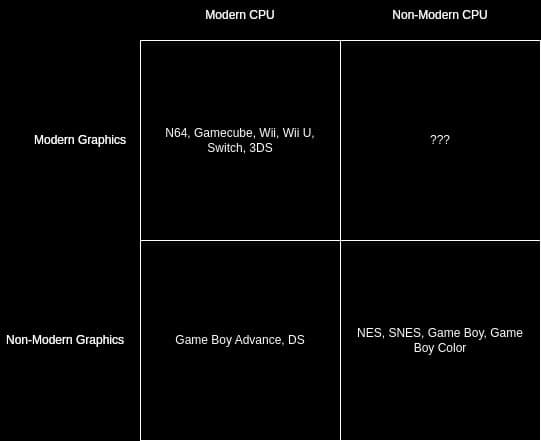
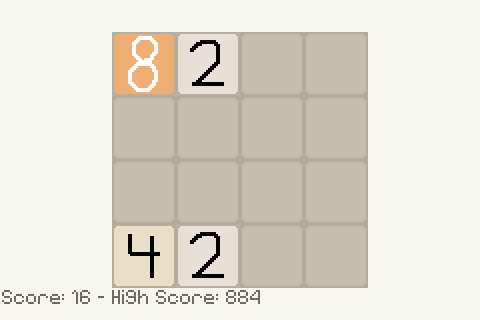
Jonot's post, "Why I Wrote a Game Boy Advance Game in Zig", is not simply a hobbyist report about building 2048 for an old Nintendo handheld. Its deeper argument is that programming languages are best understood at the boundary where abstractions meet physical constraints. The Game Boy Advance is a revealing machine for that test because it combines a 32-bit ARM CPU with a tile-based graphics model, memory-mapped registers, unusual video RAM rules, and a development culture historically shaped by C, C++, assembly, and specialized toolchains.
The post's central claim is that Zig works unusually well for this kind of embedded game development, not because it is fashionable or broadly superior in every context, but because several of its design choices line up with the real texture of programming bare hardware. Cross-compilation, explicit builds, packed structs, integer types with arbitrary bit widths, compile-time execution, and allocator-aware standard library design all become practical answers to concrete problems that appear on the GBA.
Key arguments
The first argument is about toolchains, which may sound mundane until one remembers that build friction is often the first tax imposed on low-level experimentation. Traditional retro-console development commonly depends on packages such as devkitPro, which bundles GCC-based compilers, libraries, and console-specific tooling. That ecosystem has earned its place, but it also asks the developer to accept another package manager, another set of version assumptions, and another layer of environmental state.
Zig changes the emotional shape of that work because cross-compilation is not treated as an exotic side quest. The language and its toolchain were designed around the idea that a target can be specified directly, and the build can become a program rather than a pile of shell glue. In Jonot's case, the build process needs to compile an ELF file, use a linker script to place data correctly, extract the ROM payload with objcopy, and then patch the GBA header with a tool such as gbafix. Since Zig ships related tooling and exposes the build as code through build.zig, those steps can live in one coherent build graph rather than being scattered across ad hoc scripts.
That matters because embedded projects are rarely just source files plus a compiler. A game needs sprites, palettes, tile maps, generated binary data, and sometimes compression. Jonot uses code generation to convert PNG images into data the GBA understands, and the Zig build system can compile that generator, run it, and feed its output into the ROM build. The build is no longer a ritual performed around the program. It becomes part of the program's structure.
The second and strongest argument concerns packed memory layouts. The GBA does not offer a high-level graphics API. To configure backgrounds, sprites, display modes, blending, input, and other hardware behavior, the program writes directly into memory-mapped registers. These registers are usually small, often 16 bits, and composed of fields that may occupy only one, two, or several bits. In C, this tends to become a world of masks and shifts, where setting a feature means writing something like *REG_BG0CNT |= BG_MOSAIC and trusting that every constant, bit position, and combination remains legible over time.
Zig's packed structs address this problem with unusual elegance. Because Zig supports integer widths such as u2, u5, or u7, a hardware register can be represented as a structure whose fields match the actual hardware documentation. A background control register can have a bg_priority: u2, a character_base: u2, and a mosaic: bool, packed into the same 16-bit shape the GBA expects. The resulting code, REG_BG0CNT.mosaic = true, reads less like bit arithmetic and more like direct conversation with the machine.
This is the philosophical hinge of the article. Good abstraction here does not hide the hardware. It gives the hardware a more precise vocabulary. Zig is not pretending the GBA is a modern platform with an operating system, virtual memory, drivers, and protective APIs. Instead, it lets the programmer describe the raw register layout in the type system, which preserves low-level control while reducing the cognitive noise around it.
The third argument is about compile-time execution, usually called comptime in Zig. Jonot wanted to compress sprite data so the ROM would be smaller, but compressing at runtime would defeat the purpose because the compressed result needs to exist inside the ROM before the game starts. In many environments, the answer would be a separate generator program or build script. Zig offers another route: write ordinary Zig code for run-length encoding, execute it at compile time, and store the result as a global constant.
This is a subtle but important design point. Compile-time computation becomes powerful when it allows the programmer to move work earlier without splitting the project into separate languages or tools. The same language can express runtime logic, build logic, and asset transformation logic. For a small embedded game, this reduces the number of conceptual systems the programmer must keep in mind.
The fourth argument is that Zig's standard library is designed around explicit control rather than hidden policy. In many embedded contexts, developers avoid large parts of a standard library because allocation, formatting, floating-point support, or platform assumptions may drag in code they cannot afford. Zig's allocator-passing style gives the programmer more agency. If dynamic memory is needed, the caller chooses an allocator, such as an arena, a fixed buffer, or a general-purpose allocator. If allocation is not needed, the code can avoid it.
Jonot's score display uses print with a custom io.Writer, which is a small example with larger implications. The standard library can be used selectively, and unused machinery does not necessarily appear in the final binary. On a machine with tight memory constraints, that distinction matters. A language for small systems must not merely provide features. It must also make absence cheap.
Implications
The broader implication is that modern language design can be valuable for old hardware precisely because old hardware refuses to forgive vague abstractions. A contemporary desktop or server environment can absorb a surprising amount of waste. The GBA cannot. If a compiler chooses byte-sized memory copies into video RAM where only wider accesses behave correctly, the result is not an academic performance issue. The graphics break.
That constraint turns the GBA into a philosophical instrument. It reveals which abstractions are honest and which ones are theatrical. Packed structs are honest because they map closely to hardware registers. Compile-time compression is honest because it removes runtime work and ROM waste. The build system is honest because it acknowledges that producing a ROM is a multi-stage transformation. Allocator-aware library design is honest because memory policy remains visible.
For Zig itself, projects like this are evidence that the language's most interesting audience may not be limited to people replacing C in conventional systems code. Zig also speaks to developers who want a single language for the awkward middle region between hardware and software, where build systems, binary formats, generated assets, register maps, and runtime code all touch each other.
For retro and embedded developers, the post suggests that language choice is not only about maturity or popularity. C remains dominant because it is portable, well understood, and close to the hardware, but closeness alone is not enough. A language can be close to the hardware while also making the hardware's shape easier to represent correctly. Zig's arbitrary-width integers and packed structs are examples of that more expressive closeness.
There is also a lesson for tool designers. The most beloved tools in constrained programming environments are often the ones that remove incidental friction without removing responsibility. Zig does not make the GBA simple. It makes some of the accidental work around the GBA less obstructive, which leaves more attention for the real difficulty: understanding the machine.
Counter-perspectives
The post is careful not to claim that Zig is a perfect language for GBA development. Its limitations are not cosmetic. Inline assembly support allows only one output, which becomes awkward for BIOS calls that return multiple values in different registers. On a platform where calling firmware routines and managing register state are normal parts of development, this is a real constraint.
There is also the problem of ARM and Thumb mode. The GBA's CPU can execute full ARM instructions or the smaller Thumb instruction set. Thumb is usually preferred on the GBA because instruction size and memory behavior make it efficient for most code, but some routines, such as certain interrupt handlers, may need ARM mode. C and C++ compilers commonly allow per-function attributes for this. Zig, at least as described in the post, does not offer an equally convenient way to mark individual functions, which pushes the developer toward separate compilation units or other workarounds.
The strangest counterpoint is memory itself. The GBA's video memory has rules that modern programmers can easily violate without realizing it, including restrictions around 8-bit writes. A compiler optimization that replaces a carefully written copy routine with memcpy may be correct in a normal memory model and wrong for this machine's behavior. This is not exactly Zig's fault, but it exposes the hard edge of using a general-purpose optimizing compiler against hardware with non-general memory semantics.
That tension is the most interesting unresolved idea in the article. If a language can model packed registers so precisely, perhaps future systems languages should also be able to model memory regions with access constraints: this address range must be written in 16-bit units, that one has volatile semantics, another one cannot tolerate ordinary byte copies. Current languages have partial answers through volatile pointers, address spaces, compiler attributes, and platform-specific intrinsics, but the GBA example shows how much remains informal, documented outside the type system, and rediscovered through painful bugs.
The final judgment, then, is not that Zig magically modernizes the Game Boy Advance. It is that Zig makes the developer's relationship with the machine more explicit in several crucial places. The language shines when it lets old constraints become types, build steps, compile-time values, and visible allocation choices. Its rough edges appear where the hardware's strangeness still exceeds what the language can describe. That makes Jonot's project more than a retro programming anecdote. It is a case study in what systems languages are for: giving programmers sharper instruments for thinking at the exact point where code becomes electricity.
Comments
Please log in or register to join the discussion