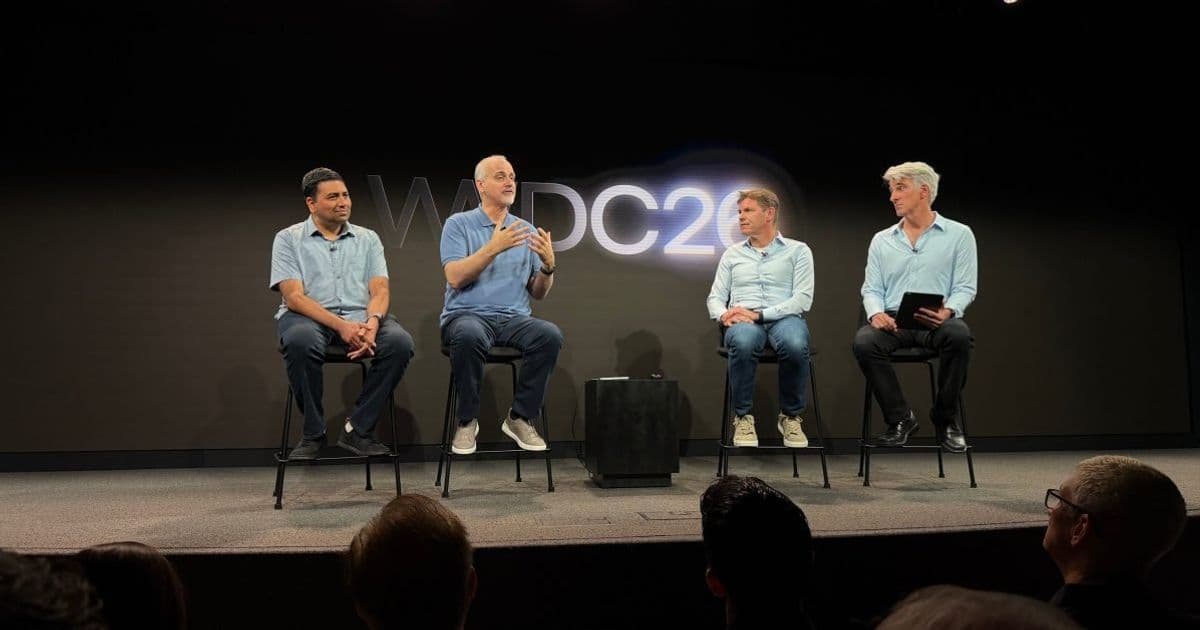
At a post-WWDC tech talk, Craig Federighi spent an unusual amount of energy explaining what Apple does *not* take from Google. The careful framing reveals how Apple is trying to sell a partnership it spent years insisting it would never need.
There is a particular tone companies adopt when they are doing something they once swore they would never do. Apple reached it last week, when Craig Federighi stood in front of a room of reporters and explained, at length, all the ways in which Apple's new Siri is not powered by Google, immediately before confirming that it is, in fact, powered by Google.
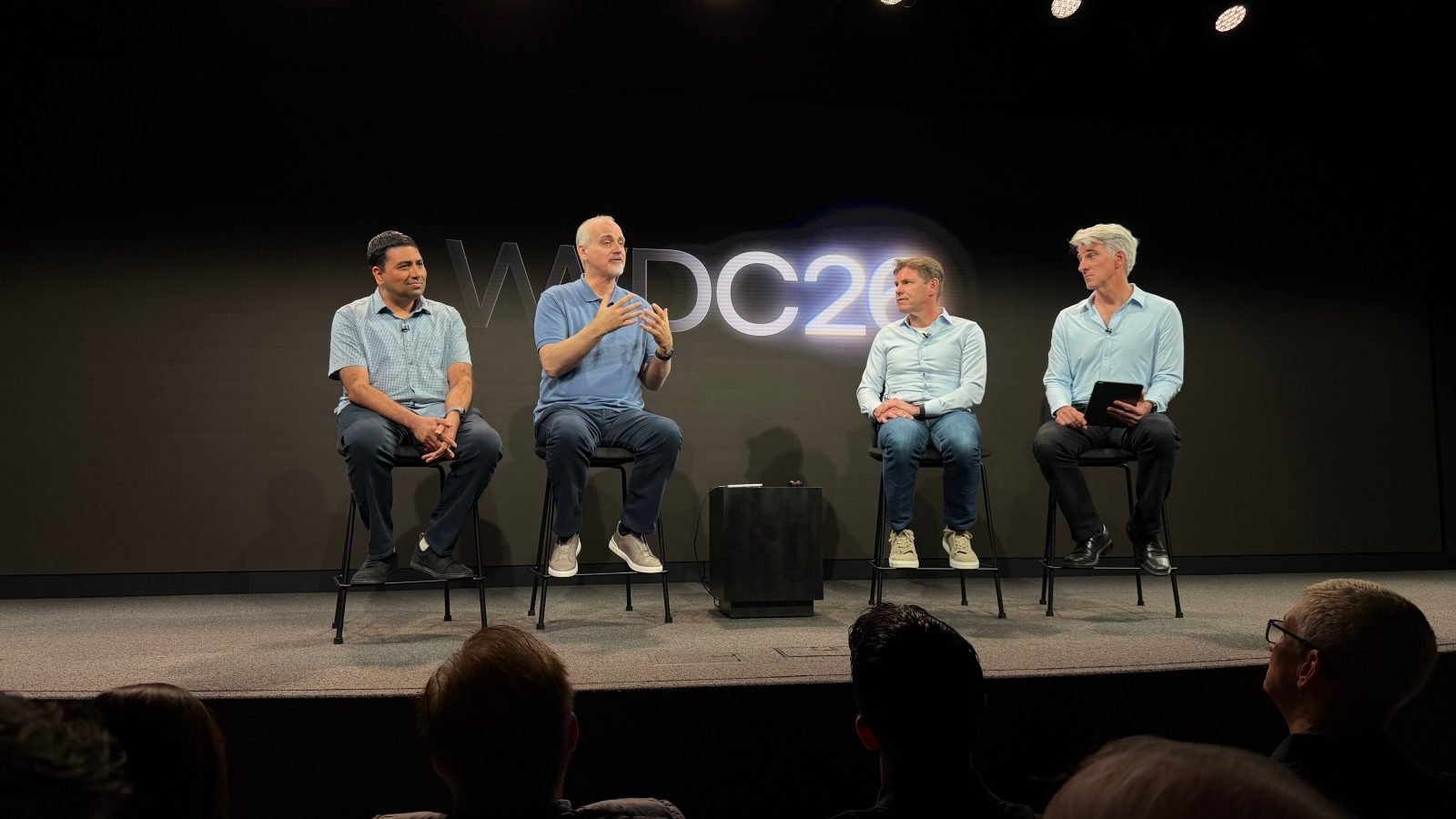
"The amount of the Google Assistant we use is none," Federighi said during the post-keynote tech talk. Then he pivoted to describing the third generation of Apple Foundation Models, which Amar Subramanya, Apple's VP of AI, later described as "refined using outputs from Gemini frontier models" and, for the most demanding model, running on "NVIDIA GPUs in Google's cloud." The denial and the admission arrived within minutes of each other, and that gap is the most interesting thing about the whole presentation.
What Apple actually confirmed
Strip away the framing and the technical disclosure is genuinely substantial. Apple laid out a model family it calls AFM, spanning device to cloud. On the phone, there is AFM Core, a dense on-device model, and AFM Core Advanced, which Subramanya described as using a sparse architecture and being natively multimodal. The advanced on-device model is what enables the expressive voices and other features Apple demoed for iOS 27 without a network round trip.
In the cloud, served out of Private Cloud Compute, there is AFM Cloud, a latency-optimized workhorse, and AFM Cloud Image for generation and editing. Then there is AFM Cloud Pro, the heavyweight reserved for agentic tool use and complex reasoning, which Subramanya said reaches "quality similar to Gemini frontier models." To run it, Apple extended Private Cloud Compute onto Nvidia GPUs inside Google's data centers, a notable concession for a company that has built its brand on controlling its own silicon end to end.
The distinction Apple wants you to hold onto is this: it licensed and distilled Google's model capability, but not Google's product. No Gemini app, no Google client code, no Google Search as the knowledge base, no Google Assistant infrastructure for serving requests to users. World knowledge is grounded through what Apple calls its own World Knowledge Service. The collaboration shows up in training, distillation, and raw compute, not in the runtime experience a user touches.
Why the careful language matters
For anyone who followed the March report from Bloomberg that Apple was paying Google roughly a billion dollars a year for a custom Gemini model, the partnership itself is no surprise. What is new is watching Apple build the rhetorical architecture to make it palatable to a base that has spent a decade being told on-device and privacy-first were non-negotiable values rather than marketing positions.
The top comment on 9to5Mac's coverage, from a reader who liked the explanation, captures the intended reaction: "does a nice job of fleshing out how exactly Apple is going about protecting user privacy when using Google models and servers." That is the trade Apple is offering. Yes, Google's intelligence is in the stack. No, Google never sees your data, because the inference runs inside Apple's verifiable Private Cloud Compute enclaves, even when those enclaves are physically sitting on Google-hosted Nvidia hardware.
It is a real engineering claim, and third-party researchers can in principle continuously verify the Private Cloud Compute attestations. If it holds up, it is a meaningful answer to the obvious objection.
The counter-arguments worth taking seriously
The skeptical reading is harder to dismiss. For years Apple positioned its reluctance to ship a large language model as evidence of discipline, not delay. The implicit message was that competitors shipping chatbots were being reckless with user data and Apple would do it properly or not at all. The 2024 version of Apple Intelligence, which underdelivered badly enough that Apple pulled advertising and reshuffled the Siri leadership, suggested the company simply could not build a frontier model on its own timeline.
So the question that the careful denials are designed to avoid is whether "none of Google's Assistant" is a privacy guarantee or a face-saving boundary. Apple is licensing the one component it could not build, the frontier-grade reasoning model, and then drawing the line precisely around everything it could build itself. That is a defensible product decision. It is a less defensible version of the independence narrative Apple sold for the better part of a decade.
There is also a strategic dependency worth naming. Apple now relies on Google for model quality at the same time that the two companies' search arrangement is under antitrust pressure in the United States. Building your flagship AI on a partner whose other deal with you may be unwound by a court is a real exposure, even if the inference is sandboxed. And distilling from Gemini frontier outputs means Apple's ceiling is, for now, defined by Google's roadmap rather than its own research.
The pattern underneath
Apple is not alone here, which is the part the consensus coverage tends to miss. Samsung leans on Google for Galaxy AI. Amazon rebuilt Alexa on a mix of its own and partner models. The independent voice assistant, fully owned and operated by the device maker, is quietly becoming a thing that nobody actually ships. The economics of training frontier models have concentrated capability in a handful of labs, and everyone else is licensing, distilling, or renting.
What makes Apple's version distinctive is the insistence on a privacy boundary as the product. The bet is that users will accept borrowed intelligence as long as the data custody story is airtight and verifiable. Federighi's lengthy preamble about what Apple does not use was not a tangent. It was the actual pitch. Whether that boundary survives contact with shipping software, and with the researchers Apple has invited to inspect it, is the thing to watch when iOS 27 reaches devices later this year.
Comments
Please log in or register to join the discussion