
Japan's NTT is assembling a $500 million fund to push its IOWN optical networking technology into AI data centers, recruiting investors from Taiwan to Silicon Valley. The target is a fast-growing slice of infrastructure where Nvidia is also expanding, and where demand for lasers and fiber is already outpacing supply.
NTT, Japan's largest telecommunications operator, is putting $500 million behind a wager that the next bottleneck in artificial intelligence infrastructure will not be chips, but the optical plumbing that connects them. The company unveiled its IOWN AI Fund on June 10, with senior executive vice president Tadao Yanase positioning the vehicle as a way to scale optical networking technology for the data centers now being built to train and run large AI models.
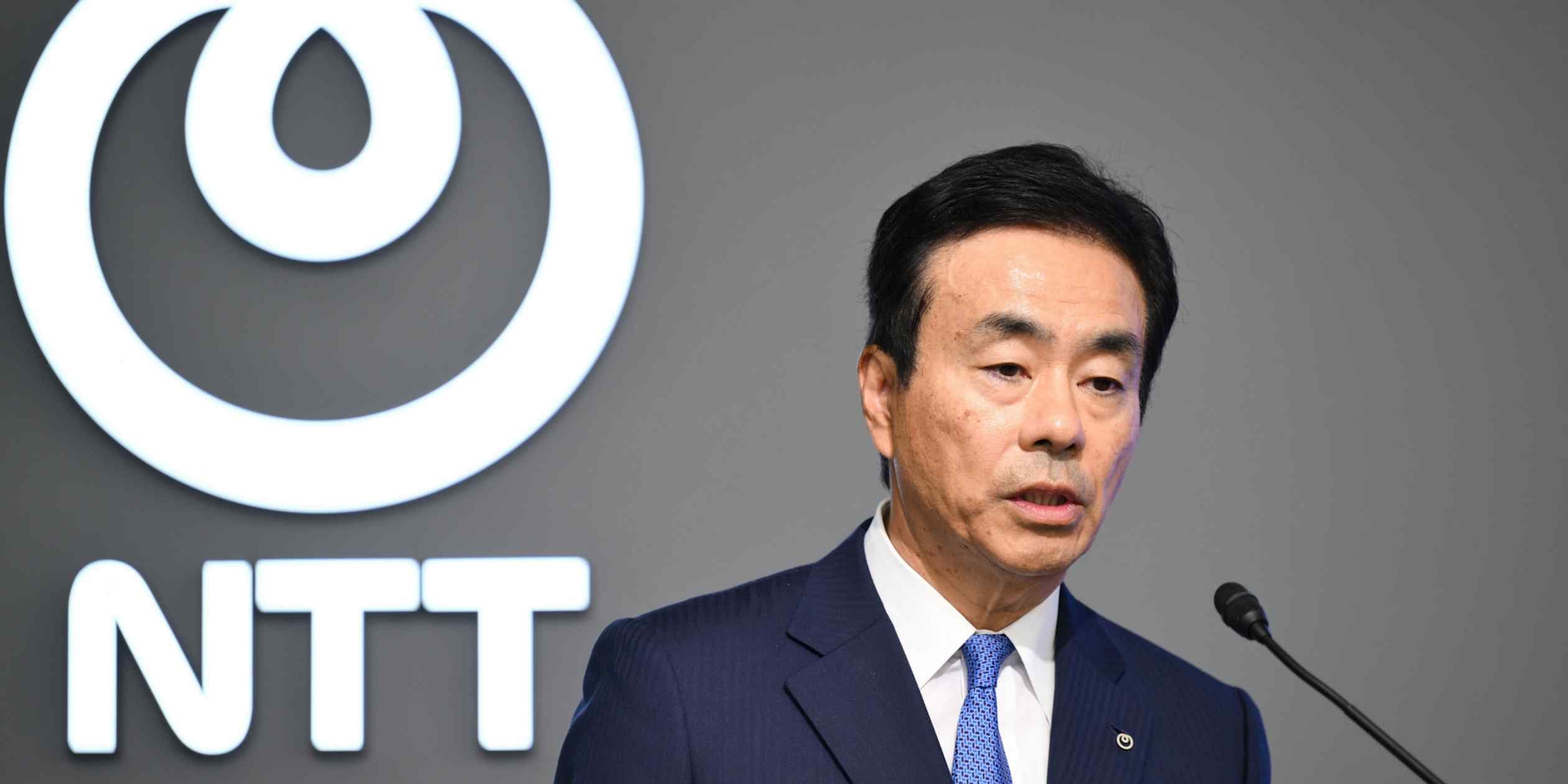
The fund's structure says as much about NTT's ambitions as its size. Rather than going it alone, NTT is recruiting investment partners across the supply chain geography that matters for optical components, drawing capital from the United States, South Korea, Taiwan, and Silicon Valley. That spread is deliberate. The companies that make the lasers, transceivers, and fiber that move data inside and between data centers are concentrated in exactly those regions, and an investment fund gives NTT both financial exposure and a seat at the table as the technology develops.
Why optical, and why now
The economics of AI training have shifted the constraint. A modern AI cluster is not one giant computer but tens of thousands of GPUs that must exchange enormous volumes of data with one another at extremely low latency. As clusters grow, the electrical interconnects traditionally used to wire servers together start to hit physical limits on bandwidth, distance, and power draw. Copper runs out of room. Optical links, which carry data as light over fiber, can move more data over longer distances while consuming less power per bit.
That is the gap NTT is aiming at with IOWN, short for the Innovative Optical and Wireless Network, an initiative the company has promoted for several years as a successor architecture to today's networks. The pitch is to push optical technology deeper into the system, eventually toward the point where light moves data not just between data centers and across long-haul networks but down to the level of connections between and inside servers. If that vision holds, the addressable market expands from carrier backbones to the interior of every AI data center being built.
The supply picture explains the urgency. AI buildout has already strained the supply of lasers, fiber, and other optical components, with demand running ahead of what existing manufacturers can deliver. Foxconn has moved to start shipping next-generation optical technology for AI data centers, and the broader contest over optical capacity is reshaping everything from component manufacturing to subsea cable planning, where Japan is seeking a larger role as AI rewires global data flows.
Setting itself against Nvidia
Framing the fund as a move to "chase Nvidia" is a notable choice. Nvidia dominates AI compute through its GPUs, but it has been expanding aggressively into networking, both through its acquisition of Mellanox years ago and through more recent work on optical interconnects and co-packaged optics designed to link its chips at scale. Networking is no longer a side business for Nvidia; it is part of how the company sells complete data center systems rather than loose silicon.
NTT is not going to out-spend Nvidia. A $500 million fund is meaningful for seeding companies and securing partnerships, but it is a fraction of the capital expenditure flowing through the AI infrastructure market. What NTT brings instead is a long institutional history in optical research and a national-scale telecom business that gives it both a testbed and a customer. The strategy reads less like a head-on challenge and more like an attempt to establish IOWN as a credible alternative standard before the architecture of AI data centers fully hardens around one vendor's approach.
The strategic backdrop
The timing also intersects with NTT's own business pressures. The company recently pushed back its profit target by three years, citing struggles at its mobile unit Docomo. Against that backdrop, optical networking for AI is one of the clearer growth stories NTT can tell investors, a market expanding quickly enough that even a modest early position could matter. Japan more broadly has been trying to convert its strengths in photonics and materials into a larger role in AI infrastructure, including new satellite communication efforts that use light and a renewed push in subsea cables.
For the wider industry, the fund is another signal that the AI buildout is spreading its value beyond the GPU. As model sizes and cluster counts climb, the parts of the stack that were once treated as commodity plumbing, the fiber and the transceivers and the switches, are becoming strategic. Whoever supplies them at scale, and sets the standards for how they connect, stands to capture a durable piece of AI economics. NTT's $500 million is a bid to be in that group rather than buying the technology from someone else later.
Whether IOWN becomes a genuine standard or remains a Japanese research program with limited reach will depend on adoption outside NTT's own network. The investor lineup across Taiwan, South Korea, and Silicon Valley suggests NTT understands that the technology only wins if it travels. The fund is the mechanism for making that travel happen.
Comments
Please log in or register to join the discussion