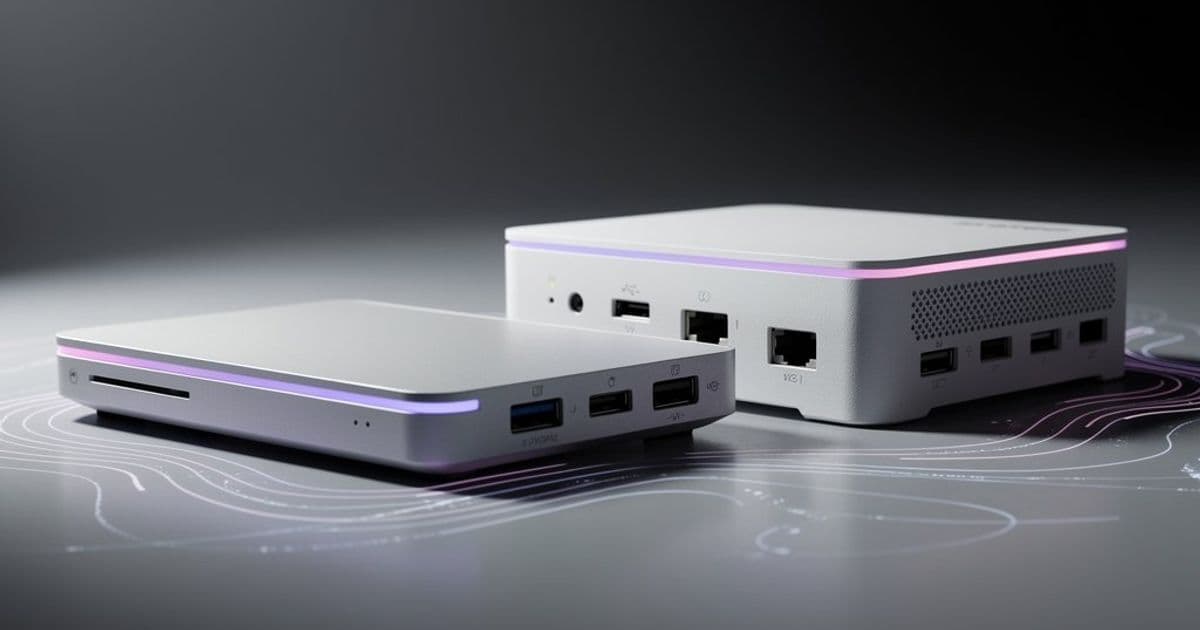
ASRock introduces compact NUC Ultra 300 BOX systems featuring Intel's upcoming Panther Lake processors with up to 16 cores and significant AI capabilities in both standard-height and ultra-slim designs.
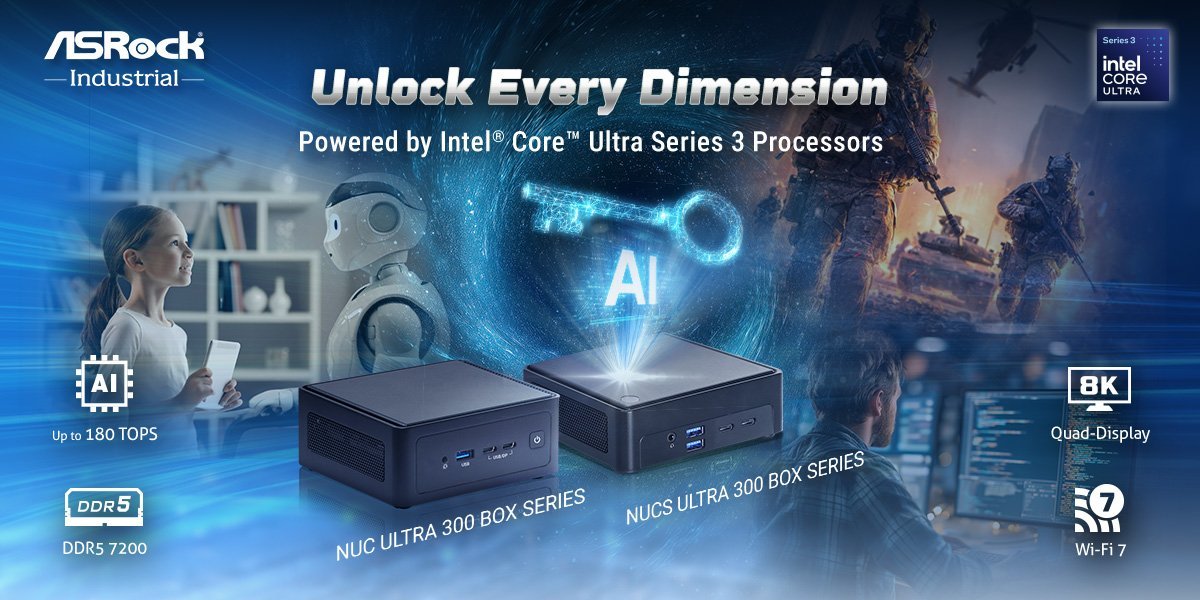
ASRock has expanded its mini PC portfolio with the new NUC Ultra 300 series, featuring Intel's upcoming Panther Lake processors. These compact systems arrive in two distinct form factors: the standard-height NUC Ultra 300 BOX (118x110x49mm) and the ultra-slim NUCS Ultra 300 BOX measuring just 38mm tall. Both configurations leverage Intel's next-generation architecture promising substantial performance gains, particularly in AI workloads.
Processor Capabilities and Memory Configurations
The Panther Lake processors powering these systems represent Intel's architectural evolution beyond Meteor Lake. While ASRock hasn't finalized specific SKUs, the company confirms configurations scaling up to 16-core models with integrated graphics options ranging from 4-core to 12-core variants. The standout feature is the NPU-enhanced AI performance, delivering up to 180 TOPS (Tera Operations Per Second) for on-device AI inferencing. This positions these mini PCs for emerging applications like real-time video analytics, generative AI tools, and intelligent edge computing scenarios.
Memory support reveals an interesting trade-off: configurations with 12-core graphics utilize soldered LPDDR5x memory capped at 96GB capacity, while models with 4-core graphics feature dual SODIMM slots supporting up to 128GB of DDR5-7200 memory. This design choice reflects Intel's bifurcated approach to balancing graphics performance against memory expandability in compact systems.
Storage and Connectivity Architecture
Both form factors share a robust storage subsystem featuring dual M.2 slots:
- Primary slot: PCIe 5.0 x4 interface (up to 128 Gbps)
- Secondary slot: PCIe 4.0 x4 interface (up to 64 Gbps) This configuration supports next-gen NVMe SSDs while maintaining backward compatibility, allowing users to balance performance and cost across storage tiers.
The connectivity suite includes WiFi 7 (802.11be) with 320MHz channel support for multi-gigabit wireless speeds and Bluetooth 5.4. Display capabilities extend to driving up to four simultaneous 8K outputs, enabled through combinations of DisplayPort, HDMI, and USB-C Alt Mode connections.
Form Factor Differentiation
Beyond height differences, the two models feature distinct port arrangements:
NUC Ultra 300 BOX (Standard Height):
- 1 × Thunderbolt 4 (USB-C)
- 4 × USB 3.2 Gen 2 (10Gbps)
- 2 × 2.5GbE Ethernet
- Enhanced cooling capacity for sustained performance
NUCS Ultra 300 BOX (Ultra-Slim):
- 5 × USB 3.2 Gen 2 (10Gbps)
- 1 × 2.5GbE Ethernet
- Space-optimized thermal solution
The Thunderbolt 4 port exclusive to the taller model provides additional flexibility for docking stations, external GPUs, and high-speed peripherals. Both models include standard audio jacks and rely on USB-C for display output where applicable.
Deployment Considerations
The NUC Ultra 300 series targets multiple deployment scenarios:
- Edge computing nodes: Local AI processing for retail analytics and industrial IoT
- Digital signage controllers: Driving multiple high-resolution displays
- Compact workstations: Software development and content creation
- Home theater PCs: 8K media playback in living room setups
ASRock's implementation maintains the company's focus on business-oriented features including vPro management capabilities (on select SKUs), TPM 2.0 security, and wall-mount/VESA compatibility. The thermal design remains unconfirmed but will likely employ hybrid cooling solutions combining heat pipes and blower fans to manage Panther Lake's thermal profile within compact enclosures.
Pricing and availability timelines will be announced closer to Intel's formal Panther Lake launch, expected later this year. These systems represent continued innovation in the mini PC segment where performance-per-liter and energy efficiency increasingly compete with traditional desktop form factors.
For technical specifications as they become available, refer to ASRock's NUC product page.
Comments
Please log in or register to join the discussion