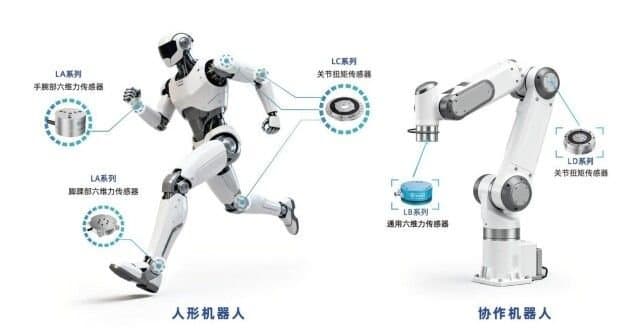
Beijing‑based Blue Dot Touch closed a C++ round led by SAIC Motor’s financial arm and Shangqi Capital, raising hundreds of millions of RMB. The money will fund new six‑axis force sensor designs, smart‑factory upgrades, and expansion into overseas markets. The deal highlights growing automotive interest in precision robotics components and China’s push for a domestic supply chain.
Blue Dot Touch Secures Hundred‑Million RMB Funding, Plans Global Rollout of Six‑Axis Force Sensors
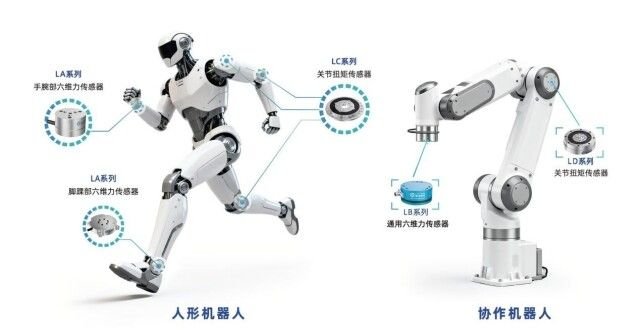
Blue Dot Touch, a Beijing startup that builds six‑axis force sensors for collaborative robots, announced the close of a C++ financing round. The round, valued in the hundreds of millions of RMB, was led by SAIC Motor’s SAIC Jinkong and Shangqi Capital. Other participants include Zhongxin Juyuan, Zhengda Robot, Houwei Capital, and Sequoia Capital China.
What the announcement claims
- The company raised enough capital to fund a new product line, upgrade its manufacturing facilities with smart‑factory equipment, and open sales offices in Europe and North America.
- Investors view the six‑axis sensor as a strategic component for collaborative robots used in automotive assembly, medical surgery, and precision manufacturing.
- The round follows a C+ round a month earlier, marking three billion‑RMB‑scale financings for the firm within six months.
What is actually new?
Sensor technology
Blue Dot Touch’s sensors measure forces along three translational axes (X, Y, Z) and three rotational axes (roll, pitch, yaw). The company’s latest SKU, the BDT‑6A‑200, claims a resolution of 0.02 N and a bandwidth of 2 kHz, comparable to the FT‑300 from ATI Industrial Automation (now part of Amphenol). The datasheet (see the official product page) shows a compact PCB‑mount form factor that can be integrated directly into robot end‑effectors.
Manufacturing upgrades
The funding will be allocated to a smart‑manufacturing line that uses vision‑guided pick‑and‑place robots and in‑process calibration rigs. Blue Dot Touch plans to embed edge AI modules (based on NVIDIA Jetson Nano) to perform real‑time drift compensation during sensor assembly. This approach mirrors the production automation seen at Keyence and Sick for their own sensor lines.
Global expansion
The company intends to establish a European sales hub in Stuttgart and a North American office in Detroit. Both locations are traditional automotive engineering centers, suggesting a focus on supplying OEMs that are integrating collaborative robots into EV battery‑pack assembly lines. The expansion plan also includes certification under ISO 13485 for medical device applications, a prerequisite for entering the surgical‑robot market.
Limitations and open questions
- Performance vs. price – While the BDT‑6A‑200 matches the specs of imported units, its bill of materials still relies on high‑precision strain‑gauge foils sourced from Japan and the United States. Any disruption in those supply chains could affect cost competitiveness.
- Manufacturing yield – The smart‑factory upgrades are still in a pilot phase. Historical data from similar sensor makers show yield improvements of 10‑15 % after the first year of AI‑assisted calibration, but the actual impact for Blue Dot Touch remains unverified.
- Regulatory hurdles – Gaining ISO 13485 certification can take 12‑18 months. Until that is achieved, the company’s ability to sell into the surgical‑robot market will be limited.
- Market saturation – The global six‑axis force sensor market is estimated at $150 M in 2025, growing at roughly 8 % CAGR. Several established players (e.g., ATI/Amphenol, Sick, Kistler) already occupy the high‑end segment. Blue Dot Touch will need to secure volume contracts quickly to achieve economies of scale.
Why this matters
The financing underscores two broader trends:
- Automotive OEMs are hedging against supply‑chain risk by investing directly in component suppliers that support their robotics initiatives. SAIC Motor’s involvement signals a strategic intent to internalize sensor sourcing for its EV factories.
- China’s industrial policy continues to favor domestic alternatives for precision components. By backing a company that can produce six‑axis sensors at scale, the policy aims to reduce reliance on imported parts that have historically dominated the market.
For practitioners, the key takeaway is that sensor vendors are now expected to provide not just hardware specs but also integrated manufacturing intelligence and global support infrastructure. Blue Dot Touch’s next milestones—demonstrating production yield, securing ISO 13485, and landing the first overseas OEM contract—will determine whether the funding translates into a sustainable market position.
Sources: Company press release (May 2026), product datasheet, industry reports from IDC and Gartner on robotics sensor market growth.
Comments
Please log in or register to join the discussion