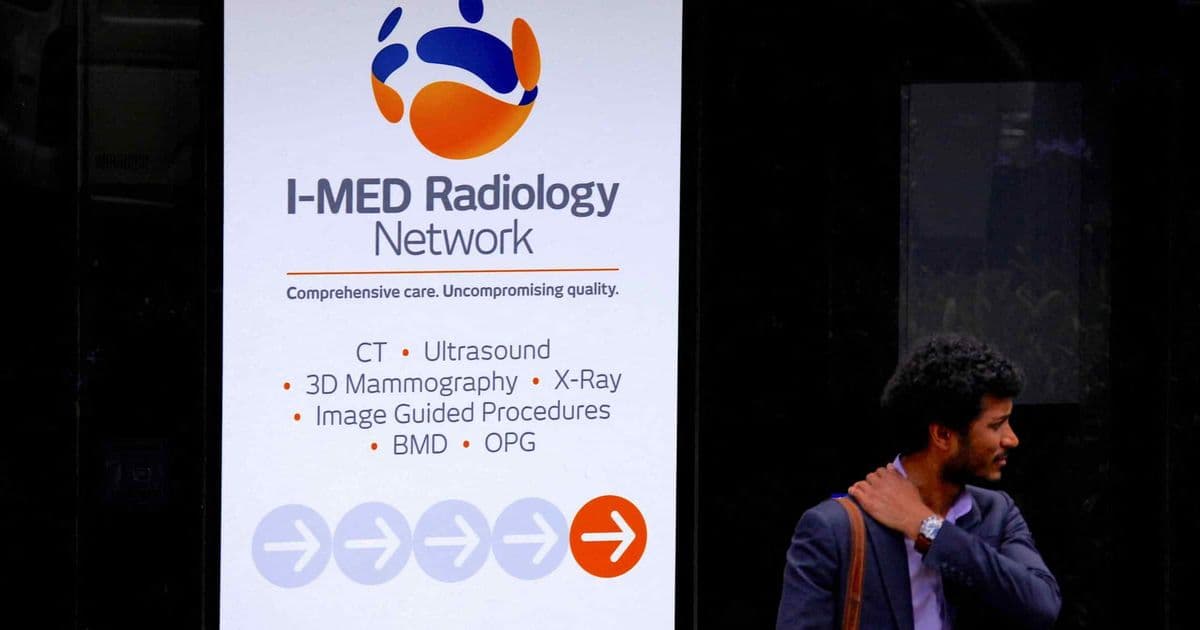
London‑listed conglomerate Jardine Matheson Holdings agreed to buy Australian radiology network I‑MED for an enterprise value of $2.4 bn, marking its first full‑scale entry into health‑care. The deal, financed partly by cash and partly by a new senior loan, gives Jardines a platform in a high‑margin, rapidly digitising sector and diversifies revenue away from its traditional trading and property assets.
Business news
London‑listed, Asia‑focused conglomerate Jardine Matheson Holdings announced on 25 May 2026 that it will acquire 100 % of I‑MED Radiology Network, Australia’s leading provider of diagnostic imaging services, for an enterprise value of US$2.4 bn. The transaction, structured as a cash‑plus‑debt purchase, will be funded by Jardines’ existing cash reserves and a senior loan facility arranged with a consortium of Australian banks. I‑MED, which operates more than 150 imaging centres across Australia and New Zealand, is being sold by private‑equity owner Permira.
Market context
The Australian health‑care services market is valued at roughly AU$45 bn and is projected to grow at a 4.2 % CAGR through 2030, driven by an ageing population and increasing demand for outpatient diagnostics. Radiology, in particular, benefits from two secular trends:
- Digital transformation – Cloud‑based picture‑archiving and communication systems (PACS) and AI‑assisted image analysis are reducing turnaround times and enabling higher throughput.
- Shift to outpatient care – Hospitals are outsourcing routine imaging to specialist networks, creating a fragmented but consolidatable market.
Industry analysts estimate that the top five radiology chains control less than 30 % of the Australian market, leaving ample room for consolidation. I‑MED’s 2025 revenue of AU$1.1 bn and EBITDA margin of 18 % make it an attractive platform for a conglomerate seeking stable cash flow and exposure to health‑tech.
Jardine Matheson, historically anchored in trading, logistics, and property, has been reshaping its portfolio under new CEO James Paterson, appointed in 2024. The group’s recent moves include a $1.1 bn stake in a Chinese biotech fund and the divestiture of non‑core retail assets. The I‑MED acquisition is the first full‑scale health‑care purchase since the 2022 sale of its Singapore‑based hospital chain.
What it means
Diversification of earnings
Jardines’ 2025 consolidated revenue of US$12.3 bn was still heavily weighted toward Asia‑Pacific trading (≈ 55 %). Adding I‑MED’s predictable, fee‑based income should reduce earnings volatility, especially amid trade‑related headwinds in its core commodities businesses. Assuming I‑MED’s 2025 EBITDA of AU$200 m (≈ US$130 m) is maintained, the acquisition would contribute roughly 5 % to Jardines’ total EBITDA, improving the group’s leverage ratio from 3.2x to 2.8x after the deal closes.
Platform for further health‑tech roll‑up
I‑MED’s existing relationships with major Australian insurers and its in‑house AI analytics team give Jardines a foothold to pursue bolt‑on acquisitions of smaller imaging providers, tele‑radiology firms, or AI start‑ups focused on image interpretation. A modest 10 % market‑share gain in the next three years could lift I‑MED’s revenue to AU$1.5 bn, delivering incremental EBITDA of US$200 m.
Exposure to AI‑driven diagnostics
The deal aligns with Jardines’ broader strategy to capture value from data‑intensive services. I‑MED’s partnership with firms such as Aidoc and DeepMind Health for automated lesion detection positions the network to monetize AI‑enabled read‑rates, potentially reducing radiologist labor costs by 15‑20 % and improving reimbursement rates for high‑complexity studies.
Risks and integration challenges
- Regulatory scrutiny – The Australian Competition and Consumer Commission (ACCC) will review the transaction for potential concentration concerns in major metropolitan markets.
- Cultural integration – Jardines’ Asian‑centric management style must adapt to Australia’s highly regulated health‑care environment and a workforce accustomed to decentralized decision‑making.
- Currency exposure – With revenues now split between USD‑denominated trading operations and AUD‑based health services, Jardines will need to hedge currency risk more actively.
Strategic outlook
If Jardines can successfully integrate I‑MED and execute a disciplined roll‑up strategy, the acquisition could become a cornerstone of a new, high‑margin health‑care division that offsets slower growth in its traditional sectors. The move also signals to investors that the conglomerate is willing to deploy capital in data‑rich, technology‑enabled services, a trend mirrored by peers such as CK Hutchison and Swire Pacific.
Analysts at Morgan Stanley have upgraded Jardines to a Buy rating, citing a 12 % implied IRR on the I‑MED purchase assuming a 3‑year EBITDA multiple expansion to 12x. The market will be watching the post‑closing integration plan and any subsequent acquisitions in the Australian and New Zealand health‑care space.
Comments
Please log in or register to join the discussion