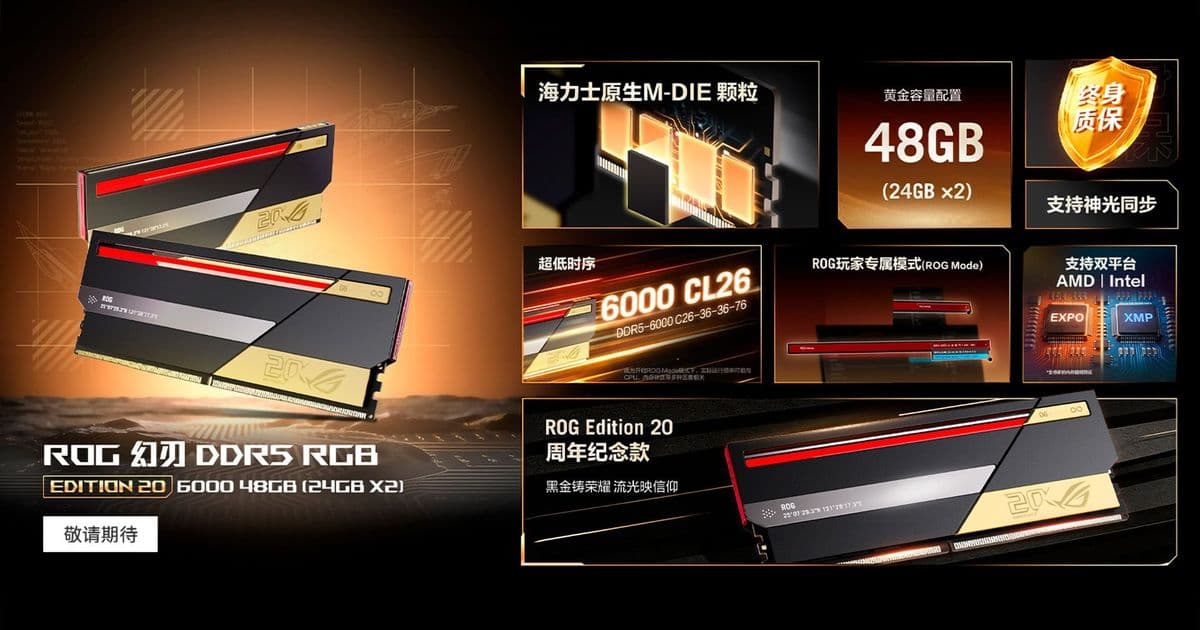
Asus launches its first ROG‑branded DDR5 memory kit—a 48 GB (2 × 24 GB) 6000 MT/s module priced at $880—just as global DRAM supplies tighten. The kit’s high‑end specs, partnership with SK hynix M‑die, and a proprietary “ROG Mode” overclock to DDR5‑8000 aim to extend the ROG ecosystem, but the price places it above many flagship GPUs and rivals, highlighting how scarcity is inflating premium‑segment memory.
Asus expands the ROG portfolio with a 48 GB DDR5 kit priced at $880, a move that underscores the severity of the current DRAM shortage.
Announcement
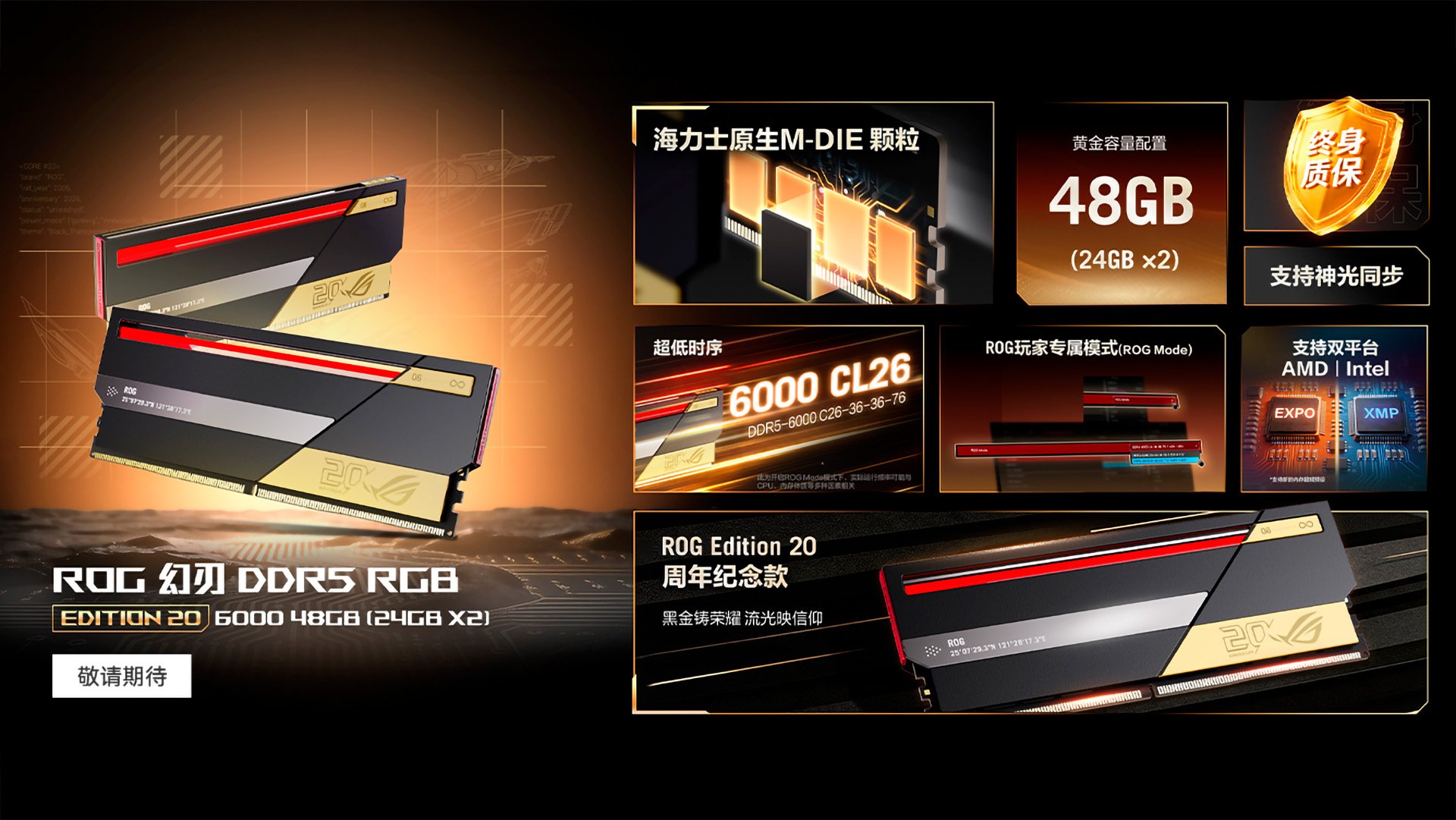
At the ROG Day 2026 event, Asus unveiled the ROG 幻刃 (Phantom Blade) 48 GB DDR5‑6000 kit. Retailing at $880, the kit costs more than a GeForce RTX 5070 Ti (starting at $829) and roughly 10 % above the closest competitor, G.Skill’s Trident Z5 Neo RGB 48 GB DDR5‑6000 ($800). The launch arrives during what industry analysts label the largest memory shortage in history, with DRAM fab capacity constrained by a combination of pandemic‑era demand spikes, supply‑chain bottlenecks, and a recent wave of capacity cuts at major fabs.
Technical specifications
| Spec | Detail |
|---|---|
| Capacity | 48 GB (2 × 24 GB) |
| Speed (default) | DDR5‑6000 MT/s |
| Timings (default) | CL26‑36‑36‑76 |
| Voltage (default) | 1.45 V |
| XMP / EXPO | Supports both Intel XMP 3.0 and AMD EXPO profiles |
| ROG‑only profile | “ROG Mode” – DDR5‑8000, CL36‑48‑48‑110 at 1.40 V |
| ICs | SK hynix M‑die (high‑performance, low‑latency) |
| Warranty | Limited lifetime warranty |
| Price | $880 (USD) |
The kit’s default 6000 MT/s speed with CL26 latency puts it on par with the top‑tier DDR5 offerings released earlier in 2024. The standout feature is the ROG‑only BIOS profile that pushes the modules to 8000 MT/s while tightening timings to 36‑48‑48‑110. This overclock is achievable because the modules use SK hynix’s M‑die chips, which have shown superior headroom in recent overclocking tests. The 1.40 V DRAM voltage required for the 8000 MT/s mode is modest compared to many enthusiast kits that exceed 1.5 V at similar frequencies.
How “ROG Mode” works
When a user installs the kit on a compatible ROG motherboard, the BIOS presents a one‑click option labeled ROG Mode. Selecting it automatically applies the 8000 MT/s profile, adjusts the memory controller settings, and raises the DRAM voltage to the preset 1.40 V. The process does not require manual timing tweaks, making extreme overclocking accessible to users who lack deep BIOS experience. This approach mirrors the “Turbo” profiles seen in some high‑end graphics cards, but it is rarer in the memory market.
Market implications
Pricing pressure in a tight supply chain
The $880 price tag translates to $18.33 per GB, a figure that would have been considered premium even before the shortage. For comparison, a 32 GB DDR5‑5600 kit from a mainstream brand typically sells for $250–$300, or about $8–$9 per GB. The premium is driven by three factors:
- Scarcity of high‑speed DRAM – SK hynix’s M‑die is allocated primarily to OEMs and high‑margin partners; Asus’s limited‑run purchase pushes the cost up.
- Brand positioning – Asus is extending the ROG ecosystem, and the “Asus Tax” on ROG‑branded components is a known pricing strategy.
- Limited production run – The kit is marketed as a 20th‑anniversary limited edition, meaning the supply will be deliberately constrained, further inflating resale values.
Competitive response
Gigabyte’s AORUS line already offers DDR5‑6000 kits at $650–$700 for similar capacities, while Corsair’s Dominator Platinum RGB 48 GB DDR5‑5600 sits near $720. Asus’s price therefore places the Phantom Blade at the top of the premium segment, forcing competitors either to introduce higher‑speed kits (e.g., DDR5‑7200) or to bundle additional services such as extended warranties or exclusive software.
Impact on system builders
For boutique PC builders targeting the high‑end gaming market, the kit’s price means that memory can now account for more than 20 % of a $4,000 build. Builders will need to balance the allure of the 8000 MT/s overclock against the cost, especially when comparable performance can be achieved with a lower‑priced 6000 MT/s kit and a modest manual timing tweak.
Supply‑chain outlook
The ongoing DRAM shortage stems from a confluence of factors:
- Fab capacity constraints – TSMC and Samsung have announced modest capacity expansions for 2027, but 2026 production remains flat.
- Geopolitical tensions – Export controls on advanced lithography equipment limit new fab construction in key regions.
- Demand surge – AI training workloads and data‑center expansion have driven DRAM demand beyond consumer PC growth.
Analysts predict that average DDR5 pricing will stay elevated through Q4 2026. Asus’s decision to launch a high‑price, limited‑edition kit is a calculated bet that the ROG brand’s loyal base will absorb the premium while the broader market continues to grapple with supply constraints.
Conclusion
Asus’s entry into the DDR5 market with a 48 GB, DDR5‑6000 (up to DDR5‑8000) ROG Phantom Blade kit illustrates how premium branding and strategic partnerships can carve a niche even when the overall market is strained. The $880 price point, while steep, reflects both the scarcity of high‑speed DRAM and the willingness of enthusiasts to pay for exclusive overclocking features and brand cachet. For the industry, the launch signals that memory manufacturers and OEMs will continue to leverage limited‑edition, high‑margin products to offset the broader supply‑chain challenges that are expected to linger for the next 12–18 months.
For further details on SK hynix’s M‑die specifications, see the official SK hynix datasheet.
Comments
Please log in or register to join the discussion