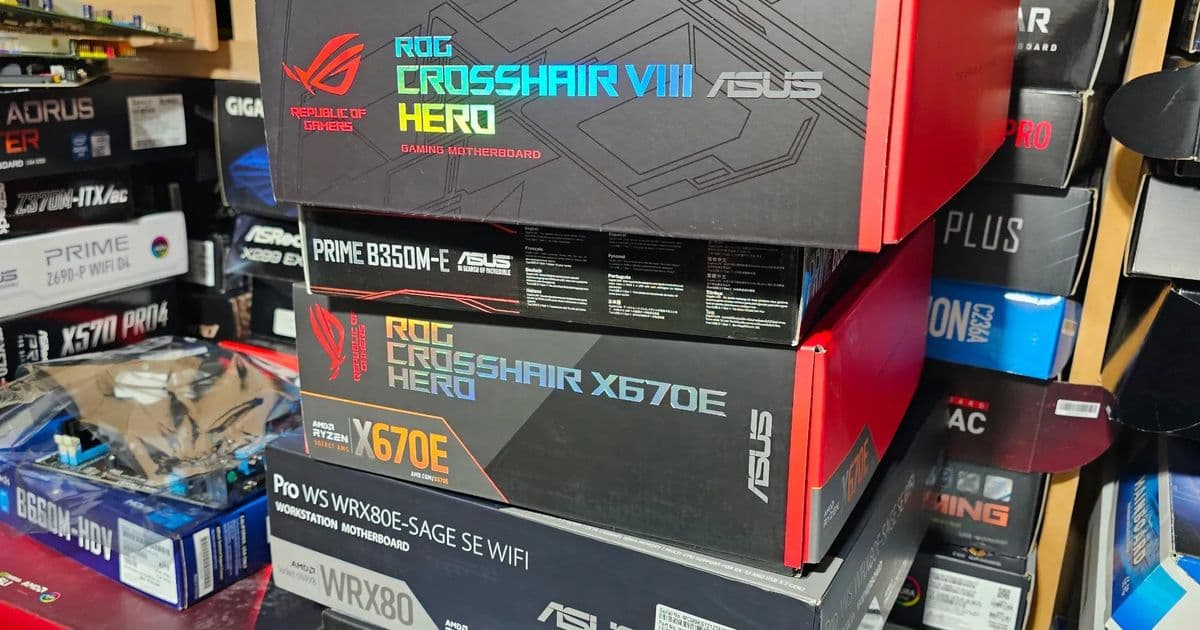
Linux 7.1 will bring expanded sensor monitoring support for ASUS desktop motherboards, including ROG STRIX Z790-H GAMING WIFI and ROG CROSSHAIR X670E EXTREME models, as the open-source community continues improving ASUS-EC-Sensors driver compatibility.
The Linux hardware monitoring ecosystem continues to expand with significant additions for ASUS desktop motherboards in the upcoming Linux 7.1 kernel. The open-source community has been steadily improving support for ASUS hardware, and recent developments in the hardware monitoring subsystem's "hwmon-next" Git branch demonstrate this ongoing commitment to broader hardware compatibility.
Expanding ASUS Motherboard Support
The latest batch of contributions to the hwmon-next branch includes comprehensive sensor monitoring support for several popular ASUS motherboard models. These additions represent a collaborative effort between hardware enthusiasts and kernel developers to ensure Linux users can fully leverage their system's monitoring capabilities.
Intel Platform Support
The ROG STRIX Z790-H GAMING WIFI motherboard has received initial sensor monitoring support, focusing on critical thermal and power delivery components. The implementation currently includes:
- VRM (Voltage Regulator Module) temperature sensors
- T_Sensor thermal monitoring
- Basic power delivery monitoring
This motherboard, based on Intel's Z790 chipset, represents one of the newer additions to the supported hardware list, providing users with detailed insights into their system's thermal performance and power delivery efficiency.
AMD Platform Support
On the AMD side, the ROG STRIX X470-F GAMING motherboard has gained comprehensive sensor support, including:
- Multiple temperature sensors throughout the system
- CPU current monitoring
- CPU voltage monitoring
Additionally, the newer ROG CROSSHAIR X670E EXTREME has received extensive sensor support through the ASUS-EC-Sensors driver. This high-end motherboard now supports monitoring for:
- CPU temperatures
- VRM thermal sensors
- T_Sensor readings
- Water cooling system integration
The CROSSHAIR X670E EXTREME support is particularly noteworthy as it demonstrates the driver's capability to handle complex monitoring scenarios, including advanced cooling solutions that are increasingly popular among enthusiast users.
Broader Hardware Monitoring Ecosystem
Beyond the ASUS-specific additions, the hwmon-next branch has also received support for the GPD Win 5 handheld device. This addition is particularly interesting as it brings hardware monitoring capabilities to the AMD Ryzen AI Max "Strix Halo" platform, showcasing the growing diversity of devices benefiting from improved Linux hardware support.
Technical Implementation
The improvements leverage the ASUS-EC-Sensors driver, which has become a crucial component in the Linux hardware monitoring ecosystem. This driver interfaces with ASUS's embedded controller to provide access to various system sensors, enabling detailed monitoring of temperatures, voltages, currents, and fan speeds.
The ongoing development in hwmon-next indicates that these features are being actively refined and tested before inclusion in the mainline Linux 7.1 kernel, scheduled to enter its merge window in April 2026.
Community-Driven Development
These additions highlight the strength of the open-source community in supporting hardware that manufacturers may not prioritize for Linux compatibility. The continued expansion of ASUS motherboard support demonstrates how community-driven development can fill gaps in hardware monitoring capabilities, providing Linux users with the same level of system insight available on other operating systems.
As Linux 7.1 development progresses, users can expect even more hardware monitoring improvements, with the hwmon-next branch serving as a testing ground for new sensor support implementations before they reach the mainline kernel.
Comments
Please log in or register to join the discussion