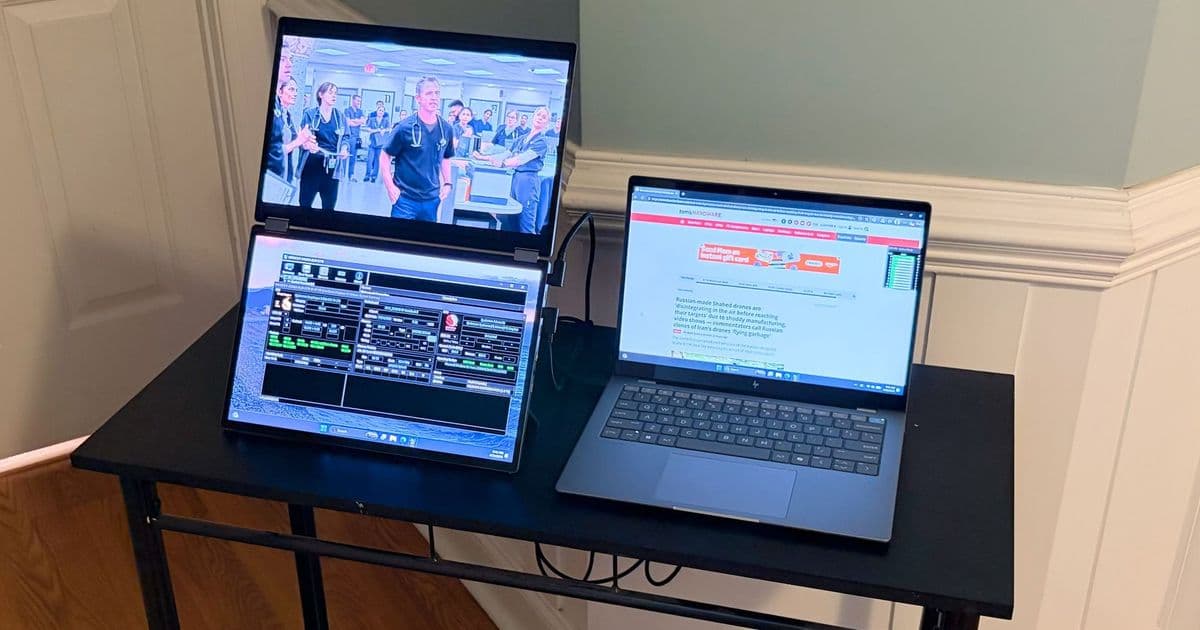
The Asus ZenScreen Duo OLED (MQ149CD) packs two 14‑inch 1200p OLED panels into a book‑style chassis, offering 1 000 000:1 contrast, 145 % DCI‑P3 coverage and flexible portrait/landscape modes. Build quality is solid, but the $500‑plus price and lack of speakers keep it out of reach for many mobile professionals.
Announcement
Asus has launched the ZenScreen Duo OLED (MQ149CD), a portable monitor that stacks two 14‑inch 1920 × 1200 OLED panels in a book‑like form factor. Priced at roughly $500 USD (MSRP $600), the unit targets creators and power users who need extra screen real‑estate while on the move.
Technical specifications
| Feature | Specification |
|---|---|
| Panel type | OLED, glossy coating |
| Screen size (per panel) | 14 in, 16:10 aspect |
| Resolution | 1920 × 1200 @ 60 Hz |
| Refresh rate | 60 Hz |
| Response time | 1 ms (GtG) |
| Brightness | 400 nits (SDR), 500 nits (HDR) |
| Contrast | 1 000 000:1 |
| Color gamut | 145.9 % DCI‑P3 (bottom), 131.2 % DCI‑P3 (top) |
| Ports | 2 × USB‑C (DP Alt Mode), 1 × USB‑C Power, 1 × Mini‑HDMI |
| Dimensions (closed) | 12.56 × 8.35 × 0.59 in |
| Weight | 2.36 lb |
| Additional features | Kensington lock, 2.5 in tripod socket, carry case |
Design and ergonomics
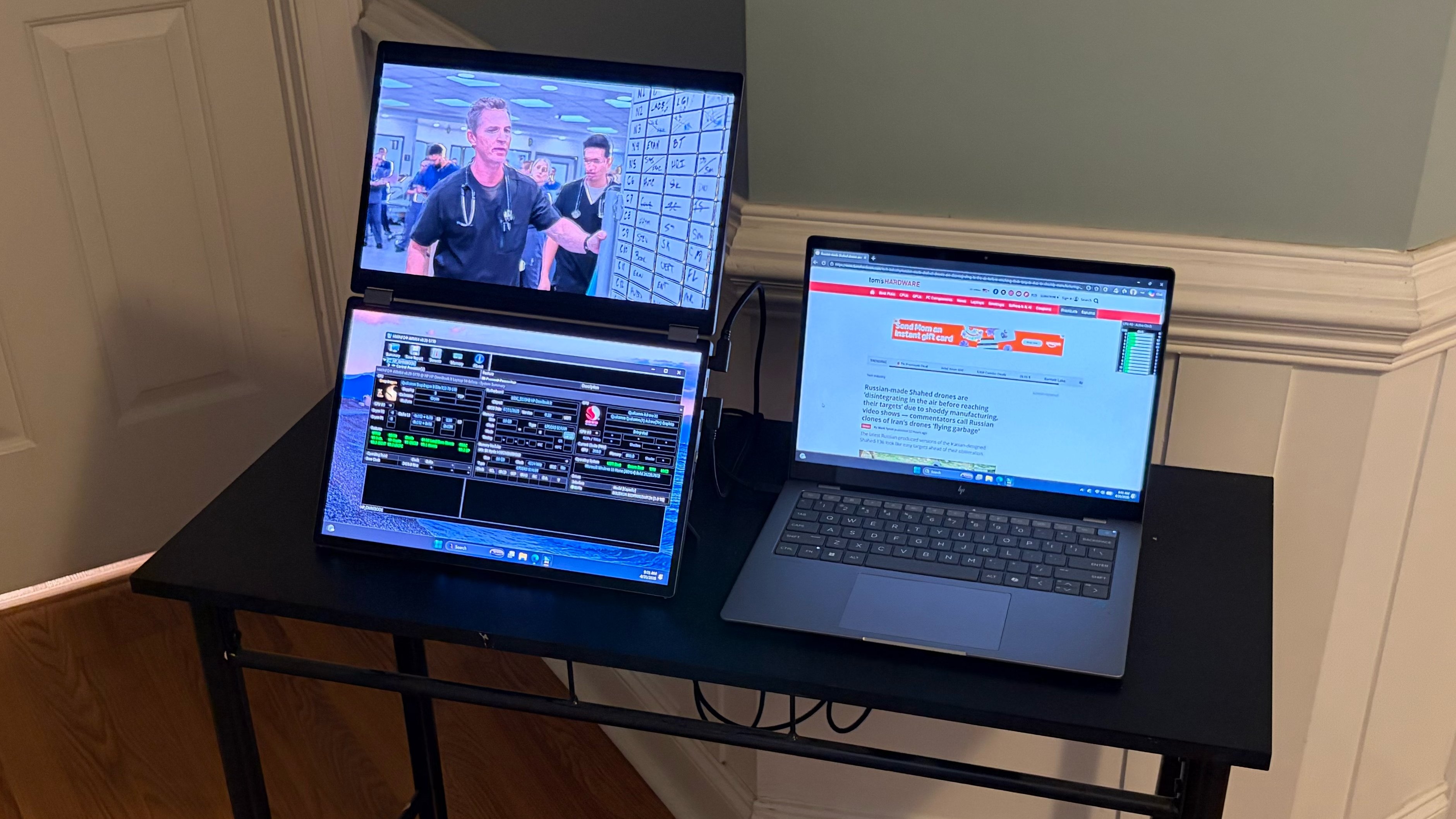
The Duo OLED uses two 360° hinges that let you configure the screens either stacked (landscape) or side‑by‑side (portrait). When folded, the chassis occupies the same footprint as a single 14‑inch monitor, but its thickness doubles to about 0.6 in. An aluminum kickstand under the lower panel provides a stable base for the stacked layout, while rubber feet on the bezel edges improve grip in portrait mode.
Connectivity and control
All ports line up on the right‑hand edge when the unit is in landscape orientation. The two USB‑C ports support DisplayPort Alt Mode, allowing a single cable to deliver video, data and power (the included USB‑C brick handles charging). A dedicated power‑only USB‑C port simplifies power management when the monitor is used as a hub. The OSD is accessed via two buttons and a jog wheel; a quick‑press brings up a mini‑OSD for brightness and mode switching, while a double‑press reveals full settings, including picture modes, color calibration and language options. The Asus Display Widget Center software adds auto‑rotation and hot‑key support.
Display performance
Both panels deliver true OLED characteristics: deep blacks, near‑infinite contrast and vivid colors. In our lab tests:
- DCI‑P3 coverage measured 145.9 % on the bottom panel and 131.2 % on the top panel.
- sRGB coverage reached 206 % (bottom) and 213.5 % (top).
- Peak brightness was 350.6 nits (bottom) and 329.8 nits (top) in SDR mode, slightly under Asus’s 400‑nit claim.
- HDR peak hit 503 nits (top) and 493 nits (bottom) with a 10 % window. The glossy coating makes the screens reflective in bright environments, but a slight tilt of the kickstand reduces glare enough for most office lighting.
Market implications
The ZenScreen Duo OLED sits at the high end of the portable‑monitor segment. Competing products such as the KYY Dual‑Screen 14‑inch start around $250, but they use IPS panels with lower contrast and narrower color gamuts. Asus’s OLED choice pushes performance metrics—contrast, DCI‑P3 coverage and response time—well above the typical portable monitor, positioning the Duo as a niche solution for video editors, designers and developers who need accurate color on the go.
However, the price premium is significant. At $500–$600, the Duo costs roughly twice what a single high‑quality 14‑inch portable monitor sells for, and four times a basic dual‑screen kit. For enterprises purchasing bulk units for field engineers, the cost could be justified by the productivity gains of having two independent displays in a single package, especially when the unit supports Independent Mode (two separate video sources). For individual consumers, the lack of built‑in speakers—common on lower‑priced models—doesn’t offset the expense.
Supply‑chain considerations also matter. The OLED panels are sourced from manufacturers that have faced capacity constraints since 2023, which could limit availability and keep retail prices elevated. Asus’s inclusion of a power brick and a rugged carry case adds value but also contributes to the overall weight (2.36 lb), making the Duo less attractive for ultra‑light travelers.
Outlook
If OLED costs continue to decline and panel yields improve, we may see a price correction that brings the Duo into a more competitive bracket. Until then, the ZenScreen Duo OLED remains the most visually impressive portable dual‑monitor on the market, but its premium price restricts adoption to professionals for whom color fidelity and dual‑source flexibility outweigh the budget impact.
For a deeper dive into the Asus Display Widget Center and firmware updates, see the official Asus support page.
Comments
Please log in or register to join the discussion