
Microsoft Marketplace now activates SaaS subscriptions at purchase, eliminating the manual activation step. The article compares this change with AWS and Google Cloud Marketplace offerings, examines pricing and migration implications, and outlines how the new flow reshapes customer onboarding and revenue timing.
What changed
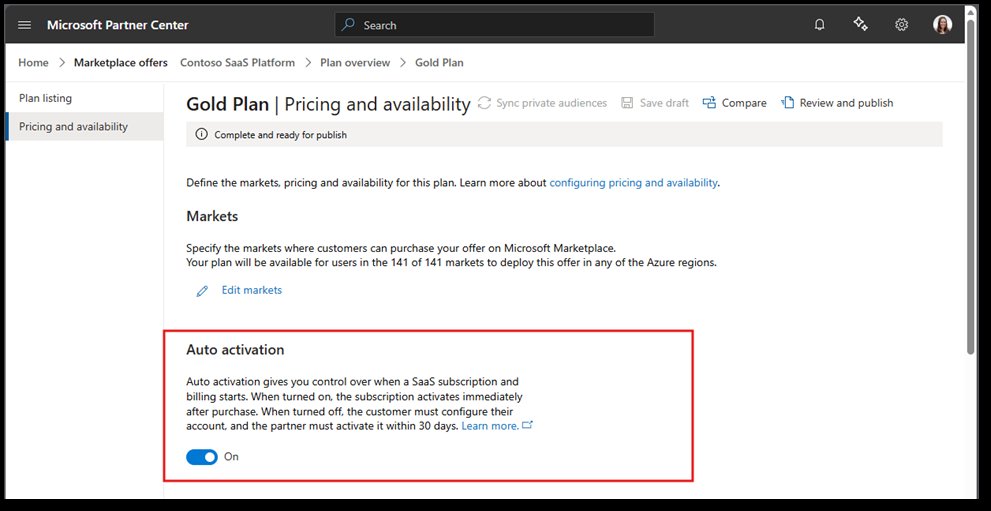
Microsoft announced that auto‑activation for SaaS products is generally available in the Microsoft Marketplace. When the feature is enabled, a subscription is billed and marked active the moment a customer completes the checkout flow. The platform sends a real‑time webhook, so partners can provision the tenant or trigger internal workflows without waiting for a manual activation request.
Key points of the rollout:
- Existing plans keep auto‑activation off by default; partners must republish to switch it on.
- New plans are created with auto‑activation on by default, but can be toggled off during publication.
- Private offers inherit the public offer’s activation setting unless a distinct plan ID is used.
- Billing starts on the purchase day, so partners must update sales collateral and customer communications.

Provider comparison
| Feature | Microsoft Marketplace | AWS Marketplace (SaaS) | Google Cloud Marketplace (SaaS) |
|---|---|---|---|
| Default activation | New plans on, existing off (opt‑in) | Manual activation required; partners must call the ActivateEntitlement API after purchase | Manual activation by default; optional auto‑provision via Cloud Billing API |
| Billing trigger | Immediate on purchase (if auto‑activation enabled) | Billing starts when partner calls ActivateEntitlement | Billing starts when partner confirms provisioning via CreateSubscription |
| Webhook support | Real‑time webhook on transaction completion | EventBridge notification for EntitlementStateChange | Pub/Sub notification on SubscriptionCreated |
| Pricing model flexibility | Supports usage‑based, tiered, and flat‑rate plans; price changes do not affect activation status of private offers | Supports usage‑based and flat‑rate; price updates require a new offer version and may reset entitlement state | Supports usage‑based, flat‑rate, and custom pricing; price changes propagate on next billing cycle |
| Migration path | Partners can republish existing offers to toggle auto‑activation; no code change required for webhook handling | Requires updating SaaS contract code to call activation API; may need to adjust CloudFormation templates | Requires changes to Cloud Billing API calls; may need to redeploy Cloud Functions handling provisioning |
Why the differences matter
- Microsoft’s default‑on stance reduces friction for partners whose SaaS is ready to be provisioned instantly, while AWS and Google keep the control in the partner’s hands, which is safer for high‑touch onboarding.
- The webhook model is identical across the three clouds, but Microsoft’s payload includes a billingStartDate field, allowing downstream systems to align licensing with usage reporting without extra lookups.
- Price‑change handling is more explicit in Microsoft’s private‑offer flow; a new plan ID isolates the activation flag, preventing accidental billing shifts.
Business impact
Faster time‑to‑value
With activation occurring at checkout, customers can start using the service within minutes. For enterprise SaaS that relies on rapid proof‑of‑concept cycles, this can shorten the sales funnel by 2‑4 weeks, directly improving win rates.
Revenue recognition shifts
Because billing starts on day 0, partners must adjust their financial reporting. Recognized revenue now appears at the moment of purchase rather than after a manual activation delay. Companies using ASC 606 should review the contract asset timing to avoid mismatches.
Operational considerations
- Provisioning pipelines: Ensure your webhook consumer is idempotent. A duplicate notification could trigger duplicate resource creation if your logic does not guard against re‑processing.
- Customer communication: Update onboarding docs and sales scripts to explain that billing begins immediately. Failure to set expectations can increase support tickets.
- Compliance: If your SaaS includes a trial period, you must implement a pre‑billing hold in your own logic, because the marketplace will not hold the charge when auto‑activation is on.
Migration strategy for existing partners
- Audit current plans – Identify which offers still rely on manual activation for validation steps (e.g., compliance checks, custom provisioning).
- Create a test plan – Duplicate a low‑risk offering, enable auto‑activation, and run a sandbox purchase. Verify webhook payloads and provisioning scripts.
- Update CI/CD – Add automated tests that simulate the webhook flow and confirm that resources are created exactly once.
- Roll out – Republish the production offer with the new activation flag. Monitor the first 48 hours via the Partner Center analytics dashboard.
- Communicate – Publish a revised FAQ on your site and send an email to existing customers outlining the new billing start date.
When to stay manual
- Solutions that require a go‑live ceremony, such as regulated financial services where a compliance officer must sign off before usage begins.
- Products that need to provision shared infrastructure (e.g., a multi‑tenant database) where capacity planning must be confirmed before charging.
- Scenarios where the partner wants to offer a free‑trial that should not generate a charge until the trial expires.
Getting started
- Review the official Microsoft documentation on auto‑activation configuration in Partner Center.
- Test the webhook payload using the Partner Center API Explorer.
- For cross‑cloud parity, compare the AWS activation flow in the AWS Marketplace SaaS documentation and Google’s approach in the Google Cloud Marketplace SaaS guide.
By aligning purchase, provisioning, and billing, auto‑activation positions Microsoft Marketplace as the most frictionless entry point for SaaS vendors that can afford an instant‑on model. Companies that weigh the trade‑offs carefully—and adjust their operational and financial processes accordingly—will capture the speed advantage while keeping the safety nets that manual activation provides.
Comments
Please log in or register to join the discussion