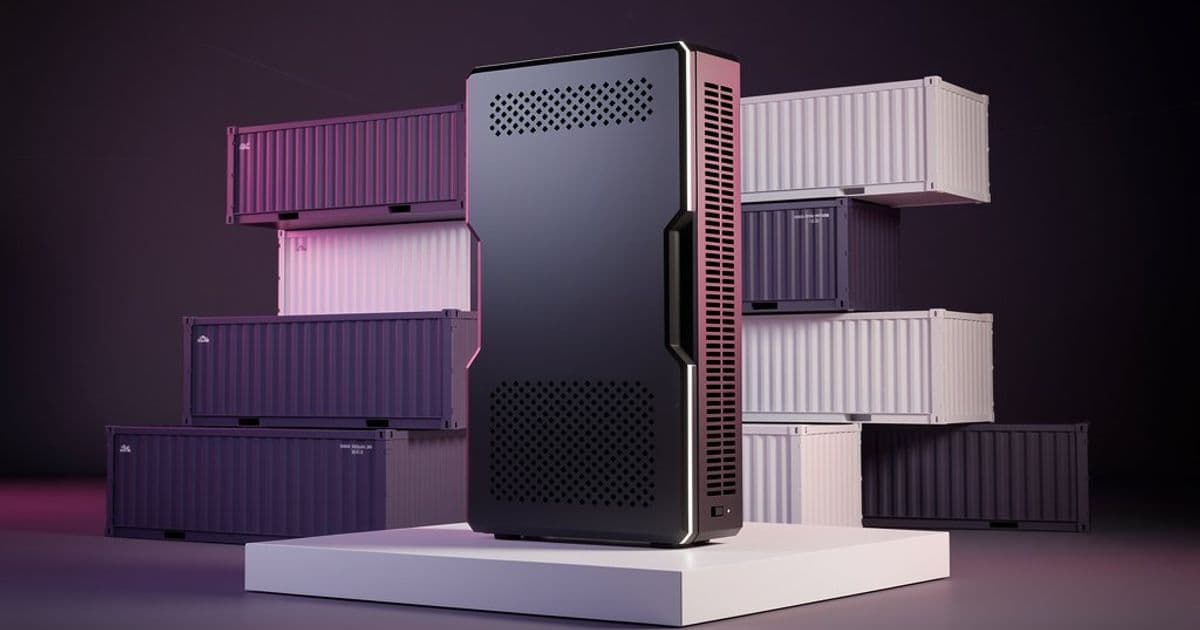
AWS launches next-generation G7e instances with NVIDIA Blackwell GPUs and introduces cross-repository layer sharing for ECR, enhancing AI inference capabilities and container efficiency.
AWS continues to push the boundaries of cloud computing with this week's announcements, focusing on accelerating AI workloads and optimizing container management. The introduction of EC2 G7e instances and cross-repository layer sharing in Amazon ECR represents significant advancements in GPU computing and container orchestration, respectively.
EC2 G7e Instances: A New Era for GPU-Intensive Workloads
The general availability of Amazon EC2 G7e instances marks a significant leap in GPU computing capabilities for AWS customers. These instances, powered by NVIDIA's latest RTX PRO 6000 Blackwell Server Edition GPUs, deliver up to 2.3 times better inference performance compared to their predecessors, the G6e instances.
Technical Specifications and Capabilities
The G7e instances feature:
- Two times the GPU memory of previous generations
- Support for up to 8 GPUs, providing 768 GB of total GPU memory
- Enhanced FP8 precision support
- Optimized for medium-sized models up to 70B parameters on a single GPU
These specifications position the G7e instances as ideal candidates for several demanding workloads:
- Generative AI inference
- Spatial computing applications
- Scientific computing and simulation
- High-performance data processing
Architecture and Performance Improvements
The Blackwell architecture introduces several innovations that contribute to the G7e's performance gains:
Transformer Engine: This technology dynamically switches between numerical precisions during inference to maximize both performance and accuracy. For large language models, this means faster processing without significant quality degradation.
Second-Generation Transformer Engine: Building on the first generation, this version provides even better performance for large models by optimizing how data moves between GPU memory and processing cores.
Enhanced Memory Bandwidth: The Blackwell GPUs feature improved memory subsystems that reduce bottlenecks when loading large models into GPU memory.
Multi-Instance GPU (MIG) Support: This allows a single physical GPU to be partitioned into multiple smaller GPUs, enabling more efficient resource utilization for various workloads.
Use Cases and Implementation Patterns
For organizations running AI inference workloads, the G7e instances offer several implementation advantages:
Cost-Effective Scaling: With the ability to run larger models on fewer instances, organizations can reduce their inference infrastructure costs while maintaining performance.
Batch Processing Optimization: The increased GPU memory allows for larger batch sizes during inference, improving throughput for applications like recommendation systems or content generation.
Hybrid Workloads: The instances can efficiently handle both training and inference workloads, making them suitable for organizations that need flexibility in their GPU infrastructure.
Serverless Integration: The G7e instances can be integrated with AWS Lambda and other serverless services for event-driven AI inference, allowing automatic scaling based on demand.
Trade-offs and Considerations
While the G7e instances offer significant performance improvements, organizations should consider several factors:
Cost: The higher performance comes at a premium price point. Organizations need to carefully evaluate the total cost of ownership, considering performance gains versus increased instance costs.
Availability: Currently limited to US East (N. Virginia) and US East (Ohio), which may introduce latency considerations for global applications.
Migration Complexity: Moving existing workloads from previous generation instances may require code adjustments to take full advantage of the new architecture.
Power Consumption: The higher performance also means increased power consumption, which may impact data center operations and sustainability goals.
For more information on G7e instances, visit the AWS EC2 Instance Types page.
Amazon ECR Cross-Repository Layer Sharing: Optimizing Container Storage
Amazon ECR's new cross-repository layer sharing feature addresses a common challenge in container management: storage duplication across similar container images. This capability allows organizations to share common image layers across repositories through blob mounting, offering significant efficiency improvements.
How Cross-Repository Layer Sharing Works
Container images are built from layers, with each layer representing a set of filesystem changes. When multiple container images share common components (like base images or dependencies), these layers are typically stored separately for each image, leading to redundant storage usage.
The new ECR feature addresses this by:
- Identifying identical layers across different repositories
- Storing these layers only once in the registry
- Creating "blob mounts" that reference the shared layer from other repositories
- Presenting the mounted layer as if it were part of the target image
This approach maintains the immutability and integrity of container images while dramatically reducing storage requirements.
Benefits and Implementation Advantages
Organizations adopting cross-repository layer sharing can expect several benefits:
Reduced Storage Costs: By eliminating duplicate layer storage, organizations can significantly reduce their ECR storage costs, especially when managing multiple similar container images.
Faster Image Builds and Pushes: When pushing images with shared layers, ECR only needs to upload new or changed layers, reducing network bandwidth usage and speeding up the deployment process.
Simplified Image Management: Teams can maintain base images in central repositories while allowing application teams to build on these foundations without duplicating storage.
Enhanced Security: By centralizing common layers, security teams can more efficiently patch and update base components across all applications.
Practical Implementation Patterns
Cross-repository layer sharing enables several useful patterns for container management:
Centralized Base Images: Organizations can maintain a central repository for base images (e.g., Python, Node.js, or Java runtimes) that multiple application teams can reference.
Shared Library Components: Common libraries and tools can be stored in dedicated repositories and mounted into application containers as needed.
Environment-Specific Builds: Development, staging, and production environments can share common layers while maintaining environment-specific configurations in separate layers.
Multi-Architecture Support: When building images for multiple architectures (x86, ARM, etc.), common layers can be shared across architecture-specific variants.
Integration with CI/CD Pipelines
The feature integrates naturally with containerized CI/CD workflows:
Build Optimization: CI pipelines can build images incrementally, only pushing new layers while mounting shared layers from previous builds.
Registry Organization: Teams can organize container registries more logically, separating concerns without duplicating storage.
Cross-Team Collaboration: Different teams can maintain their own repositories while sharing common components, reducing coordination overhead.
Trade-offs and Limitations
While powerful, cross-repository layer sharing has some considerations:
Access Permissions: The source repository must grant read permissions to the target repository, requiring careful access management.
Repository Lifecycle: When the source repository is deleted or the layer is modified, all repositories mounting that layer may be affected.
Layer Visibility: Mounted layers may not be immediately visible in all tools that inspect the registry, potentially complicating debugging.
Compatibility: Some older container runtimes or tools may not properly handle blob mounts, potentially requiring environment updates.
For detailed implementation guidance, refer to the Amazon ECR documentation.
Broader Implications for Cloud Architecture
These AWS announcements reflect several important trends in cloud architecture:
Specialized Hardware Acceleration: The continued investment in specialized GPU instances demonstrates the cloud industry's focus on hardware acceleration for AI and high-performance workloads.
Storage Optimization: Cross-repository layer sharing highlights the growing importance of storage efficiency in containerized environments, as organizations scale their container deployments.
Serverless Integration: Both features can enhance serverless architectures, enabling more efficient AI inference with Lambda and more optimized container images for Fargate.
Cost-Performance Balance: These innovations help organizations achieve better performance per dollar, a critical consideration as economic pressures increase.
As organizations continue to adopt AI and container technologies at scale, features like the G7e instances and ECR cross-repository layer sharing will become increasingly important components of cloud infrastructure strategies.

Comments
Please log in or register to join the discussion