
MIT-founded startup Beacon Biosignals is developing an AI-driven platform that uses home-based EEG monitoring to map brain activity during sleep, enabling earlier detection of neurological disorders and accelerating treatment development.
The human brain remains one of medicine's most complex frontiers. Despite decades of research, scientists still struggle to precisely map neurological activity to brain function and detect problems early, hindering efforts to treat neurological disorders. Beacon Biosignals, a company founded by MIT alumni, is addressing this challenge by monitoring brain activity during sleep in home environments, potentially transforming how we understand and treat brain diseases.
Founded in 2019 by Jake Donoghue PhD '19 and former MIT researcher Jarrett Revels, Beacon Biosignals has developed a lightweight headband that uses electroencephalogram (EEG) technology to measure brain activity while people sleep in their own beds. This approach removes the constraints of traditional sleep labs, allowing for the collection of high-quality data in natural sleep environments.
"There's a step-change in what becomes possible when you remove the sleep lab and bring clinical-grade EEG into the home," explains Donoghue, who serves as Beacon's CEO. "It turns sleep from a constrained, facility-based test into a scalable source of high-quality data for diagnostics, drug development, and longitudinal brain health."
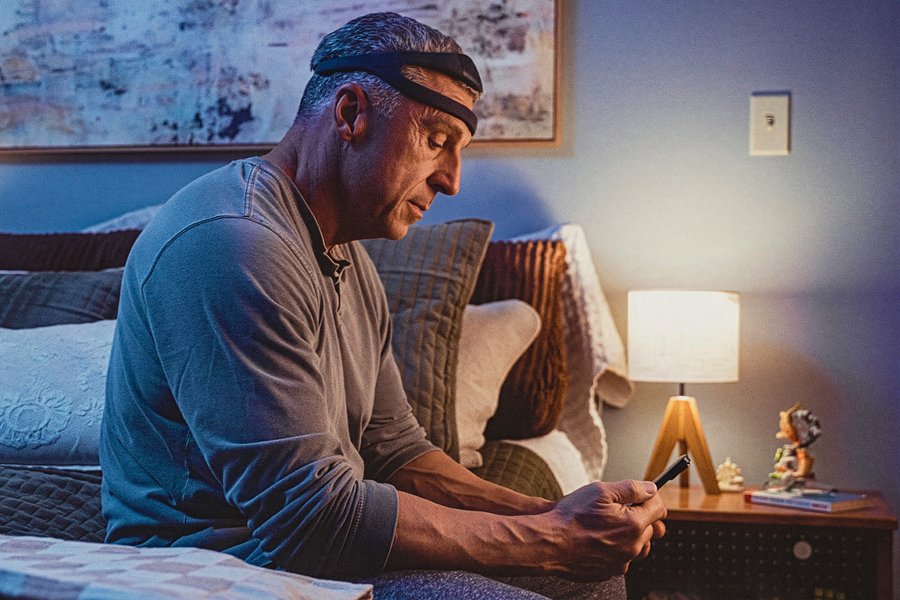 A man wears a unique headpiece, like a bandana, while getting ready for bed.
The company's platform processes sleep data using machine-learning algorithms to monitor treatment effects, identify disease progression markers, and create patient cohorts for clinical trials. Their FDA 510(k)-cleared medical device has already been deployed in over 40 clinical trials worldwide, studying conditions including major depressive disorder, schizophrenia, narcolepsy, Alzheimer's disease, and Parkinson's disease.
Beacon's approach leverages the fact that neural activity during sleep can be "an order of magnitude higher and more structured, almost like a language," as Donoghue describes it. This makes sleep an ideal window for understanding brain function and how different treatments affect neural activity.
The company's technology can collect lab-grade data on each patient for multiple consecutive nights, resulting in higher quality assessments than single-night studies in controlled environments. Their machine learning algorithms extract insights such as time spent in different sleep stages, frequency of awakenings, and subtle changes in sleep architecture that might indicate cognitive decline.
"We're starting to take features of sleep activity and link them to outcomes in a way that's never been done with this level of precision," Donoghue notes. This precision enables researchers to detect early changes in brain activity that may precede clinical symptoms by years, particularly in neurodegenerative diseases.
 Illustration of a head divided into a dark section at the front and a light section at the back, where a bell emits lines representing sound
The company is building on Donoghue's background in neuroscience from MIT's Harvard-MIT Program in Health Sciences and Technology. During his training, he observed the contrast between the data-driven approaches in oncology and the more iterative methods in neurology and psychiatry, sparking his conviction that similar precision could be applied to brain health.
"What struck me most was the inability to measure brain function in the ways that cardiologists can longitudinally monitor cardiac function in patients from home," Donoghue recalls. "At MIT, I built this conviction that processing a lot of brain data and working to correlate that with brain function would be transformative to how these neurological diseases are identified and treated."
Beacon's vision extends beyond current applications to create a comprehensive "foundation model" of the brain. By collecting extensive longitudinal data, the company aims to characterize disease progression heterogeneity and discover novel disease subgroups that might respond differently to treatments.
"It's our belief that the dataset that's going to transform brain health doesn't exist yet — but we are rapidly creating it," Donoghue explains. "Our platform can characterize the heterogeneity of disease progression, generating dynamic insights that are impossible to fully capture through static modalities like sequencing or imaging. The brain is an electric organ and changes through synaptic plasticity, so tracking brain function across many diseases at scale will allow us to discover novel subgroups of diseases and map them over time."
 Photo of a team of surgeons and an anesthesiologist gathered around a patient on an operating table
The company's growth trajectory has been significant. Last year, Beacon acquired an at-home sleep apnea testing company that serves more than 100,000 patients annually across the U.S., expanding access to comprehensive sleep testing in home environments. In November, the company raised $97 million to accelerate this expansion.
"The vision has always been to reach patients and help people at scale," Donoghue says. "What's powerful is that we're building a longitudinal record of brain function over time. A patient might come in for sleep apnea screening, but if they develop Parkinson's years later, that earlier data becomes a window into the disease before symptoms emerged. That turns routine testing into a foundation for entirely new prognostic biomarkers — and a path to detecting and intervening in brain disease earlier, potentially before symptoms ever begin."
As Beacon continues to collect and analyze brain activity data from sleep, the company is positioning itself at the forefront of neurological diagnostics and treatment development. By bringing clinical-grade monitoring into homes and leveraging advanced machine learning, Beacon is helping illuminate one of medicine's greatest mysteries—the human brain—with the potential to transform care for millions of patients with neurological and psychiatric disorders.
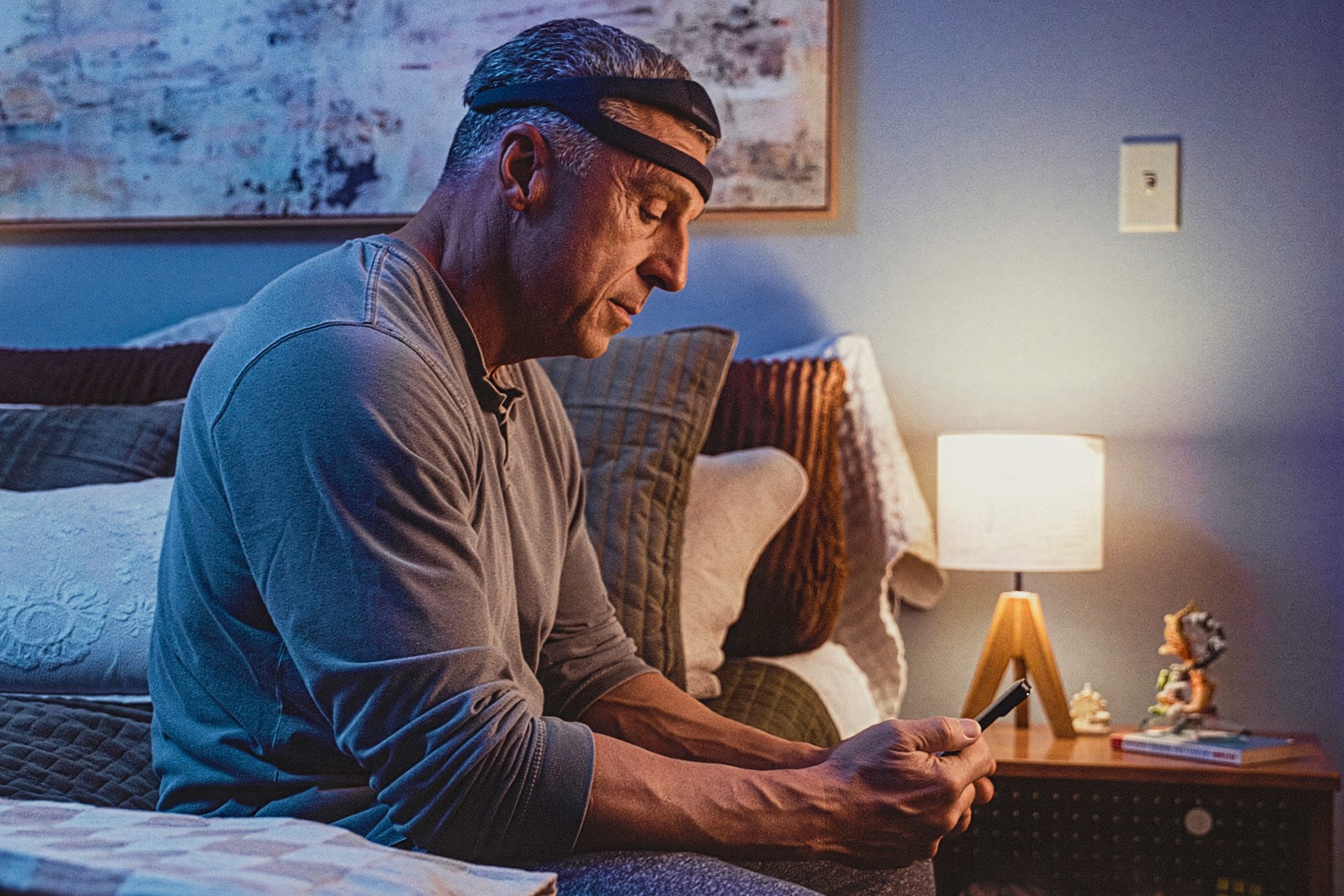 Featured image
This approach represents a significant shift in how neurological research and diagnostics are conducted, moving from facility-based, short-term monitoring to longitudinal, home-based assessment. As the company continues to grow and refine its technology, Beacon's work may help usher in a new era of precision medicine for brain disorders, where early detection and personalized treatment become the standard rather than the exception.
Comments
Please log in or register to join the discussion