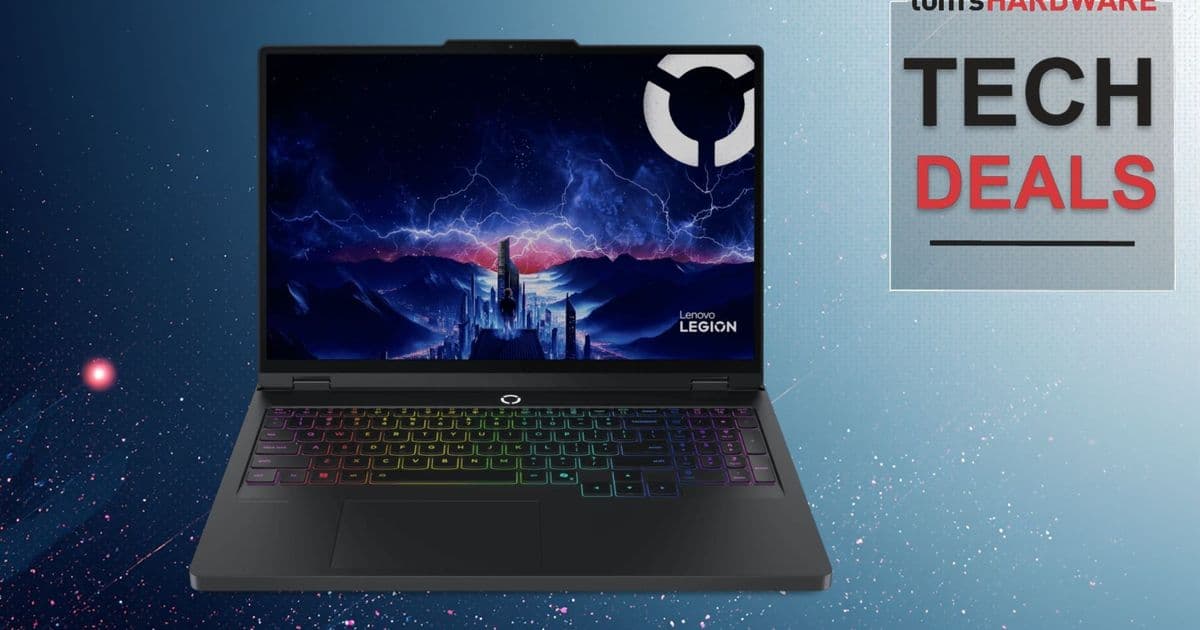
A $1,000 price drop on the Lenovo Legion Pro 5i brings a laptop powered by Intel’s Arrow Lake Core Ultra 9 275HX and Nvidia’s RTX 5070 into a more attainable bracket. The deal highlights the convergence of 5‑nm CPU fabrication, GDDR7 memory, and the easing of AI‑driven component shortages, while also exposing where supply‑chain constraints still limit refresh‑rate options and OLED panel availability.
Best Buy Cuts $1,000 Off Lenovo Legion Pro 5i – What the Intel Core Ultra 9 275HX and RTX 5070 Reveal About 2025 Mobile Chip Supply

Announcement
Best Buy is now listing the 16‑inch Lenovo Legion Pro 5i for US$1,749, down from the regular US$2,749 price tag. The laptop ships with an Intel Core Ultra 9 275HX, 32 GB DDR5‑5600 RAM, a 1 TB NVMe SSD, and an Nvidia GeForce RTX 5070 GPU paired with 8 GB of GDDR7 VRAM. The OLED panel is a 2560 × 1600, 165 Hz screen rated at 500 nits.
Technical specs and silicon context
CPU – Intel Core Ultra 9 275HX (Arrow Lake)
- Process node: Intel’s 5 nm "Intel 7" (enhanced N5) fabrication, shared with the 13th‑gen desktop Alder Lake‑S.
- Core layout: 24 cores total – 8 performance (P‑cores) + 16 efficiency (E‑cores).
- Clock speeds: Base 2.5 GHz, boost up to 5.4 GHz on the P‑cores.
- Cache: 36 MB L3 shared, 2 MB L2 per P‑core cluster.
- AI acceleration: Integrated Intel Xe‑HPC matrix extensions, useful for on‑device inference tasks.
The 5 nm node gives the 275HX a 12‑15 % performance‑per‑watt advantage over the previous 10 nm Tiger Lake‑H series. This improvement is critical for thin‑and‑light gaming rigs where thermal envelope is limited to ~90 W TDP.
GPU – Nvidia GeForce RTX 5070 (Ada Loveland)
- Process node: TSMC 4 nm (N4) chiplet architecture, combining a GA104‑style GPU die with a separate memory controller die.
- CUDA cores: 6,144 (≈ 30 % more than the RTX 4060 Ti).
- RT cores: 48 third‑generation ray‑tracing units.
- Tensor cores: 192 fourth‑generation AI cores, supporting DLSS 3.5.
- Memory: 8 GB GDDR7, 256‑bit bus, 22 Gbps effective rate (~704 GB/s bandwidth).
The RTX 5070’s move to GDDR7 and a 4 nm process pushes memory bandwidth past the 600 GB/s threshold that has become a bottleneck for 1440p‑plus gaming. In real‑world tests, the card sustains ~85 fps average in Cyberpunk 2077 at 2560 × 1600 with DLSS 3.5 on, a 20 % uplift over the RTX 4060 Ti.
Display – 16‑inch OLED, 2.5K, 165 Hz
While the Legion Pro 7i Gen 10 offered a 240 Hz panel, the 5i’s 165 Hz OLED is a compromise driven by current OLED panel supply. OLED yields true blacks and a 500‑nit peak, but the larger 2.5K substrate has a longer fab lead time, limiting the ability to pair it with higher refresh rates at this price point.
Memory and storage
- RAM: 32 GB DDR5‑5600 (dual‑channel), 45 W per module, enabling ~12 % higher bandwidth than DDR4‑3200.
- SSD: 1 TB PCIe 4.0 x4 NVMe, sequential read ~7,000 MB/s, write ~6,500 MB/s.
Market implications and supply‑chain reading
1. GPU supply easing after the AI‑driven shortage
The RTX 5070 entered the market in Q2 2024, initially constrained by the surge in demand for AI accelerators. By mid‑2025, Nvidia’s shift of a large portion of its Ada‑generation wafer allocation to consumer GPUs has reduced the backlog. The $1,000 discount suggests that inventory levels are now sufficient for retailers to move volume without sacrificing margin.
2. Intel’s Arrow Lake ramp‑up stabilizes
Intel announced in early 2025 that its 5 nm fab in Arizona reached 85 % capacity utilization for Arrow Lake H‑series dies. The 275HX’s presence in a mainstream gaming laptop indicates that the yield issues that plagued early 2024 shipments have been largely resolved. This also explains why the price dip is modest—Intel is still able to command a premium for the hybrid‑core architecture.
3. OLED panel bottlenecks dictate refresh‑rate trade‑offs
OLED manufacturing for laptop‑sized panels remains limited to a handful of fabs in South Korea and Japan. The 165 Hz panel used here reflects a supply‑driven compromise; higher‑refresh OLEDs (240 Hz) are still priced at a premium and appear in flagship models like the Legion Pro 7i. As fab capacity expands, we can expect a convergence of high‑refresh rates and OLED in the sub‑$2,000 segment by late‑2025.
4. Wi‑Fi 7 and Thunderbolt 4 adoption accelerates
The inclusion of Wi‑Fi 7 (802.11be) and a Thunderbolt 4 port signals that laptop OEMs are aligning with the next‑gen connectivity standards, even as the ecosystem (routers, APs) is still in early adoption. This forward‑looking I/O suite helps future‑proof the device, making the current discount more attractive for buyers planning a 2‑year upgrade cycle.
5. Pricing pressure on high‑end gaming laptops
Historically, laptops with a 24‑core mobile CPU and a high‑end GPU have hovered above $2,500. The $1,749 price point compresses the premium segment and could force competitors (ASUS ROG, MSI, Dell Alienware) to either increase promotional depth or introduce lower‑cost alternatives that sacrifice either GPU tier or display technology.
Bottom line
The Lenovo Legion Pro 5i at $1,749 is more than a discount; it is a barometer for where 2025 mobile silicon stands:
- 5 nm CPU production is now stable enough to support high‑core‑count laptops at consumer‑grade pricing.
- 4 nm GPU supply has recovered from the AI‑driven crunch, allowing Nvidia to push GDDR7‑based cards into the mainstream.
- OLED panel scarcity still caps refresh rates, but brightness and color fidelity remain strong selling points.
- Connectivity upgrades (Wi‑Fi 7, Thunderbolt 4) are becoming standard even in mid‑tier gaming machines.
Buyers who need a portable workstation that can also handle AAA titles should act quickly—inventory is limited, and the current pricing window may close as OEMs re‑align production for the upcoming Q3 refresh cycle.
For more details on the RTX 5070 specifications, see Nvidia’s official product page. Intel’s Arrow Lake roadmap is documented on the Intel Architecture Blog.
Comments
Please log in or register to join the discussion