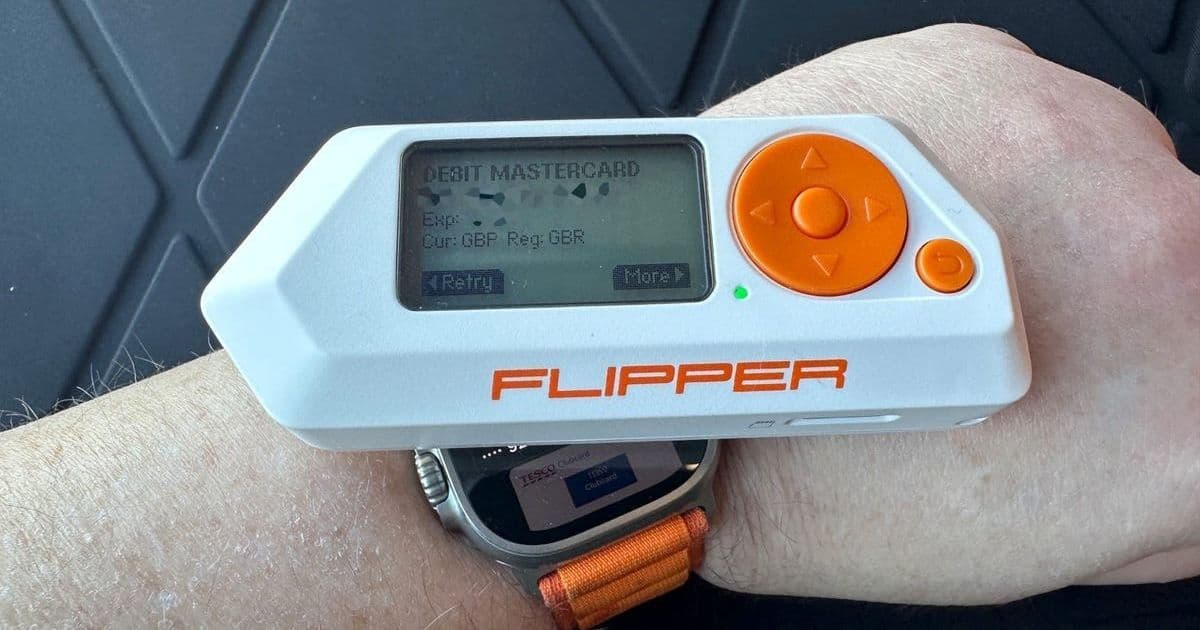
Amidst viral TikTok myths of car theft and credit card cloning, the Flipper Zero emerges as a serious tool for ethical hacking and development. This analysis unpacks seven practical, real-world applications—from NFC emulation to signal generation—that underscore its value for security professionals and tinkerers.
The Flipper Zero exploded into mainstream consciousness via sensationalized social media clips, often depicting it as a gadget for illicit activities like car hacking or payment fraud. But as Adrian Kingsley-Hughes notes in his ZDNET deep dive, these claims are largely exaggerated fabrications. In reality, this palm-sized multi-tool—packed with sub-GHz wireless, RFID/NFC readers, infrared transceivers, and GPIO ports—serves as an indispensable asset for developers, security researchers, and hardware enthusiasts. Two years after its release, its capabilities continue to evolve, offering legitimate utilities that enhance workflow efficiency and security auditing.
Cutting Through the Noise: What the Flipper Zero Actually Does
At its core, the Flipper Zero is a portable penetration testing device designed for ethical exploration. Running custom firmware (which doesn’t void the warranty), it transforms into a versatile diagnostic and automation tool. Here’s how professionals leverage its features:
Wireless Device Testing
The sub-GHz antenna captures signals from car key fobs, doorbells, and IoT sensors. While viral videos suggest it can steal cars, modern vehicles use rolling codes that invalidate captured signals after one use. Instead, it’s ideal for verifying transmitter functionality and range—critical for developers debugging IoT ecosystems or assessing wireless security in smart homes.NFC Emulation and Security Auditing
It reads, saves, and emulates NFC tags, commonly used in hotel keys or access cards. As Kingsley-Hughes demonstrates, this allows cloning for convenience (e.g., duplicating a room key during family travel). Crucially, it cannot decode encrypted bank card security codes, debunking fears of financial cloning. This functionality shines in testing NFC-based system vulnerabilities, urging developers to implement stronger encryption.RFID Unlocking and Cloning
Beyond NFC, the device bypasses locked RFID tags by simulating authorized readers, enabling cloning for authorized access. This exposes weaknesses in low-security systems like hotel keycards, emphasizing the need for hardware engineers to adopt dynamic authentication methods in access control designs.Universal IR Remote Control
The infrared module controls TVs, AC units, and other IR devices, doubling as a diagnostic tool to test remote functionality. For developers, this provides a low-cost way to prototype and validate IR integrations in consumer electronics without specialized hardware.Physical Security Testing
By exploiting GPIO outputs, the Flipper Zero can bypass electronic safes like those from Sentry Safe—highlighting alarming flaws in consumer-grade security hardware. This isn’t encouragement for misuse but a wake-up call for manufacturers to fortify devices against simple exploits.Script Automation via BadUSB
Acting as a Human Interface Device (HID), it executes DuckyScript to automate keystrokes for tasks like opening backdoors or retrieving data. Security teams use this to simulate attack vectors, reinforcing the importance of input validation in software development.
"Retransmitting codes to a modern car won’t unlock it due to rolling codes," Kingsley-Hughes clarifies, underscoring the device’s limitations amid hype. "But it’s a game-changer for testing and diagnostics."
- Signal Generation for Hardware Validation
The GPIO ports output electrical signals, enabling it to mimic components like antilock braking modules. This turns the Flipper Zero into a pocket-sized oscilloscope alternative for automotive or embedded systems engineers testing circuit responses.
Expanding Horizons: The Raspberry Pi Video Game Module
Adding the RP2040 microcontroller-based module unlocks DVI video output and motion sensing, transforming the device into a portable gaming or display tool. More broadly, it exemplifies how extensible hardware can adapt to niche developer needs, from prototyping interfaces to educational demos.
Far from a toy for digital mischief, the Flipper Zero embodies a shift toward accessible hardware hacking. It democratizes security research, allowing professionals to identify vulnerabilities in everyday systems—from hotel locks to consumer remotes—before malicious actors do. In an age of interconnected devices, such tools aren’t just useful; they’re essential for building a more resilient tech landscape.
Source: ZDNET article by Adrian Kingsley-Hughes, updated July 17, 2025.
Comments
Please log in or register to join the discussion