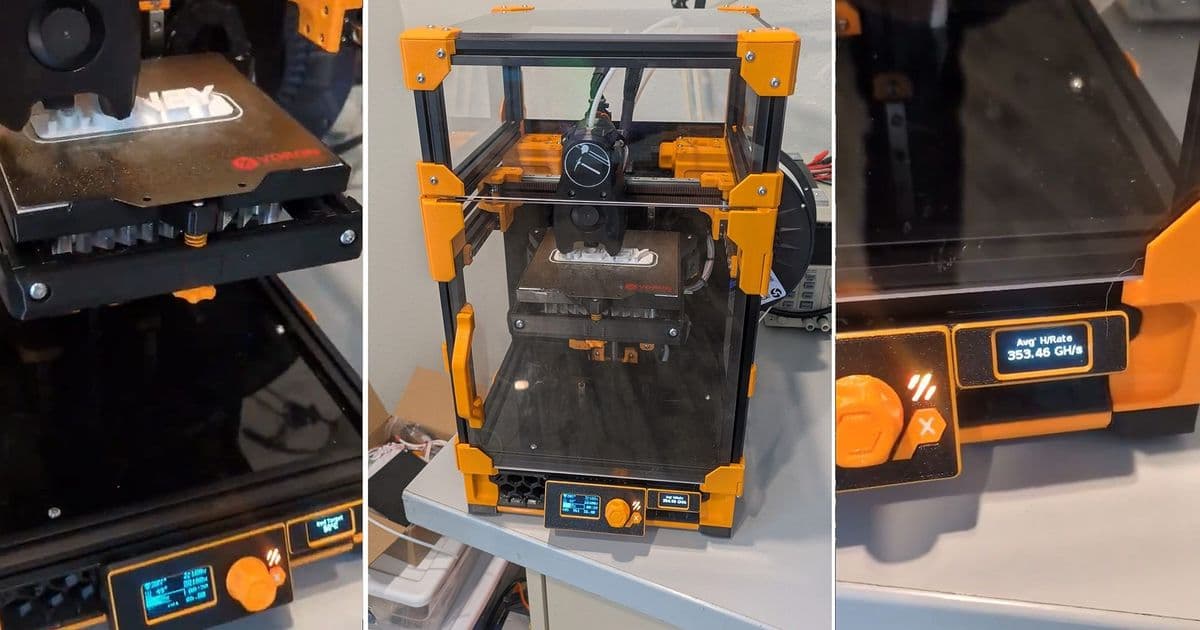
A new 3D printer prototype mines Bitcoin while using the ASIC heat to control print bed temperature, creating a dual-purpose device that could transform both cryptocurrency mining and additive manufacturing.
A groundbreaking 3D printer prototype that mines Bitcoin while using the excess heat from ASICs to control print bed temperature has emerged from the workshop of creator PizzAndy, potentially revolutionizing both cryptocurrency mining and desktop fabrication.
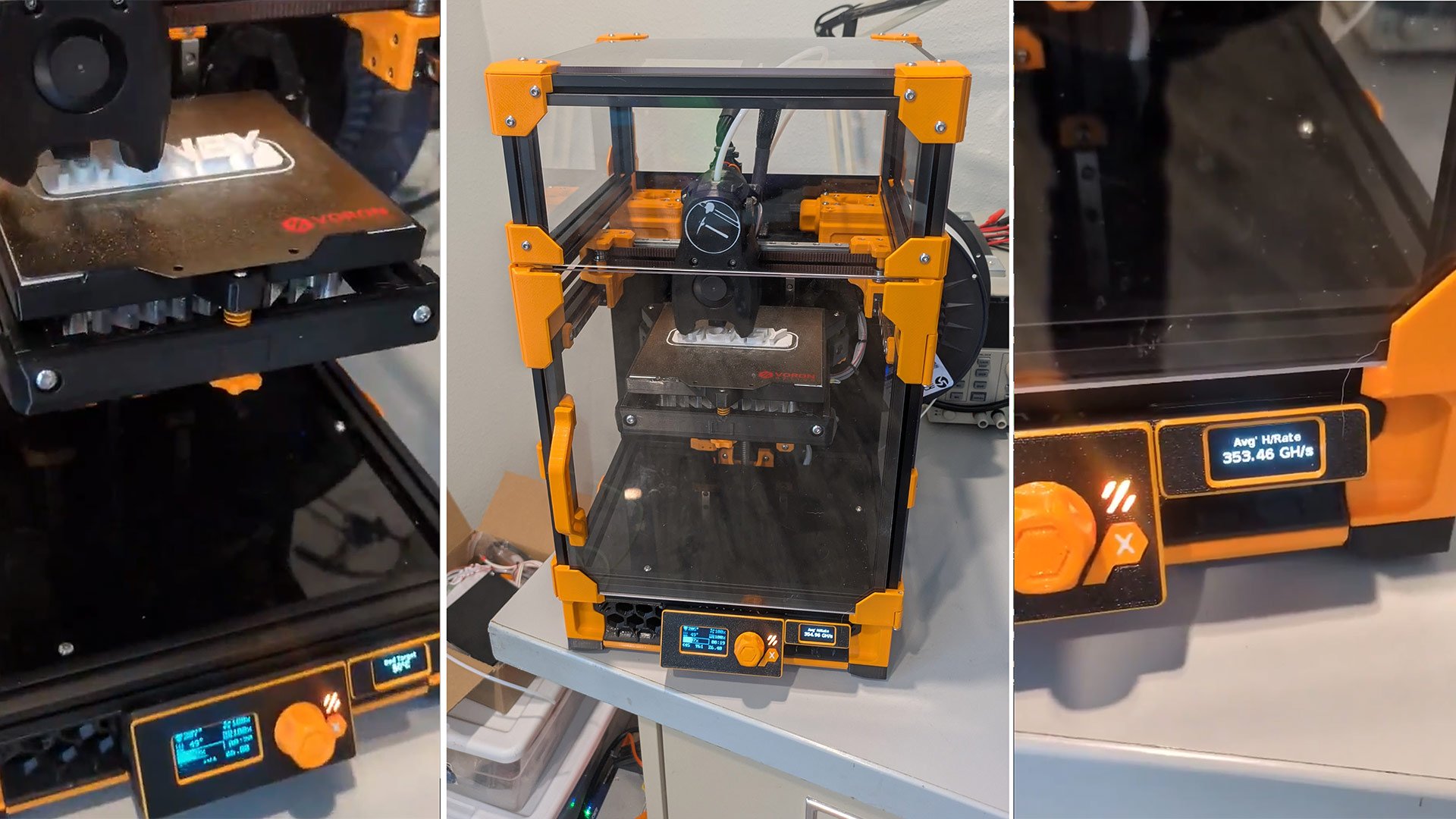
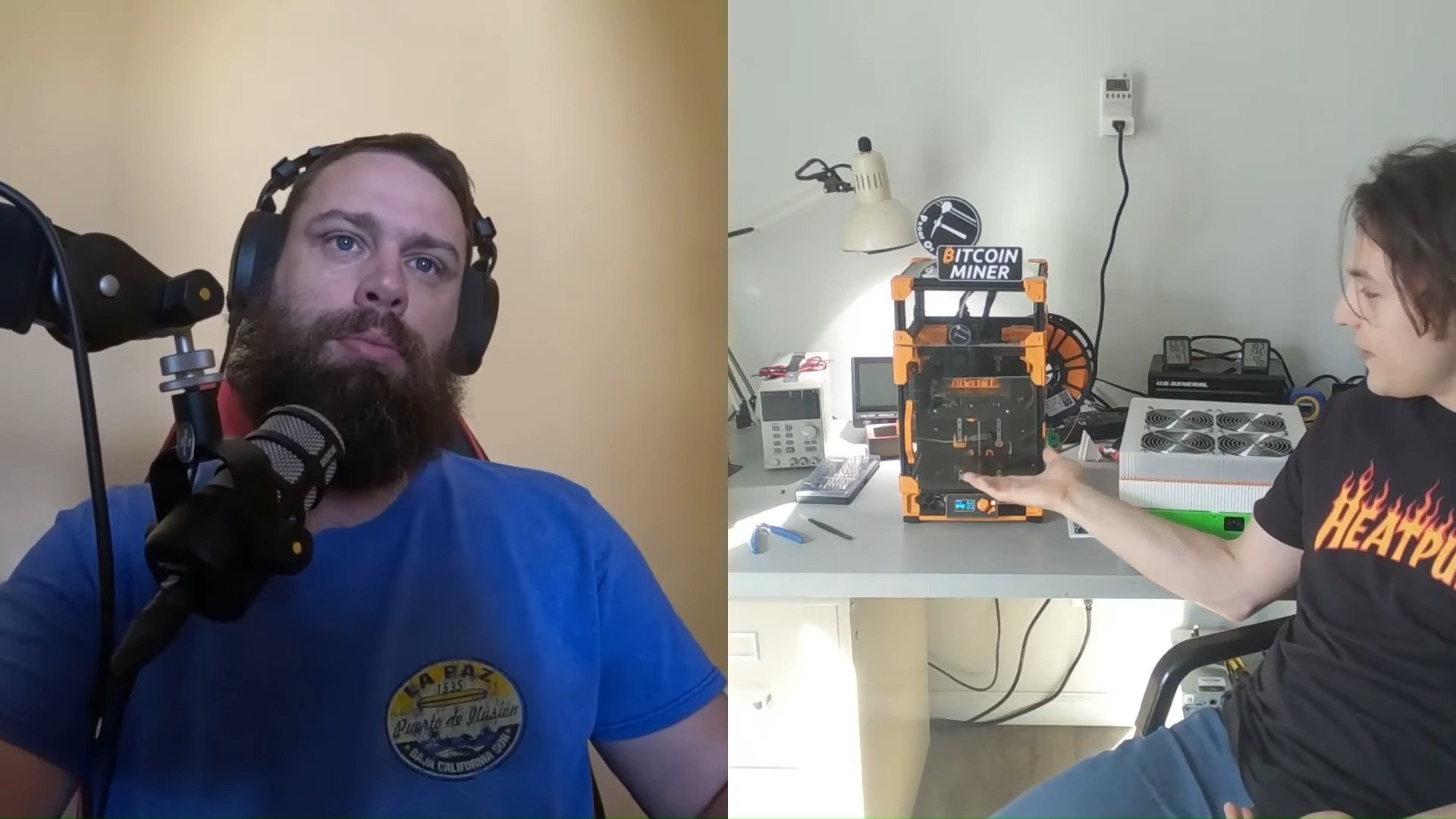
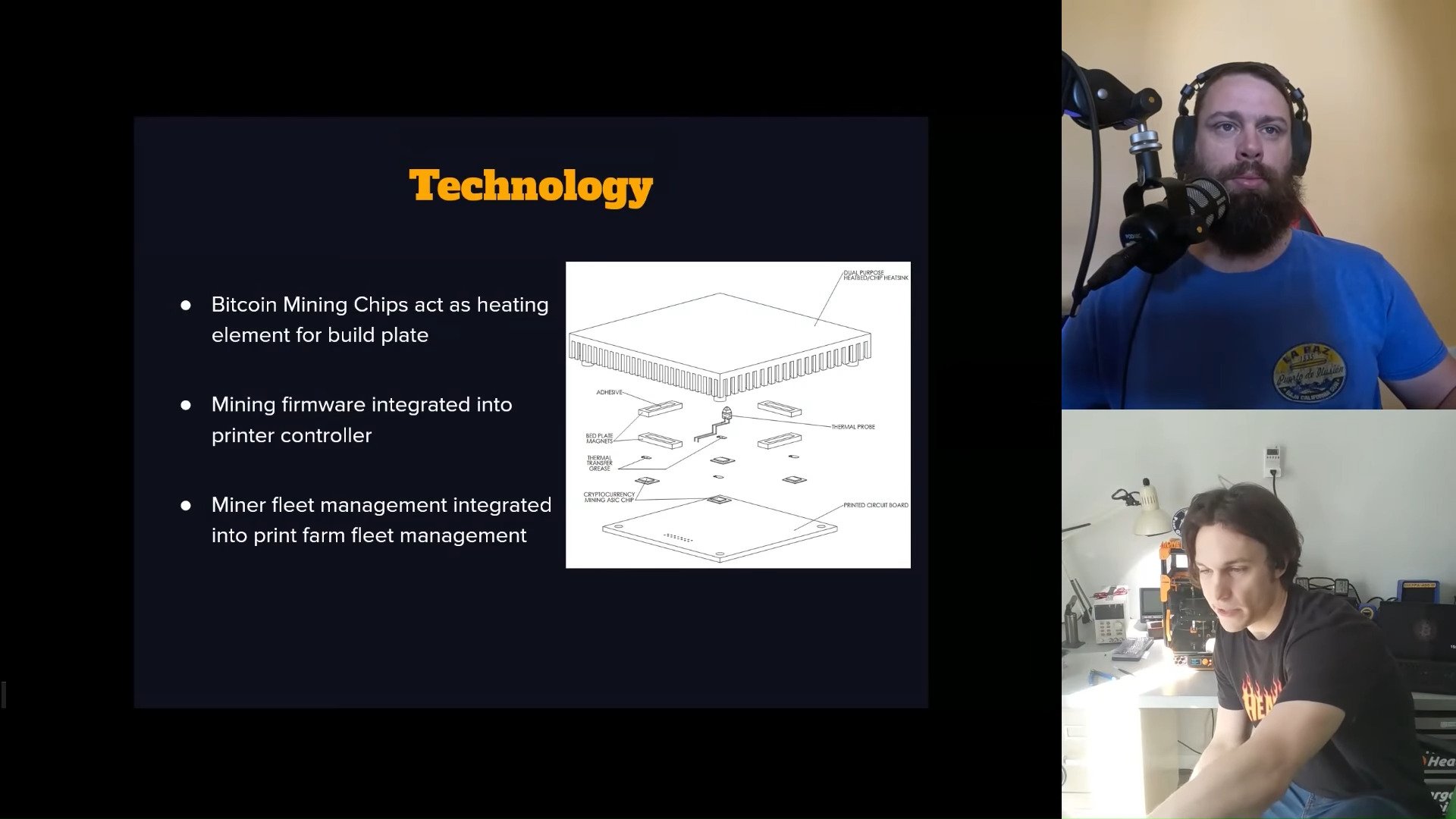
The hybrid device, detailed in a recent interview on the Home Mining Podcast with host Two Sats, represents a novel approach to heat reuse in computing. The compact prototype achieves 500 GH/s when operating at a bed temperature of 75 °C, with the printer bed functioning essentially as a heatsink for the Bitcoin mining chips.
Heat Reuse: The Eureka Moment
The concept originated five years ago when PizzAndy was heating his basement workspace during cold months to improve 3D printer performance. The idea crystallized in 2024 after attending a presentation about heat reuse, where he realized the potential of combining these technologies. "It would be a cool thing," he initially thought, though he wasn't certain about commercial viability until recently.
Technical Architecture
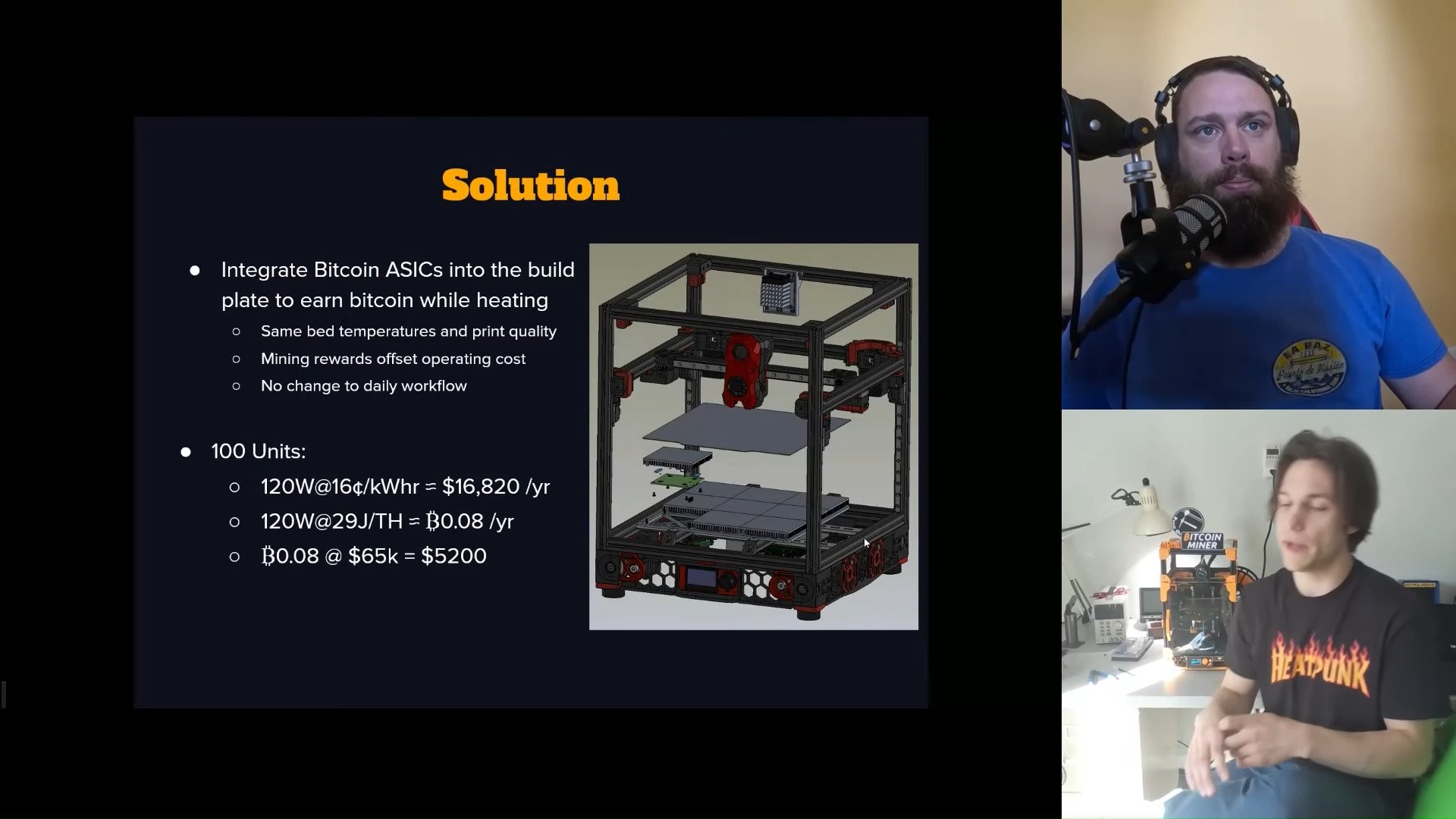
The prototype is built on an open-source Voron 3D printer design, with PizzAndy designing "everything on the Z-axis" and adding supplementary electronics. The core innovation involves four 'BM 1362 AK chips' mounted with custom heatsinks that directly warm the print bed. This creates a symbiotic relationship where the ASIC chips must maintain specific thermal conditions to optimize both mining performance and print quality.
Interestingly, the system doesn't use waste heat to warm the extruder—only the print bed currently benefits from the thermal output. The mining chips are throttled to target the 75 °C thermal environment, contrasting with typical Bitcoin miner optimization that prioritizes maximum hash rate regardless of heat distribution.
Commercial Potential and Market Context
Podcast host Two Sats emphasized that such hybrid products must excel as 3D printers first, with Bitcoin mining as a secondary benefit. This mirrors the emerging trend of dual-purpose Bitcoin mining hardware for home heating applications, which has gained traction as cryptocurrency mining becomes more accessible to consumers.
PizzAndy notes the product is "mostly intended to exist in a print farm, where printers are printing around the clock, all the time." In these scenarios, the economics resemble those of a Bitcoin mine, where continuous operation maximizes both printing revenue and mining returns.
Scaling Plans and Future Roadmap
The creator has ambitious plans for scaling the technology through a modular bed tile system. Each tile would contain 16 mining chips, with estimates suggesting 10-30 TH/s performance using Intel BZM2 ASIC chips at 75 °C. "At least 10 TH/s or we riot," Andy quipped about the performance targets.
A prototype of the scaled system is expected "soon," with the modular approach allowing users to expand their printer bed and mining operation "as big as you want, theoretically." This scalability could make the technology attractive for both small businesses and larger operations.
Configuration Advantages
Beyond simple heat reuse, the ASIC array configuration offers unique advantages for 3D printing. Each chip/tile is individually addressable, allowing selective heating of specific bed zones. This enables different parts of the bed to maintain different temperatures, accommodating various materials and print requirements within a single job.
Industry Implications
The technology bears similarities to Bitcoin water and space heater consumer products already on the market, but applies the concept to 3D printing specifically. If successful, it could prompt larger 3D printing companies to adopt similar heat reuse strategies, potentially transforming how desktop fabrication devices manage thermal output.
The project represents an innovative intersection of cryptocurrency mining and additive manufacturing, where waste heat becomes a valuable resource rather than an engineering challenge to dissipate. As energy costs rise and sustainability becomes increasingly important, such dual-purpose designs may become more common across computing applications.
For now, the 500 GH/s prototype demonstrates the concept's viability, with the upcoming tile-based system potentially proving whether this approach can scale to commercially viable levels while maintaining print quality and mining profitability.
Comments
Please log in or register to join the discussion