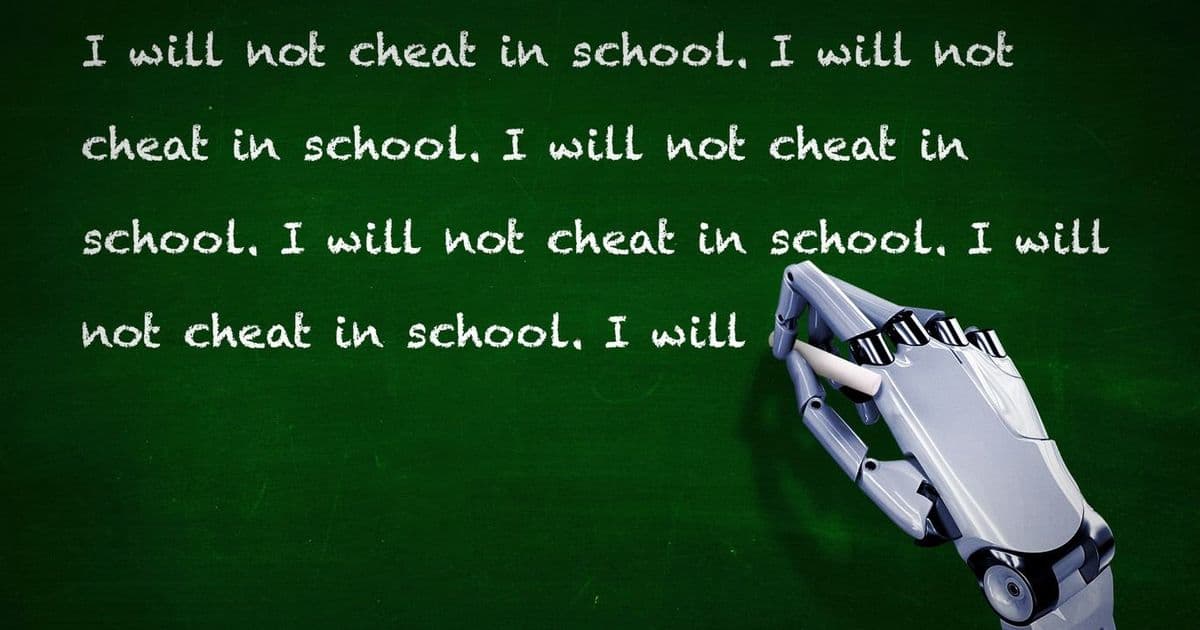
Universities are returning to handwritten blue book exams as AI tools like ChatGPT make it impossible to distinguish between student work and machine-generated content.
Universities across the country are experiencing a surprising shift back to analog assessment methods as artificial intelligence tools have made traditional take-home essays and online assignments virtually indistinguishable from machine-generated content.
The blue book revival represents one of the most visible responses to the AI cheating crisis. These small, bound examination booklets—once considered relics of a pre-digital education system—are now being dusted off and distributed in classrooms nationwide. Professors report that the simple act of requiring handwritten responses in a controlled environment has become one of the few reliable ways to ensure students are actually producing their own work.
The scope of the problem has escalated rapidly since the release of ChatGPT in late 2022. A recent survey by the International Center for Academic Integrity found that 60% of college students admit to using AI tools for assignments, with many reporting they use these tools for the majority of their written coursework. The technology has advanced so quickly that even sophisticated plagiarism detection software struggles to identify AI-generated content, particularly when students use AI as a writing assistant rather than submitting entire papers verbatim.
Beyond the classroom, the implications extend to job markets and professional certification. Companies report receiving cover letters and writing samples that appear polished but lack the authentic voice and critical thinking patterns that employers seek. Professional certification exams are being rewritten to include in-person, monitored components to prevent AI-assisted cheating.
The financial impact on educational institutions is substantial. Schools are investing millions in new proctoring technologies, updated academic integrity policies, and faculty training on AI detection methods. Some institutions have reported spending upwards of $500,000 annually on software subscriptions and hardware upgrades to combat AI-assisted academic dishonesty.
Student perspectives are mixed. While some appreciate the return to more traditional assessment methods as a way to develop genuine writing skills, others argue that resisting AI tools puts them at a disadvantage in a workforce increasingly reliant on these technologies. The debate has sparked discussions about whether educational assessment itself needs fundamental restructuring to account for AI's role in knowledge work.
The blue book solution, while effective for ensuring academic integrity, raises questions about accessibility and learning outcomes. Students with disabilities who rely on assistive technology, international students whose primary language isn't English, and those who process information differently may be disproportionately affected by the return to handwritten, in-class assessments.
Looking forward, educational experts suggest that the current crisis may ultimately lead to more meaningful assessment methods that focus on process, critical thinking, and application rather than product alone. Some institutions are experimenting with oral defenses of written work, project-based assessments, and AI-integrated assignments that teach students to use these tools ethically and effectively.
The irony is that the very technology threatening academic integrity may eventually become integrated into educational assessment in ways that make traditional cheating obsolete. Until then, the humble blue book stands as a low-tech solution to a high-tech problem, representing both a step backward and a necessary pause in the rush toward digital education.
Comments
Please log in or register to join the discussion