A new survey reveals IT departments are abandoning cloud-only strategies due to vendor lock-in fears, rising costs, and security concerns, with hybrid approaches becoming the new standard.
A new survey from Parallels reveals a significant shift in enterprise IT strategy, as organizations increasingly abandon the "cloud-only" dream that dominated the past decade. The 2026 State of Cloud Computing Survey paints a picture of an industry hitting the brakes on wholesale cloud adoption, driven by mounting concerns about vendor lock-in, unpredictable costs, and security vulnerabilities.
The Lock-in Problem That's Keeping IT Leaders Up at Night
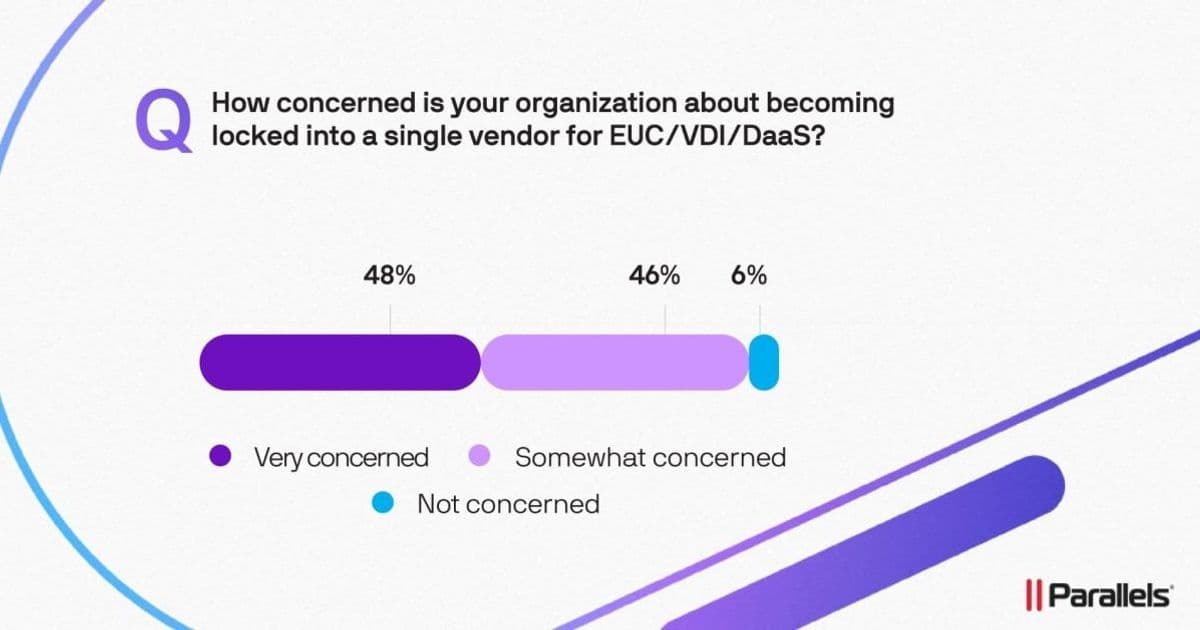
The most striking finding from the survey is that 94% of organizations are concerned about vendor lock-in. This near-unanimous anxiety confirms what IT professionals have been experiencing firsthand: the initial promise of cloud computing—faster deployment, reduced maintenance, and lower costs—has been overshadowed by the reality of escalating subscription fees and limited exit strategies.
Nearly half of respondents reported being "very concerned" about lock-in, citing uncertain product roadmaps and fears over future support as key drivers. The era of blindly trusting single-platform vendors appears to be over. IT directors are now prioritizing architectures that provide flexibility and escape routes if pricing or features become problematic.
This concern is particularly acute in the AI era. While 2025 saw organizations scrambling to develop "AI strategies," 2026 has brought a more pragmatic approach. The survey found that organizations want AI to reduce grunt work, not serve as a premium add-on. Specifically:
- 47% prioritize AI for issue detection
- 41% want automated application patching
- 39% seek reduced administrative overhead
Crucially, only 29% of respondents are willing to pay extra for these features. This sends a clear message to vendors: don't bolt on a chatbot and charge a premium. Build automation that actually saves time, or organizations won't buy it.
VDI Fatigue: The Hidden Cost of Cross-Platform Support
For Mac administrators, Virtual Desktop Infrastructure (VDI) has often been a necessary evil for delivering Windows applications to macOS users. However, the operational costs are becoming unsustainable. The survey found that 85% of organizations spend between 1 and 10 hours per week managing their VDI environment.
This "hidden cost" of staff time is driving significant change. Two-thirds of organizations are actively seeking new VDI or DaaS solutions, and more than half plan to switch within the next six months. The burden of maintaining these environments is pushing IT teams to explore alternatives that don't require constant babysitting.
The Security Wake-Up Call
Security concerns are accelerating the shift away from cloud-only strategies. Nearly half of surveyed organizations experienced a security breach in the last year. When combined with the rising costs of cloud computing, these incidents are creating a perfect storm that's pushing organizations toward more balanced approaches.
Hybrid is the New Standard
Perhaps the most significant finding is the reversal of cloud-only strategies. Almost half of respondents (49%) are actively considering or planning a move back to on-premises or hybrid models. The drivers are exactly what you'd expect: cost volatility and data sovereignty.
Organizations aren't abandoning the cloud entirely—rather, they're becoming more selective about what lives there. The survey suggests that hybrid is the future, ensuring long-term flexibility as SaaS tools look to monetize AI features through price increases.
What This Means for IT Strategy
The survey results validate a growing sentiment in IT departments: the pendulum is swinging back toward balanced approaches. Organizations are recognizing that while cloud services offer undeniable benefits, complete dependence on single vendors creates unacceptable risks.
For IT leaders, this means:
- Diversifying infrastructure across multiple providers and on-premises solutions
- Building exit strategies into vendor contracts and architectures
- Prioritizing automation that delivers measurable efficiency gains
- Reassessing VDI strategies to reduce operational overhead
- Implementing hybrid models that balance cloud benefits with control
The shift away from cloud-only strategies isn't a rejection of cloud computing—it's a maturation of how organizations approach IT infrastructure. As costs rise and lock-in fears grow, the most successful organizations will be those that maintain flexibility while still leveraging cloud advantages where they make the most sense.
For IT professionals managing Apple devices in enterprise environments, this trend suggests a future where on-premises solutions, hybrid architectures, and carefully selected cloud services coexist. The key will be maintaining the agility to adapt as vendor landscapes and technology requirements continue to evolve.
Download the full Parallels 2026 State of Cloud Computing Survey to explore all findings in detail.
Comments
Please log in or register to join the discussion