
MIT and Northeastern researchers challenge the long-held view that brain categorization is a feedforward process of matching sensory inputs to stored prototypes, proposing instead that categorization is a predictive, action-first process tied to bodily needs. The work has direct implications for autonomous system design, suggesting engineers shift from modular perception-planning stacks to unified predictive architectures that reduce latency and improve adaptability in dynamic environments.

Engineers building autonomous systems often model machine perception on a decades-old consensus about how biological brains categorize the world: sense input, match to a stored prototype, then select an action. A new review paper in Nature Reviews Neuroscience argues this model is fundamentally backwards, a finding that could reshape how roboticists design perception stacks for everything from warehouse bots to self-driving cars.
The paper, “Categorization is Baked into the Brain”, is co-authored by Earl K. Miller, Picower Professor of Neuroscience at MIT and faculty member of the Picower Institute for Learning and Memory, and Lisa Feldman Barrett, university distinguished professor at Northeastern University and co-director of the Interdisciplinary Affective Science Laboratory. The work synthesizes decades of anatomical, electrophysiological, and behavioral research to challenge the classic "stimulus-cognition-response" model of brain function.
The Traditional View vs. The Predictive Alternative
The classic model of categorization, dominant for decades, describes a feedforward process. When you encounter a furry, four-legged animal that barks, your brain processes those sensory features, compares them to a stored "dog" prototype in memory, and only then decides whether to run away or kneel to pet it. This process takes hundreds of milliseconds, a delay that could be fatal if the dog lunges. 
Miller and Barrett’s work flips this sequence. They argue categorization is not a post-perception intellectual exercise, but a core part of the brain’s predictive, allostatic function, meaning it evolved to help the body meet its needs efficiently. Instead of waiting to process sensory inputs before planning action, the brain starts with predicted motor plans tied to current needs and goals, then shapes incoming sensory signals to fit those plans. The "category" of "dog" is not a static memory prototype, but a momentary, context-dependent signal processing event. If you are walking in an unfamiliar neighborhood, your brain might predict a "threat" plan for the approaching dog, compressing sensory inputs to confirm that category and trigger a slow retreat. On your own block, the same sensory inputs are compressed into a "familiar pet" category, triggering a kneel-and-pet plan. In both cases, the category arises from the predicted action, not the other way around.
"One of the main things your brain has to do is predict the world," Miller says. "It takes several hundred milliseconds to process things, and meanwhile the world is moving on. Your brain has to anticipate things." Barrett adds that the brain is not reactive, but predictive: "Action planning comes first. Perception comes second, as a function of the action plan."
Technical Evidence for Predictive Categorization
The authors ground their proposal in three key lines of evidence, spanning brain structure and function.
Anatomical Architecture
Cortical architecture follows a hierarchy where signals move from sensory surfaces (retina, skin, ears) to specialized sensory regions (visual cortex, somatosensory cortex) and up to executive control regions like the prefrontal cortex. As signals move up this hierarchy, they pass from small, sparsely connected neurons to fewer, larger, densely connected neurons. This structure compresses high-dimensional sensory data into increasingly abstract representations, grouping similar features to select predicted action plans. 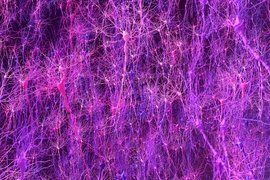
A critical piece of this anatomical evidence is the dominance of feedback connections. Up to 90 percent of synapses in the visual cortex carry signals from memory and executive regions back to sensory processing areas, rather than forward from sensory surfaces to higher regions. This means the brain is built to filter incoming sensory data through existing memories and goals, rather than processing sensory data neutrally before applying memory.
Electrophysiological Signals
Studies from Miller’s lab add functional evidence for this model. At the broad network level, the brain uses beta frequency waves, which carry information about goals and plans, to constrain gamma frequency waves, which carry detailed sensory input. This means high-level plans directly shape how sensory information is processed, rather than sensory information shaping plans. 
When predicted plans are wrong, the resulting prediction error is integrated as learning, a process that refines future action predictions without requiring explicit re-training on labeled data. "In science, there is a special name for that: learning," Barrett says.
Real-World Applications for AI and Robotics
For engineers building autonomous systems, the paper highlights a core limitation of current perception architectures. Most modern computer vision models, including convolutional neural networks and vision transformers, follow the classic feedforward categorization model. They take an input image, process it through a series of layers to extract features, match those features to a learned class prototype, then pass the classification to a planning module to select an action. This introduces latency: a self-driving car using this architecture might take hundreds of milliseconds to classify a pedestrian and select a braking action, a delay that can increase stopping distance by meters at highway speeds.
Biological systems avoid this latency by merging categorization and action planning into a single predictive process. The brain does not wait to classify a stimulus before acting, it acts first with a predicted plan, then adjusts perception to match. For robotics, this suggests a shift toward predictive perception stacks, where high-level task goals and action plans directly shape how sensor data is processed. Instead of a modular stack where perception, categorization, and planning are separate steps, a unified predictive architecture could reduce latency and improve performance in dynamic environments.
Practical Use Cases
Warehouse robots navigating cluttered aisles could use predicted path plans to prioritize processing of sensory data in their intended direction of travel, ignoring irrelevant details in peripheral vision. Collaborative robots working alongside humans could predict common interaction plans (handing over a tool, avoiding a moving worker) and shape their perception to confirm those plans, rather than processing all visual inputs equally. Autonomous drones could predict navigation plans for a survey route and compress sensor data to confirm terrain categories relevant to that plan, reducing compute load and power consumption.
The work also has implications for general AI categorization tasks. Large language models and vision-language models currently rely on static category prototypes learned from massive datasets. Shifting to a predictive, need-driven categorization framework could make these models more efficient, allowing them to adapt categories to specific user goals without retraining. For example, a medical imaging model could predict the category of a suspected tumor based on a doctor’s query, then shape its analysis of the scan to confirm that prediction, rather than classifying all possible abnormalities first.
Implications for Assistive Technology
The authors also note that disorders like depression and autism stem from categorization errors in this predictive system. Depression involves overly broad categories (interpreting neutral comments as criticism), while autism involves under-compression of sensory signals (failing to generalize similar situations to select appropriate plans). For engineers building assistive robots for neurodivergent users, this framework could inform how perception systems are calibrated to match individual users’ categorization patterns, rather than imposing a standard prototype-based classification.
Funding and Related Work
Funding for the paper came from the National Institutes of Health, the U.S. Army Research Institute for the Behavioral and Social Sciences, the Office of Naval Research, the Unlikely Collaborators Foundation, the Freedom Together Foundation, and the Picower Institute for Learning and Memory. Related work from the Miller Lab includes research on spatial computing for working memory and how sensory prediction changes under anesthesia.
Conclusion
While the paper is a review of existing research rather than a new experimental study, it synthesizes decades of work into a coherent framework that challenges core assumptions in both neuroscience and engineering. For the robotics and AI communities, it offers a biological blueprint for reducing latency and improving adaptability in perception systems, moving away from static prototype matching toward dynamic, need-driven prediction. As autonomous systems take on more complex tasks in unstructured environments, this shift could be the difference between a robot that reacts to its surroundings and one that anticipates them.
Comments
Please log in or register to join the discussion