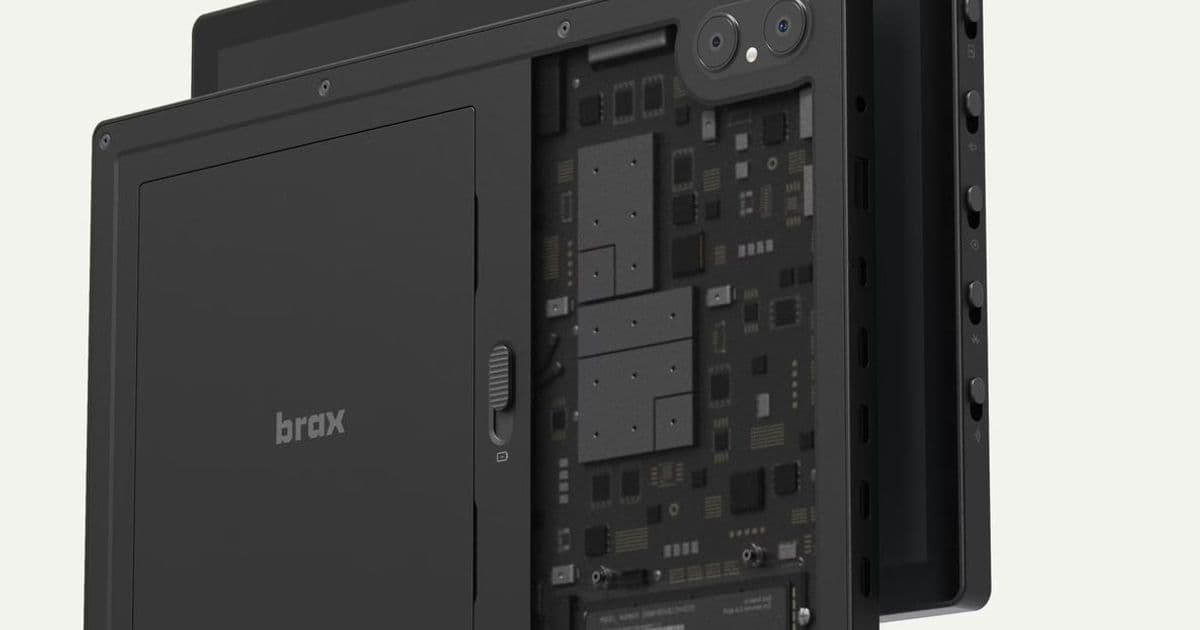
Brax Technologies' open_slate tablet enters crowdfunding with a MediaTek Genio 720 processor, 12-inch 2.4K display, and unique privacy-focused hardware including physical kill switches for cameras, GPS, and wireless radios. The device offers dual-boot capability between a Google-free Android variant and Ubuntu Linux, along with user-replaceable battery and upgradable NVMe storage.
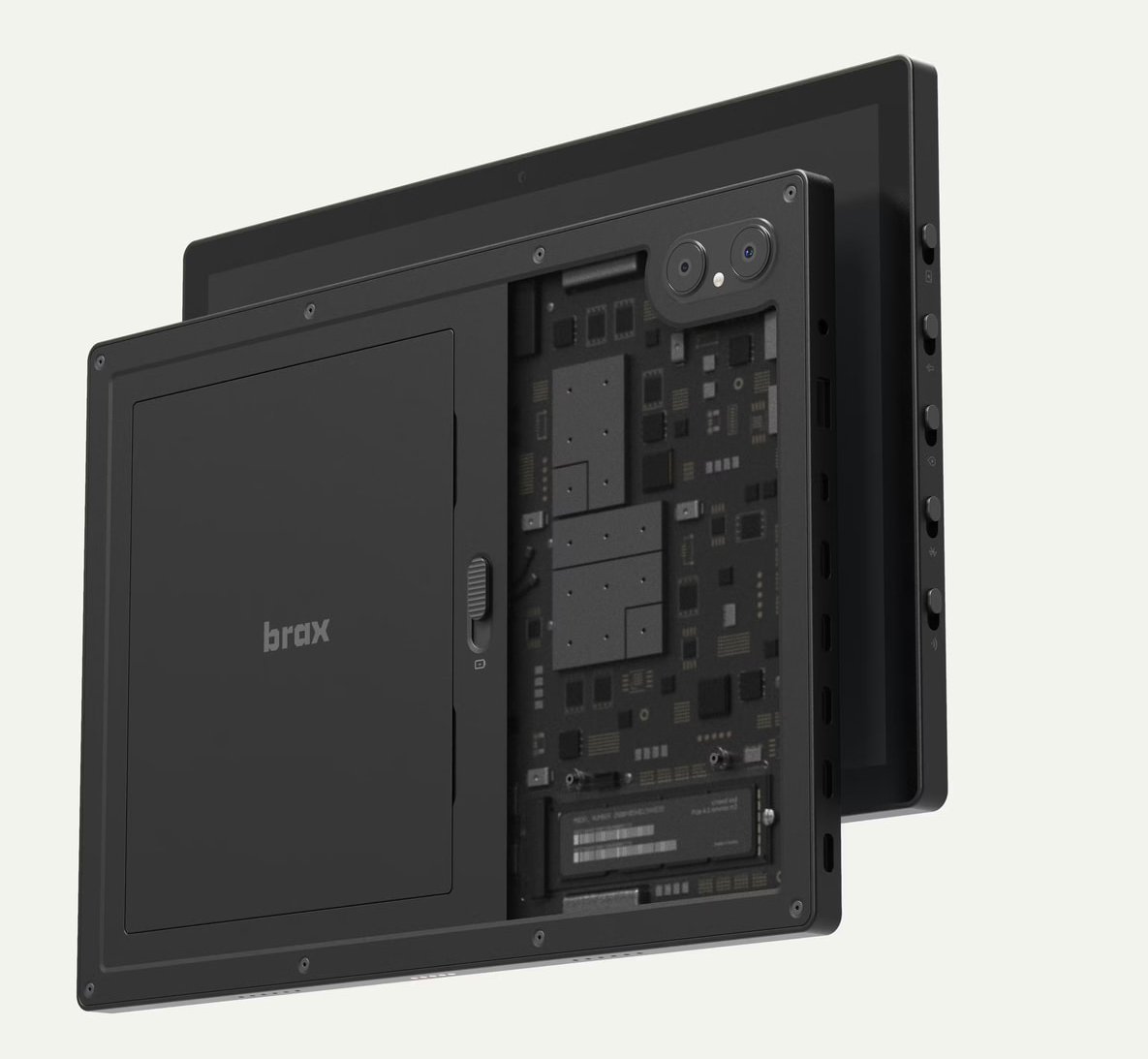
Brax Technologies has launched crowdfunding for its open_slate privacy-focused tablet, featuring a 12-inch 2.4K IPS display and dual-boot support for Ubuntu Linux and a de-Googled Android variant called Brax OS. Priced starting at $399 for Early Bird backers (retail $599), the tablet includes several hardware-level privacy controls and upgradeable components uncommon in modern tablets.
Hardware architecture and privacy features
At the core of the open_slate is MediaTek's Genio 720 IoT processor (MediaTek Genio platform), featuring:
- 2x Arm Cortex-A78 cores @ 2.6GHz
- 6x Cortex-A55 efficiency cores
- Mali-G57 MC2 GPU
- 9 TOPS NPU for machine learning workloads
The tablet includes physical kill switches that completely disconnect power to:
- Microphone
- Front/rear cameras
- GPS/GNSS receivers
- Bluetooth/WiFi radios
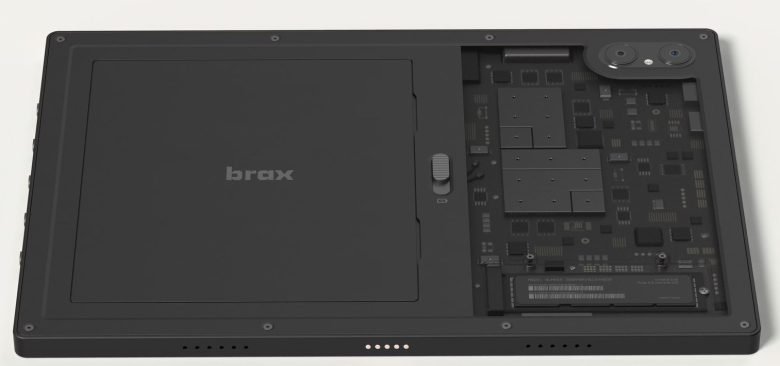
Unlike software-based toggles, these hardware switches provide guaranteed privacy by creating an air gap between components and power sources. The rear panel features a transparent window showcasing internal components, with screws allowing full access to:
- Removable 8,000mAh battery
- M.2 2280 NVMe slot (PCIe 2.0)
- MicroSD card reader
- Replaceable thermal solution
Software stack and Linux support
The open_slate offers two primary operating systems:
Brax OS (Android-based):
- Completely removed Google Mobile Services (GMS)
- No Play Store or proprietary Google APIs
- Alternative app distribution through F-Droid and Aurora Store
Ubuntu Linux (MediaTek Ubuntu support):
- Based on MediaTek's Yocto BSP
- Mainline kernel support in development
- Early versions may lack hardware acceleration for GPU/NPU
Brax confirms collaboration with Canonical to improve Linux compatibility, though warns some features like WiFi 7 (coming late 2026) may initially work better under Android. The company aims for mainline kernel support rather than device-specific forks to ensure long-term compatibility.
Development-focused hardware specs
| Component | Specification |
|---|---|
| Display | 12" 2400x1600 IPS LCD, 90Hz, 450 nits |
| RAM Options | 8GB LPDDR4X or 16GB LPDDR5x |
| Storage | 128GB/256GB eMMC + NVMe expansion |
| Ports | 2x USB-C 3.2, USB-A 2.0, mini DisplayPort |
| Wireless | WiFi 6E (WiFi 7 upgradeable), BT 5.3 |
| Security | Fingerprint sensor (power button) |
Practical considerations for developers
The open_slate presents several unique advantages and challenges:
Pros:
- Hardware kill switches enable true sensor isolation
- M.2 slot allows SSD storage expansion (rare in ARM tablets)
- Standard USB-PD charging via 33W adapter
- Pogo pin connector for keyboard accessories
Cons:
- MediaTek Genio 720 lacks AV1 decoding support
- Linux GPU drivers still maturing
- No official LineageOS support at launch
Crowdfunding timeline and pricing
Brax plans to ship devices by August 2026, with Early Bird pricing available through Indiegogo:
| Configuration | Early Bird | Retail |
|---|---|---|
| 8GB RAM + 128GB | $399 | $599 |
| 16GB RAM + 256GB | $529 | $799 |
Accessories include a pressure-sensitive stylus (4096 levels) and detachable keyboard. Backers should note Brax's previous BraX3 smartphone faced multiple delays, though the company claims improved manufacturing pipelines for this project.
For developers seeking an open, repairable tablet platform, the open_slate offers rare hardware transparency. However, as with all crowdfunded projects, technical risks remain until production units ship with finalized software support.
Comments
Please log in or register to join the discussion