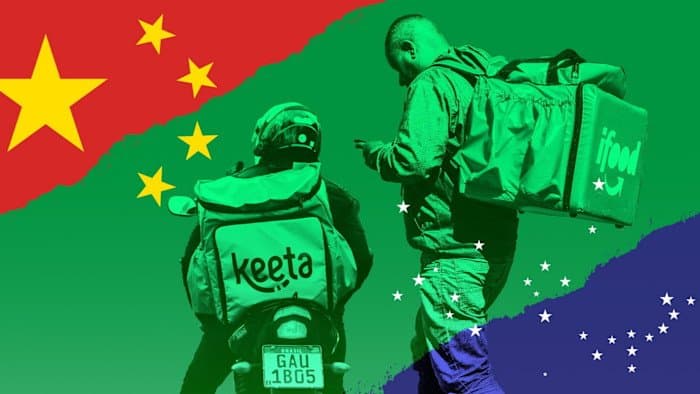
Competition between Brazilian delivery giant iFood and China's Keeta has escalated into allegations of corporate espionage and underhanded tactics, highlighting the intensifying global battle for dominance in the food delivery market.
The Brazilian food delivery market has become the latest battleground in the global tech competition, with local champion iFood and China's Keeta trading accusations of corporate espionage and shady tactics. According to the Financial Times, what began as a straightforward market contest has devolved into a war of allegations that underscores the high stakes in the multi-billion dollar food delivery industry.
The rivalry intensified after Keeta, backed by Chinese tech giant Meituan, entered Brazil's market with aggressive expansion plans. iFood, which dominates the Brazilian delivery space with an estimated 80% market share, has accused Keeta of employing corporate spies to infiltrate its operations and steal proprietary information. In turn, Keeta has alleged that iFood is using its market power to unfairly disadvantage competitors through exclusive partnerships and predatory pricing.
This corporate conflict mirrors similar battles playing out globally as delivery platforms vie for dominance in lucrative markets. The Brazilian case stands out for its rapid escalation and the severity of the accusations. Industry analysts note that food delivery remains one of the few tech sectors where local champions can still compete with global giants, making Brazil a particularly attractive prize.
Both companies have reportedly deployed extensive resources to gain competitive advantages. iFood has leveraged its deep understanding of Brazilian consumer behavior and established relationships with restaurants, while Keeta has brought Meituan's technological expertise and capital to bear. The result is a price war that has benefited consumers but squeezed restaurant margins and delivery worker earnings.
Regulatory scrutiny has increased as the allegations have mounted. Brazilian authorities are reportedly investigating whether either company has violated competition laws or engaged in unfair business practices. The outcome could have significant implications for how tech companies compete in emerging markets, particularly when backed by powerful foreign interests.
The situation highlights the broader tensions between local tech champions and global competitors backed by deep-pocketed investors. As delivery platforms expand globally, they're increasingly clashing in markets where local players have established dominance, leading to accusations of corporate espionage, predatory pricing, and other aggressive tactics.
For consumers, the rivalry has meant lower delivery fees and more restaurant options, but questions remain about the long-term sustainability of the business model and the working conditions for delivery personnel. The corporate espionage allegations add another layer of concern about how these companies operate and compete.
As the investigation continues, the Brazilian delivery market serves as a microcosm of the global tech competition, where market dominance, corporate espionage allegations, and regulatory scrutiny intersect in the race to control the last-mile delivery economy.
Comments
Please log in or register to join the discussion