Microsoft's Bicep experimental local extensions enable declarative management of physical devices, transforming how organizations approach smart infrastructure beyond traditional cloud resources.
The convergence of digital and physical worlds has reached a new milestone with Microsoft's Bicep infrastructure as code platform. What began as a tool for managing cloud resources has now extended its reach into physical environments, enabling organizations to apply declarative principles to smart devices and IoT infrastructure.
What Changed: From Cloud Resources to Physical Devices
Infrastructure as Code (IaC) has traditionally focused on cloud resources—virtual machines, networks, storage, and container applications. The core principle involves defining desired state in code and letting the platform converge reality toward that definition. This approach eliminates manual configuration drift, ensures consistency, and enables version control of infrastructure.
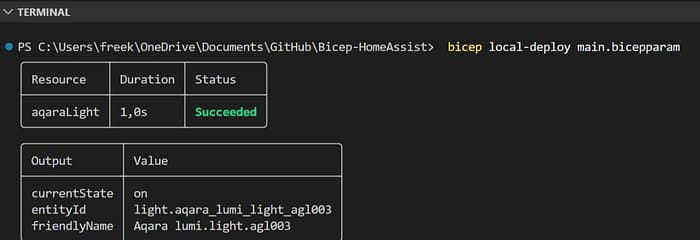
The innovation demonstrated here extends this model beyond the cloud. By leveraging Bicep's experimental local extension capability, developers can now create custom resource providers that treat physical devices as first-class IaC resources. The example provided—a Home Assistant smart light controlled through a Bicep template—illustrates how the same declarative approach that manages Azure resources can now toggle physical devices.
This shift represents a fundamental change in how organizations view infrastructure. No longer limited to data centers and cloud platforms, infrastructure as code now encompasses the physical devices that populate modern smart environments.
Provider Comparison: Traditional vs. Declarative Approaches
The current landscape of device management presents several approaches, each with distinct advantages and limitations:
Traditional Imperative Methods
Most smart home and IoT systems rely on imperative APIs that require explicit commands: "turn on," "turn off," or "toggle." This approach works well for user-facing interfaces like mobile apps and dashboards but conflicts with IaC principles.
Limitations:
- Non-idempotent operations (running the same command twice produces different results)
- No convergence model (systems don't self-correct toward desired state)
- Difficult to version control and audit
- Prone to configuration drift over time
Script-Based Automation
Scripting approaches provide more control but maintain imperative logic. These scripts typically include conditional logic to handle different scenarios.
Limitations:
- Complex maintenance as device inventory grows
- Difficult to ensure idempotency across all scenarios
- Limited reusability across different device types
- Requires specialized knowledge beyond infrastructure skills
Declarative IaC Extension
The Bicep local extension approach treats devices as resources with defined desired states, similar to how Azure resources are managed.
Advantages:
- True idempotency (identical deployments produce identical results)
- Self-healing through convergence model
- Version control and auditability
- Consistent interface across different device types
- Integration with existing IaC skills and tooling
The declarative approach fundamentally changes the relationship between digital code and physical devices, enabling infrastructure teams to manage smart environments using the same principles they apply to cloud infrastructure.
Business Impact: Operational Efficiency and New Capabilities
Extending IaC principles to physical devices creates significant business value across multiple dimensions:
Operational Efficiency
Organizations managing large smart environments—manufacturing facilities, smart buildings, or retail spaces—benefit from reduced operational overhead. The declarative model eliminates manual device management and reduces the need for specialized IoT programming skills.
Infrastructure teams can now manage physical devices using the same processes and tooling they use for cloud resources, creating operational consistency across digital and physical infrastructure.
Enhanced Reliability
The convergence model ensures devices maintain their desired state automatically. If a device is accidentally toggled or falls out of configuration, the next deployment corrects the issue without manual intervention.
This self-healing capability becomes increasingly valuable as organizations deploy more IoT devices, where manual verification becomes impractical at scale.
Security and Compliance
Declarative management improves security posture by:
- Enforcing consistent configurations across all devices
- Eliminating undocumented "shadow" configurations
- Providing complete audit trails of all configuration changes
- Facilitating rapid deployment of security patches and updates
Integration with Existing Workflows
Perhaps the most significant business impact is how this approach bridges the gap between IT operations and IoT deployments. Infrastructure teams can now manage smart devices using familiar tools and processes, reducing the need for specialized IoT teams and creating operational synergies.
The example provided demonstrates how a simple light can be managed through Bicep templates, but the pattern extends to any device with an API and meaningful desired state—thermostats, switches, sensors, and more complex systems.
Technical Implementation and Ecosystem
The technical implementation leverages several key components:
Bicep Local Extensions
The experimental local extension model allows registering custom executables as resource providers. Instead of deploying to Azure Resource Manager, az bicep local-deploy invokes handlers locally, enabling management of non-Azure resources.
Resource Modeling
Physical devices are modeled with explicit parameters defining their desired state. The light resource example demonstrates how properties like brightness, color temperature, and on/off status can be declared in code.
State Convergence
The extension implements CreateOrUpdate semantics, computing the desired end state from template properties and applying exactly one configuration per deployment. This enforces idempotency and prevents conflicting operations.
The implementation handles complex scenarios like color mode exclusivity, where Home Assistant doesn't allow color temperature and hue/saturation in the same service call. The extension enforces proper usage of the underlying API while maintaining the declarative model.
Future Implications
This approach represents the beginning of a broader shift in how organizations view infrastructure. As the extension model matures, we can expect:
Expanded device support: Beyond lights, switches, and sensors, organizations could declaratively manage complex systems like HVAC, security cameras, and industrial equipment.
Hybrid infrastructure management: Seamless integration between cloud, on-premises, and physical device management using a single declarative model.
Advanced convergence patterns: More sophisticated state management that handles device-specific behaviors while maintaining idempotency.
Ecosystem growth: A marketplace of device-specific extensions, enabling rapid adoption across different device types and manufacturers.
The convergence of digital and physical infrastructure through declarative models represents a fundamental shift in how organizations approach smart environments. By extending Infrastructure as Code principles to physical devices, Microsoft's Bicep platform is enabling organizations to manage complex smart environments with the same reliability, consistency, and efficiency they've achieved with cloud infrastructure.
For organizations already invested in IaC practices, this approach eliminates the need for specialized IoT programming skills and creates operational consistency across all infrastructure types. The example of a simple smart light controlled through Bicep templates demonstrates how this pattern can scale to manage entire smart buildings, manufacturing facilities, or retail environments.
As the boundary between digital and physical continues to blur, the ability to manage both through a unified declarative model will become increasingly valuable. The Bicep local extension approach provides a foundation for this convergence, transforming how organizations approach smart infrastructure in the digital age.
For more information on Bicep local extensions and related projects:
Comments
Please log in or register to join the discussion