A detailed exploration of a unique cyberdeck project that repurposes Framework's modular laptop mainboard into a slab-style portable computer, combining modern hardware with retro design aesthetics.
When Framework announced they would be selling their laptop mainboard as a standalone single-board computer, it opened up exciting possibilities for hardware enthusiasts and tinkerers. One such enthusiast, Richard Sutherland, took on the challenge of creating something unique with this modular hardware, resulting in a fascinating cyberdeck that bridges the gap between modern computing and retro design aesthetics.
The Foundation: Framework's Modular Mainboard
Framework has built a reputation for creating highly serviceable and modular laptops, and their mainboard continues this philosophy. As a full Intel-based system on a single board, it offers impressive specifications including robust storage and memory expansion capabilities, decent onboard graphics, and comprehensive power management features. The board's design prioritizes integration into Framework's laptop chassis, which means some connectors are specialized, but the released technical documentation including pinouts and CAD models provides ample opportunities for creative repurposing.
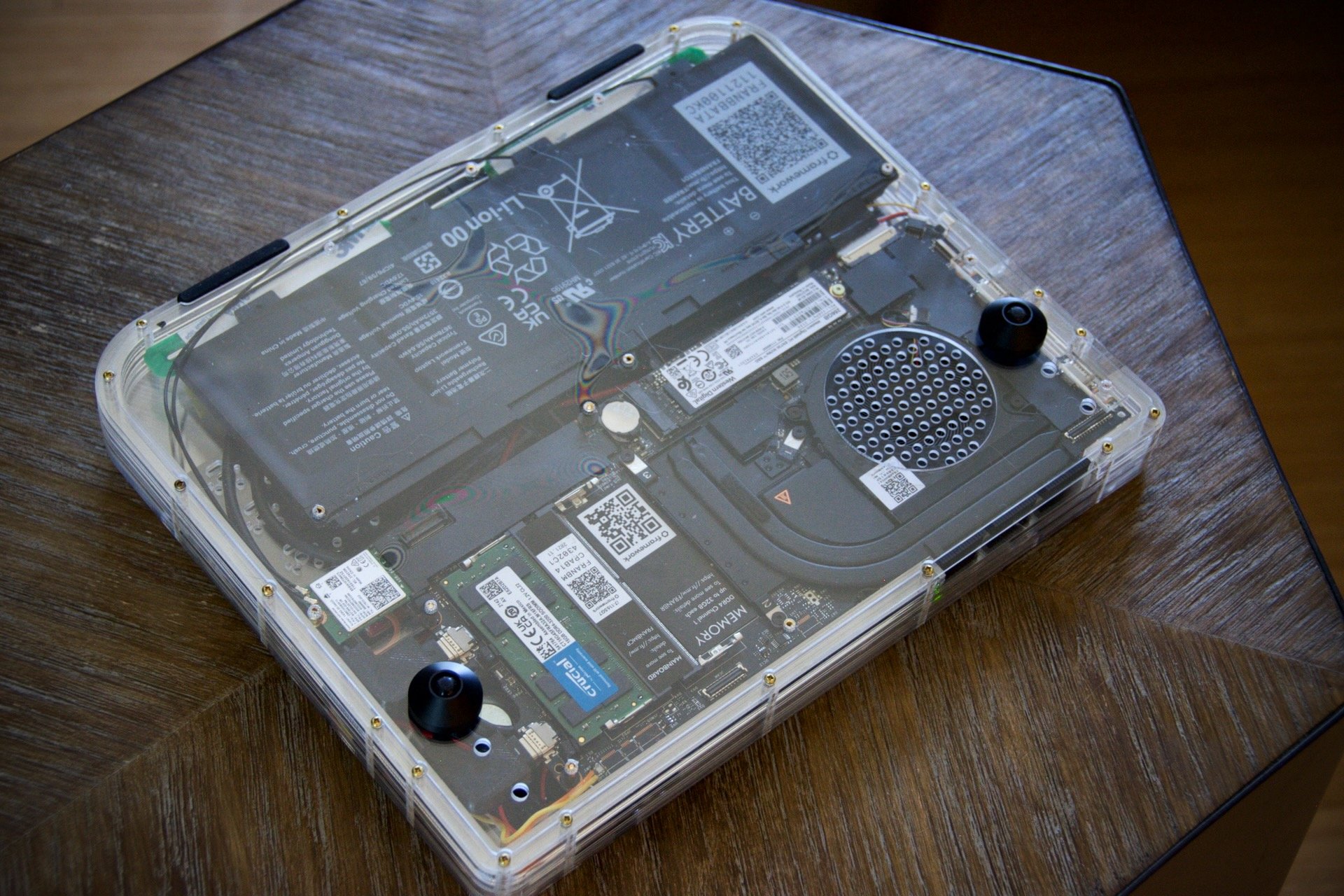
What makes this mainboard particularly versatile is its four standard USB-C ports, which alone provide numerous expansion possibilities without requiring any additional connector work. The board can be powered via USB-C, making it compatible with standard power banks for portable use or USB-C power bricks for stationary setups. For Sutherland's cyberdeck, he opted to use Framework's battery system, which offers solid capacity and is already designed to work seamlessly with the onboard power management.
Design Philosophy: Slab-Style Computing
Sutherland's creation draws inspiration from the slab-style computers that gained popularity before clamshell designs became the standard for portable computing. This design choice was influenced by his childhood desire for a TRS-80 Model 100, a classic portable computer from the 1980s. The slab design offers a unique form factor that sets it apart from conventional laptops while maintaining practical usability.
Component Selection and Integration
The cyberdeck incorporates several key components to create a functional and aesthetically pleasing device:
- Framework laptop battery for reliable power management
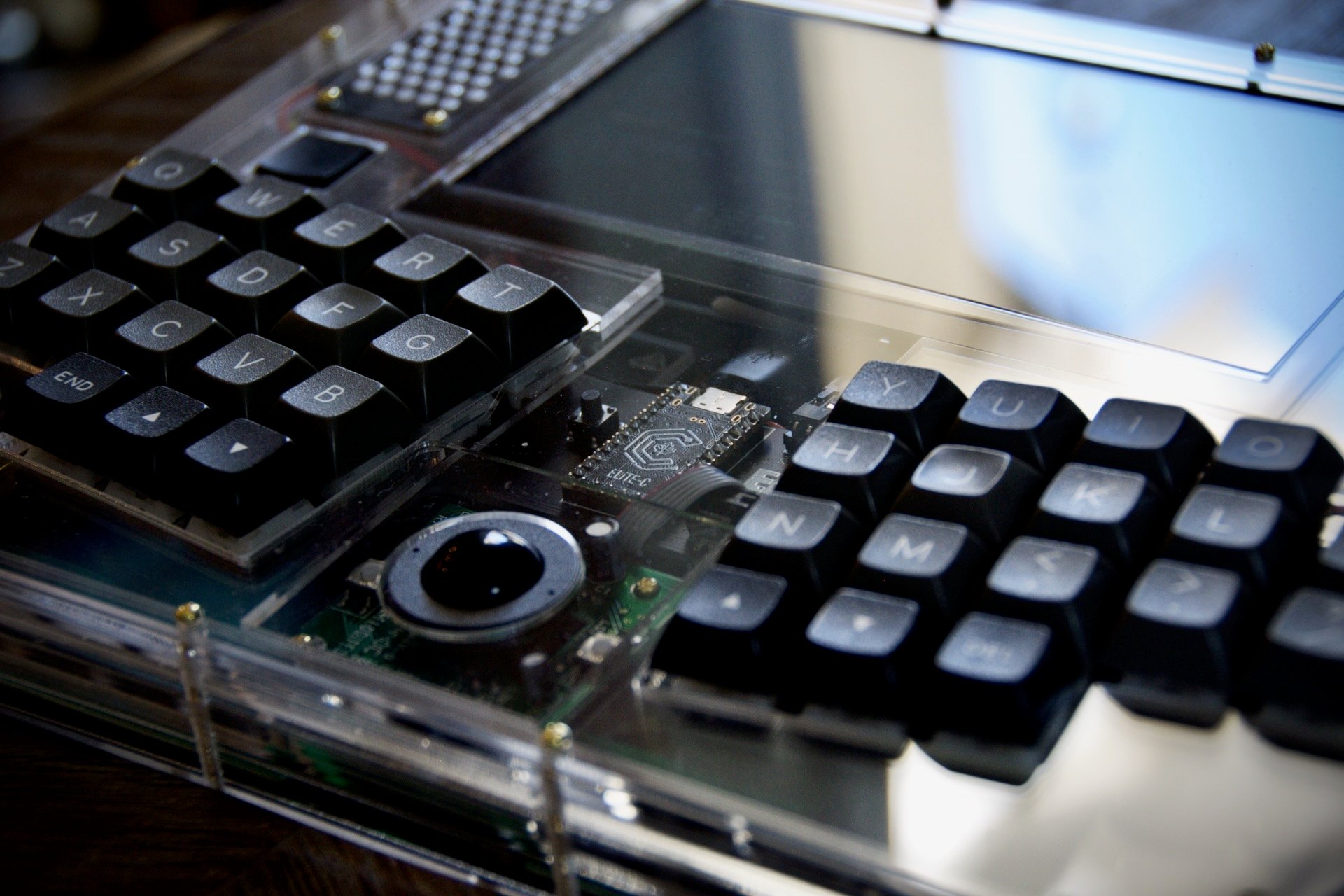
- Custom mechanical keyboard PCB for a personalized typing experience
- WiFi card for wireless connectivity
- SSD storage for fast data access
- 16GB of memory for smooth multitasking
- 7-inch IPS display for clear visual output
- Integrated speakers for audio functionality
This combination of components results in a fairly capable computer that maintains the spirit of portable computing while incorporating modern hardware specifications.
The Case: Clear Acrylic and Brass
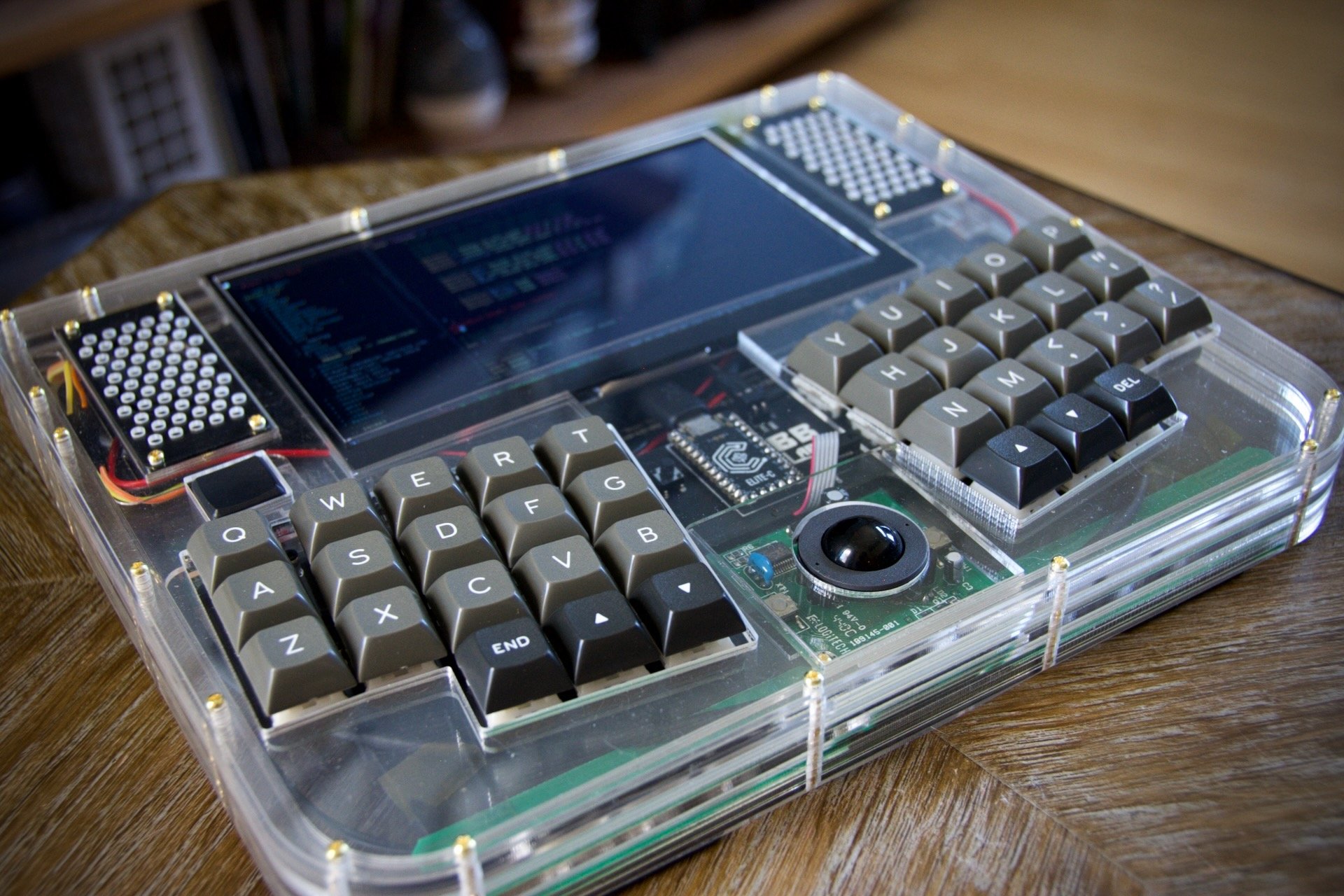
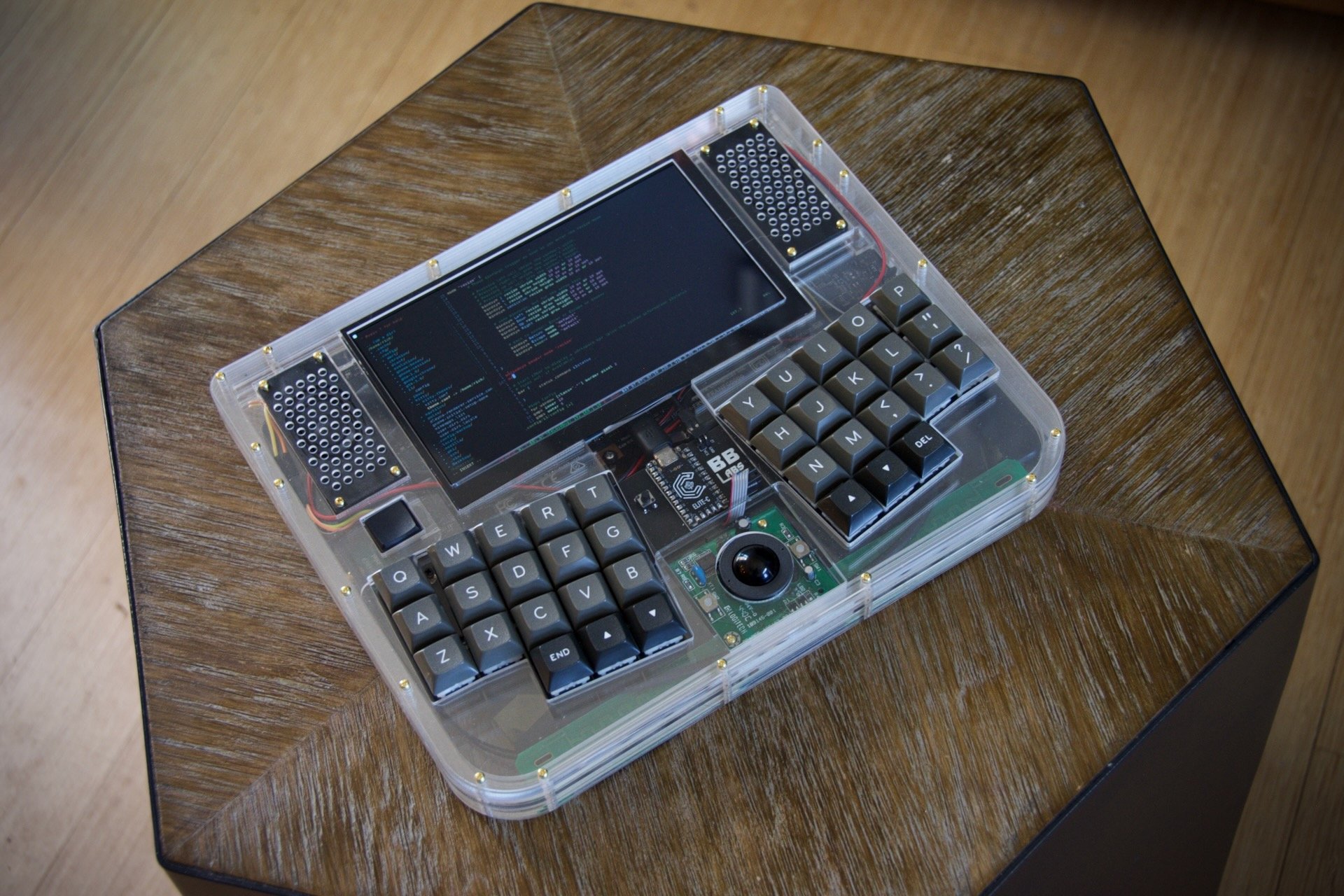
For the case design, Sutherland chose an unconventional approach that would showcase the internal components while creating a visually striking device. Clear acrylic and brass were selected to create a transparent enclosure that highlights the mainboard, custom keyboard PCB, and other internal elements. This choice not only makes the device visually interesting but also serves an educational purpose by allowing viewers to see how the components are integrated.
While 3D printing was considered as an alternative manufacturing method, the decision to use laser-cut acrylic layers presented unique challenges and opportunities. Building the unit with stacked acrylic layers allowed for precise component mounting and created an interesting visual depth to the design. This approach demonstrates how traditional manufacturing techniques can be combined with modern electronics to create compelling hardware projects.
The Custom Keyboard: A Mechanical Marvel
The cyberdeck features a custom mechanical keyboard, which represents a significant engineering challenge. While Sutherland doesn't provide exhaustive details about the keyboard's construction, its inclusion demonstrates the project's commitment to creating a truly personalized computing experience. The mechanical keyboard adds to the retro aesthetic while providing modern typing comfort and reliability.
Documentation and Open Source Philosophy
True to the spirit of the hardware hacking community, Sutherland has released all design files and documentation for the project. The repository serves as a "guided tour" rather than a comprehensive build guide, highlighting interesting aspects of the build and pointing out tricky elements while acknowledging that many details are left for individual exploration.
This approach encourages others to learn from the project and adapt the concepts to their own creations. The open-source nature of the project, licensed under MIT and CC BY-SA 4.0, ensures that the community can build upon and modify the designs for their own purposes.
Technical Challenges and Solutions
Working with Framework's mainboard presented several challenges due to its laptop-centric design. The specialized connectors required creative solutions for integration into a custom form factor. However, the availability of comprehensive technical documentation, including pinouts and CAD models, made it possible to work around these limitations.
The power management system deserves special mention, as it demonstrates how Framework's thoughtful design extends beyond their laptop product. The ability to use the laptop's battery system with the mainboard shows the advantages of a modular approach to hardware design.
Implications for the Hardware Hacking Community
This project represents more than just a creative use of Framework's mainboard; it demonstrates the potential for modular computing platforms to enable innovative hardware projects. The Framework mainboard's combination of modern specifications, comprehensive documentation, and flexible power options makes it an ideal platform for custom computing projects.
The cyberdeck also highlights the enduring appeal of alternative form factors in personal computing. While clamshell laptops dominate the market, projects like this show that there's still interest in exploring different approaches to portable computing.
Building Your Own: Considerations and Advice
For those inspired to create their own cyberdeck or similar project using Framework's mainboard, Sutherland offers to answer questions and provide advice. This willingness to support the community reflects the collaborative nature of hardware hacking and open-source development.
Key considerations for potential builders include:
- Understanding the power requirements and options available
- Planning the case design to accommodate all components
- Considering the trade-offs between different manufacturing methods
- Ensuring proper cooling for the mainboard
- Designing a comfortable and functional keyboard layout
Conclusion: A Bridge Between Eras
Sutherland's cyberdeck project successfully combines modern computing power with retro design aesthetics, creating a device that is both functional and visually striking. By leveraging Framework's modular mainboard and combining it with custom components and thoughtful design, the project demonstrates what's possible when modern hardware meets creative vision.
The project serves as inspiration for others in the hardware hacking community and showcases the potential of modular computing platforms. It also reminds us that while technology continues to advance, there's still value in exploring alternative form factors and design approaches in personal computing.
For those interested in exploring this project further or creating their own variations, the complete design files and documentation are available in the GitHub repository, continuing the tradition of open-source hardware development and community collaboration.
Comments
Please log in or register to join the discussion