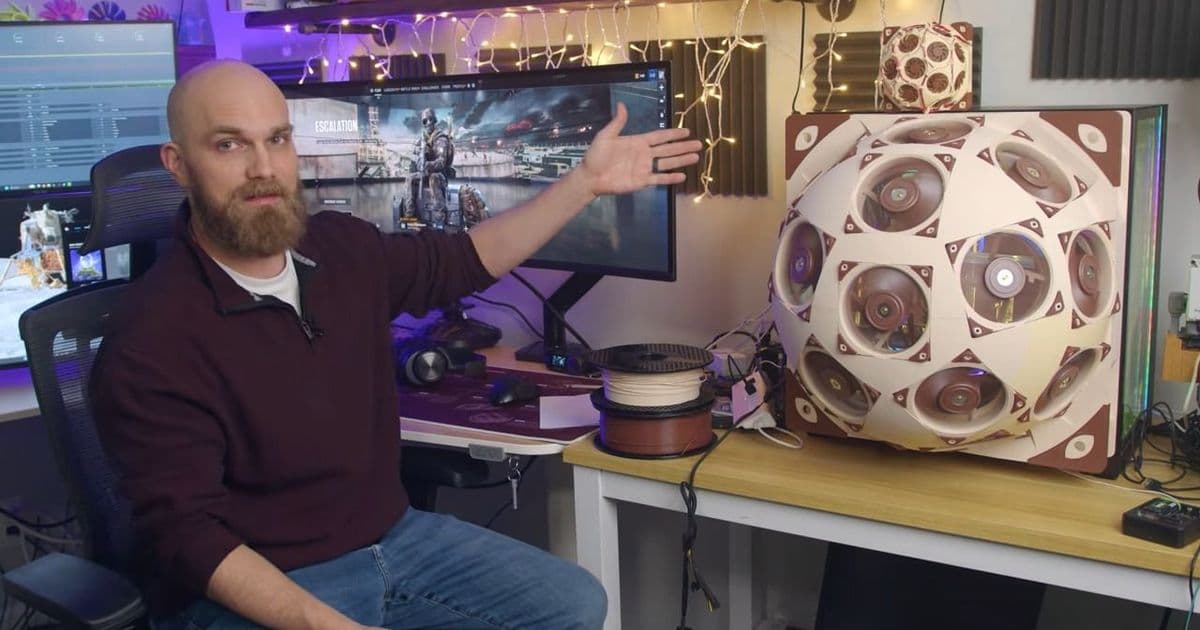
TechTuber Major Hardware has created a bulbous 15-fan PC case side panel called the 'Superdome' that dramatically improves cooling performance, dropping CPU temperatures by 20°C during gaming tests while maintaining surprisingly quiet operation.
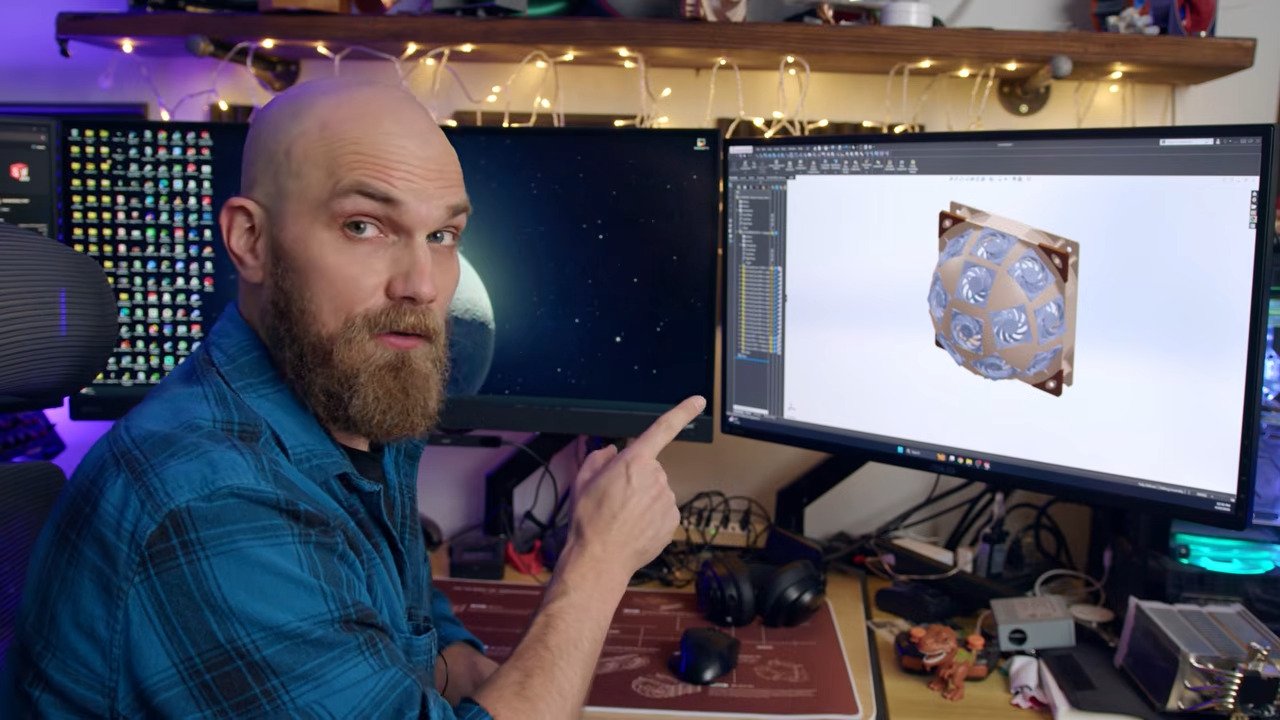
A TechTuber has constructed a bulbous 15x fan PC case side panel as a cooling experiment. If you think the mind-boggling design of the 'Superdome' is familiar, that's probably because the fevered imagination of Major Hardware was also behind the custom domed 15x fans in the 'Fanhattan Project' we wrote about last month. How well does it scale to PC side panel use? Let's see.
Building the Superdome: A 15-Fan PC Side Panel
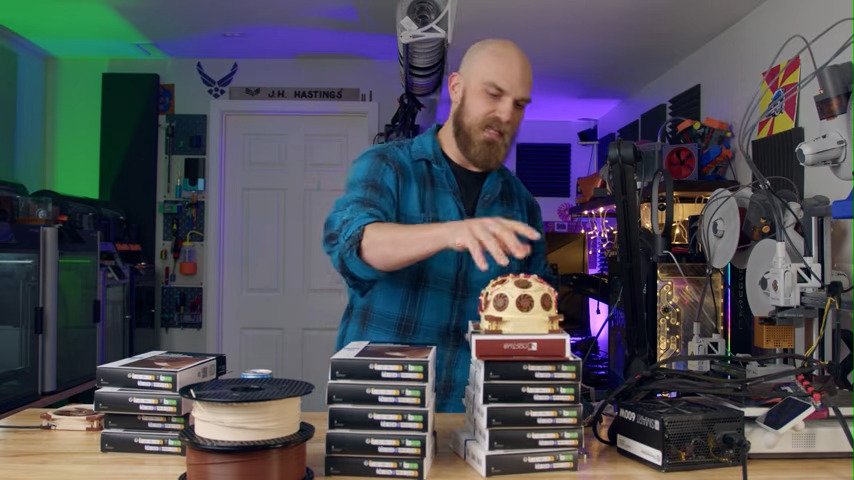
Major Hardware explains at the start of his new video that the Superdome was inspired by user comments on the prior project, suggesting the use of multiple standard NF-A12x25 120mm fans instead of tiny fans replacing a single unit. Thankfully, as the Noctua fans are $40 a piece, the cooling firm provided all the fans the project required — saving $600 for the maker. As a cherry on top, Noctua also generously provided spools of matching 3D printer filament.
The freebie Noctua fans arrived before the TechTuber had drafted the Superdome in 3D, but the idea was made to work with five fans around one on top of the dome, and nine surrounding them at the base of the dome, near the PC. Cabling routing was yet to be decided.
Next, we see Major Hardware 3D print the structure of the Superdome, and luckily, the Bambu Labs H2D and H2S build volume was just enough to prevent more design splitting than would be ideal. Still, it took days to output all the pieces. The finished work looks great from the outside, but Major Hardware is the first to admit cable management is "a little bit of a disaster." But it was "honestly pretty quiet," as long as none of the cables swung into the fan blades. All the fans were configured to be intakes, so we guess that when attached to the PC, the build would have a soupçon of positive internal pressure.
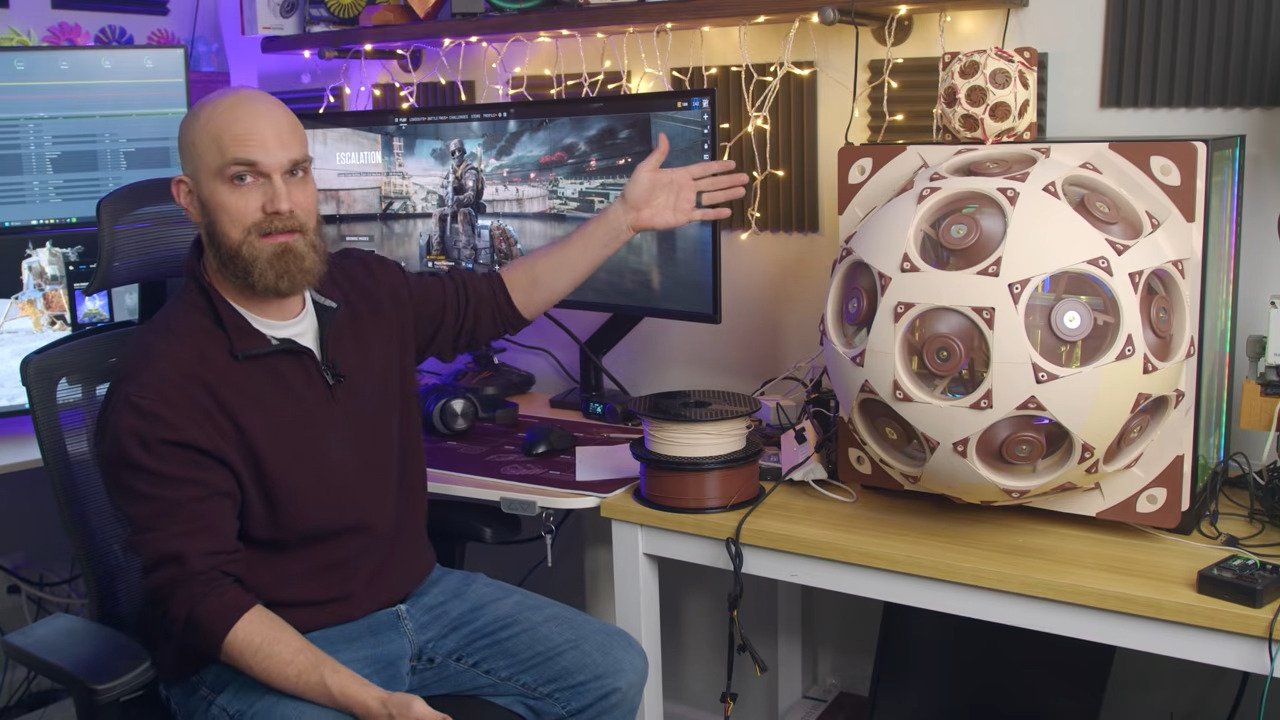
Battlefield 6 gaming thermals test
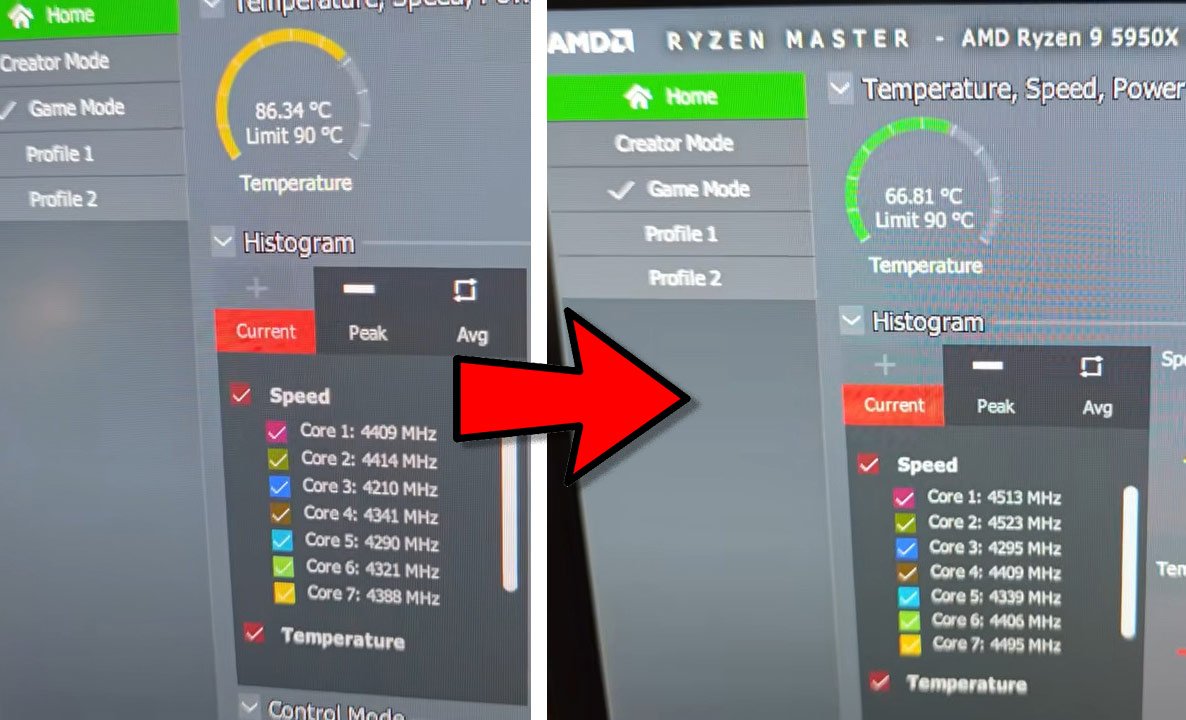
The proof of any success from equipping the Superdome would come from an A/B Battlefield 6 gaming challenge, decided the TechTuber. With the standard glass panel equipped, he observed a top temperature of ~86°C in the Ryzen Master software. Swapping to the Superdome and playing a few more BF6 games, and Major Hardware saw that the CPU temps had dropped to approximately 67°C. "I dropped about 20°C just by putting the Superdome on the front of my PC," noted the TechTuber. "This is pretty incredible, and it's not even loud."
However, sitting beside the PC, he felt "a constant breeze."
Major Hardware has decided to share the 3D printing files on Thingiverse, so others with a Lian Li O11 case and a few spare fans can easily follow in his footsteps.
Technical Analysis and Market Context
The Superdome represents an extreme approach to PC cooling that pushes the boundaries of conventional case design. By utilizing 15 Noctua NF-A12x25 fans in a 3D-printed dome structure, Major Hardware has created a solution that delivers exceptional thermal performance at the cost of complexity and aesthetics.
From a technical standpoint, the 20°C temperature reduction is significant. For high-performance CPUs, particularly those from AMD's Ryzen 7000 series or Intel's 13th/14th generation processors, this kind of cooling improvement can translate to sustained higher clock speeds, better performance in thermally constrained scenarios, and potentially longer component lifespan.
However, the practical limitations are substantial. The $600 worth of fans alone makes this an expensive proposition, and the cable management challenges described suggest this isn't a solution for those seeking clean, professional builds. The constant airflow mentioned by Major Hardware also indicates this might be better suited for environments where noise isn't a primary concern.
The Economics of Extreme Cooling
The fact that Noctua provided the fans for this project speaks to the marketing value of such extreme cooling demonstrations. While few enthusiasts would actually build a Superdome, the publicity generated helps reinforce Noctua's reputation for premium cooling solutions. The company's willingness to provide both fans and 3D printing filament shows a sophisticated understanding of how to engage with the enthusiast community.
For the average PC builder, more conventional cooling solutions like high-end air coolers or AIO liquid coolers offer better value propositions. The Superdome serves more as a proof of concept and conversation starter than a practical recommendation.
Future Implications
Projects like the Superdome push the envelope of what's possible in PC cooling and may influence future case designs. As processors continue to demand more power and generate more heat, innovative cooling solutions will become increasingly important. While the Superdome's extreme approach isn't practical for mass adoption, elements of its design philosophy—maximizing airflow, creative fan placement, and 3D-printed customization—may find their way into more mainstream products.
The willingness of companies like Noctua to support such experimental projects also suggests a healthy ecosystem where innovation is encouraged, even if the end results aren't always commercially viable. This kind of creative exploration often leads to unexpected breakthroughs that eventually benefit the broader market.
For now, the Superdome remains a fascinating example of enthusiast ingenuity and the lengths to which some will go to achieve optimal cooling performance. While most users will stick with more conventional solutions, the project serves as an inspiring reminder of the creativity and technical skill present in the PC building community.
Comments
Please log in or register to join the discussion