
An analysis of Byron Allen's acquisition of BuzzFeed, examining how this union represents a changing media landscape where experimental digital publishing meets old-school business acumen.
In the ever-shifting sands of media ownership, few deals encapsulate the current moment quite like Byron Allen's acquisition of BuzzFeed. To understand this union, we must first appreciate the two entities coming together—a digital pioneer fallen on hard times and a media mogul who built his empire on acquiring distressed assets.
Byron Allen, often described as a "television business model exploiter," has carved out a unique niche in media by identifying undervalued properties and turning them into profitable ventures. His portfolio includes Weather Channel, Local TV stations, and other legacy media assets that he has revitalized through aggressive acquisition strategies and operational efficiency. Allen's business model is simple yet effective: acquire assets when they're cheap, optimize operations, and either flip them for profit or run them as part of his growing empire.
BuzzFeed, on the other hand, represents a different kind of media evolution. Founded by Jonah Peretti in 2006, it began as an experimental petri dish for digital media ideas, pioneering the listicle format and mastering the art of viral content. The company grew rapidly, securing massive venture funding that eventually pushed it toward becoming a publicly traded entity in 2021. However, the IPO marked the beginning of a downward spiral, with BuzzFeed's stock price plummeting and the company struggling to find its footing in an increasingly crowded digital landscape.
The acquisition, therefore, feels like something of an admission of how far BuzzFeed has fallen. As Peretti himself stated in his farewell message: "Byron's vision, operational experience, and long-term commitment to premium content makes him exceptionally well-positioned to lead BuzzFeed and HuffPost into our next phase of growth."
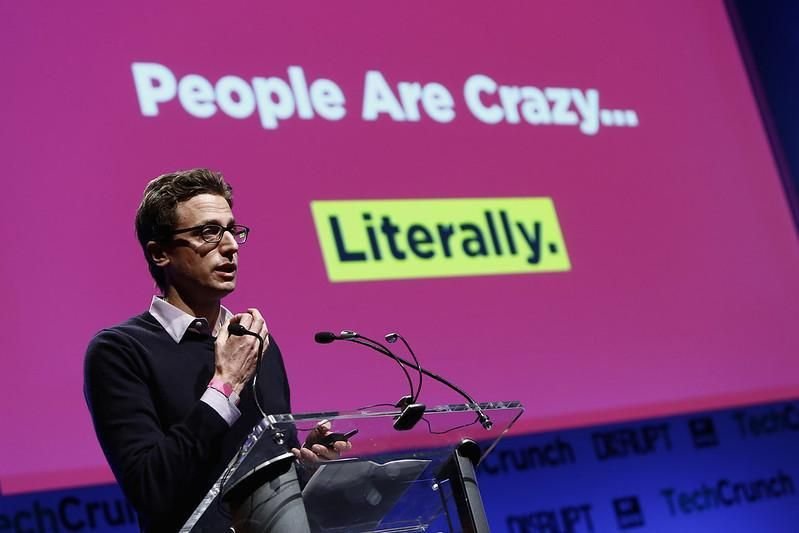
Peretti's praise notwithstanding, there's little doubt he's feeling a sense of relief. The company he founded has been in a state of flux for years, attempting to balance its experimental roots with the financial realities of public ownership. Recent moves, including Peretti's "Anti-SNARF Manifesto" from last year, suggested he was trying to recapture the innovative spirit that made BuzzFeed famous in the first place.
As an experiment in building virality and generating attention online, BuzzFeed has been a massive success. As a company, it's seen better days. The diaspora of former BuzzFeed employees has arguably achieved more success than the company itself, with many going on to win Emmys, reshape independent media, and become media moguls in their own right.
This raises an interesting question: has BuzzFeed's business model fundamentally failed? The company spent years treading water, attempting to shore itself up with acquisitions that only made things worse from a financial standpoint. (Notably, HuffPost was cofounded by Peretti but came with significant debt.)
Enter Byron Allen. He's not a deeply creative mind like Peretti, but rather an old-school entertainer with sharp business chops. As strange as it sounds, this might actually be to BuzzFeed's advantage. The company needed someone who could make difficult decisions, streamline operations, and potentially steer it toward profitability.
Simon Owens suggested in his newsletter that BuzzFeed might benefit from a "coherent YouTube strategy," highlighting how the company has struggled to adapt to changing platform dynamics. It's telling that the most memorable product BuzzFeed has produced in recent years was something it acquired, then sold: Hot Ones.
The acquisition also raises questions about the future of digital media. When experimental digital publishers like BuzzFeed end up in the hands of traditional media acquirers, what does that mean for innovation in the space? Is this a sign that the era of venture-funded digital experimentation is over, and we're entering a phase where sustainability trumps disruption?
Meanwhile, the media landscape continues to evolve. As traditional platforms struggle, new models emerge. The author of this article, whose newsletter Tedium has covered media oddities for years, recently launched the "Tedium Shopping Network"—a collection of unusual, offbeat products presented in a stylized slideshow format. This represents another evolution in media, blending content with commerce in a way that feels authentic to the publication's voice.

The BuzzFeed acquisition by Byron Allen may mark the end of an era for digital media experimentation, but it also signals a new beginning—one where business fundamentals take precedence over viral potential. Whether this leads to a more sustainable media ecosystem or simply a consolidation of power remains to be seen. What's certain is that the media landscape continues to evolve, and the players who can adapt will be the ones who thrive in whatever comes next.
Comments
Please log in or register to join the discussion