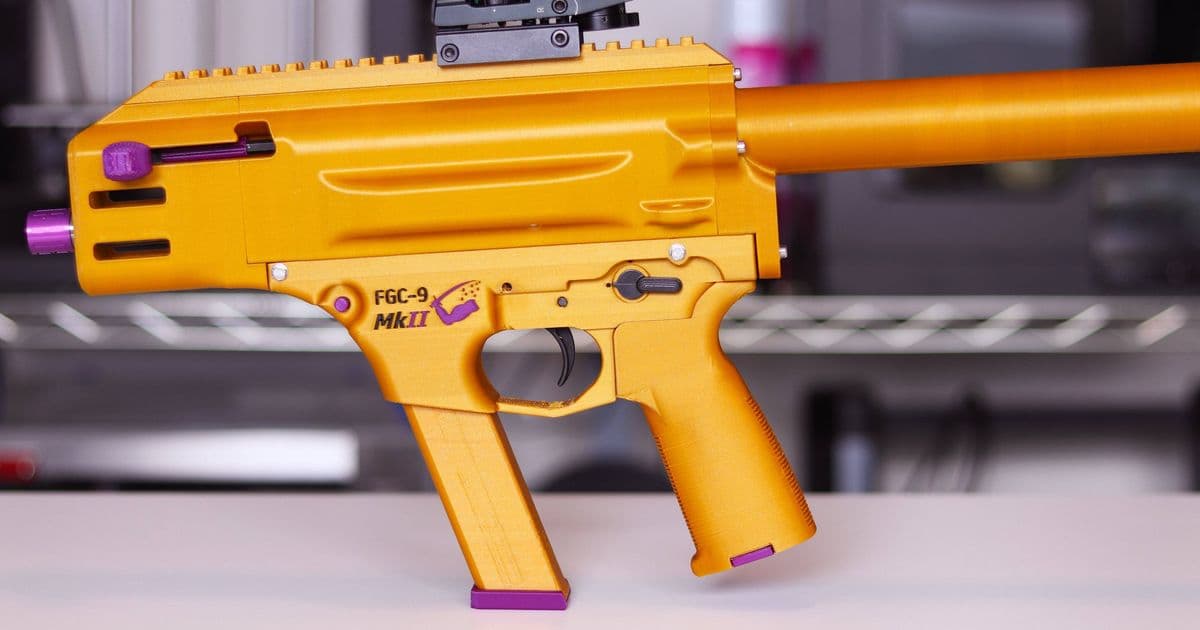
Proposed California legislation requiring 3D printers to block firearm designs threatens open source tools and creates surveillance concerns, according to the EFF.
California's proposed legislation to put the burden of blocking 3D-printed firearms onto printer manufacturers could effectively sideline open source tools and create new surveillance concerns, digital rights activists argue. The Electronic Frontier Foundation (EFF) warns that AB 2047, while aimed at curbing ghost guns, could lead to widespread monitoring of users' printing activity and empower manufacturers to introduce restrictive policies affecting consumer choice.
The Technical Impossibility of Print-Blocking Technology
Cliff Braun and Rory Mir from the EFF have published a series of blog posts this month arguing that the proposed print-blocking technology is fundamentally flawed. Their analysis reveals that 3D printers and other computer numerical control (CNC) machines are relatively simple devices, with much of their intelligence coming from the computer-aided manufacturing (CAM) software or slicer software they connect to.
"Under these proposed laws, manufacturers of consumer 3D printers must ensure their printers only work with their software, and implement firearm detection algorithms on either the printer itself or in a slicer software," Braun explained. "These algorithms must detect firearm files using a maintained database of existing models."
This requirement would effectively establish legal and illegal software, with proprietary solutions becoming the de facto standard while open source alternatives wither. The technical simplicity of 3D printers means that anyone determined to print firearm components could easily evade detection by making small modifications to either the visual models of firearm parts or the machine instructions (G-code) generated from those models.
Surveillance Concerns Beyond Gun Control
The EFF's concerns extend far beyond the immediate goal of preventing ghost gun production. Mir warns that the bill offers no guardrails to keep the "constantly expanding blacklist" limited to firearm-related designs. This lack of boundaries creates a clear risk that the surveillance infrastructure could be repurposed for other forms of alleged unlawful activity.
"This could look like Nintendo blocking a Pikachu toy, John Deere blocking a replacement part, or even patent trolls forcing the hand of hardware companies," Mir wrote. "Repressive regimes, here or abroad, could likewise block the printing of 'extreme' and 'obscene' symbols, or tools of resistance like popular anti-ICE community whistles."
The surveillance implications are particularly troubling. Printer manufacturers would need to monitor and analyze every design file sent to their devices, creating a comprehensive record of users' printing activities. This data could potentially be shared with other companies looking to protect against 3D-printed spare parts, opening the door to copyright lawsuits and other legal complications.
Impact on Legitimate Users and Open Source Community
Many 3D printer owners have no interest in printing firearm components. Most simply want the freedom to print trinkets, spare parts, or use their printers as an income stream by selling printed items. The proposed legislation would affect these legitimate users through false positives and restrictive policies.
Braun notes that the algorithms are more than likely to lead to false positives, preventing good-faith users from using their hardware. Additionally, owners of printers would be guilty of a crime if they circumvent these intrusive scanning procedures or load alternative software, which they might do because their printer manufacturer ends support.
Leading 3D printing site Prusa Research has already taken a stance on this issue. Community manager Tommy Muszynski emphasized the company's commitment to open source principles and user freedom. "At Prusa, safety is obviously the highest priority," Muszynski said in a Reddit comment. "We want everyone to have a safe experience in this hobby, but at the same time, we have always been firm believers in the 'right to repair' and the right for you to use the machine you bought however you see fit."
Opposition from Multiple Fronts
The bill faces opposition not just from digital rights advocates but also from gun rights organizations. Gun Owners of California argues that the legislation does not target criminals but instead restricts innocent consumers and businesses. "Californians deserve policies that focus on criminal misuse – not sweeping mandates that expand bureaucracy and restrict lawful activity," the organization wrote in response to the bill's introduction in February.
This unusual alliance between digital rights groups and gun rights organizations highlights the broader implications of the legislation. While the goal of reducing gun violence is widely supported, the means proposed in AB 2047 could have far-reaching consequences for digital freedoms and open source technology.
The Broader Context of 3D Printing Regulation
This isn't the first time 3D printing and firearms have collided in the regulatory sphere. Leading 3D printing sites have already banned firearm files, though home gun makers have found alternative sources. Meanwhile, innovative uses of 3D printing continue to emerge, from train stations being 3D-printed in an afternoon to the development of 3D-printed, Raspberry Pi-powered "suicide pods."
The tension between innovation and regulation is at the heart of this debate. As 3D printing technology becomes more accessible and powerful, the challenge of balancing public safety with technological freedom becomes increasingly complex. The EFF's analysis suggests that AB 2047 represents a solution that may be worse than the problem it seeks to address, potentially undermining the very innovation that makes 3D printing such a transformative technology.
The outcome of this legislative battle could set a precedent for how emerging technologies are regulated in the digital age, making it a crucial test case for the future of open source tools and digital rights in America.
Comments
Please log in or register to join the discussion