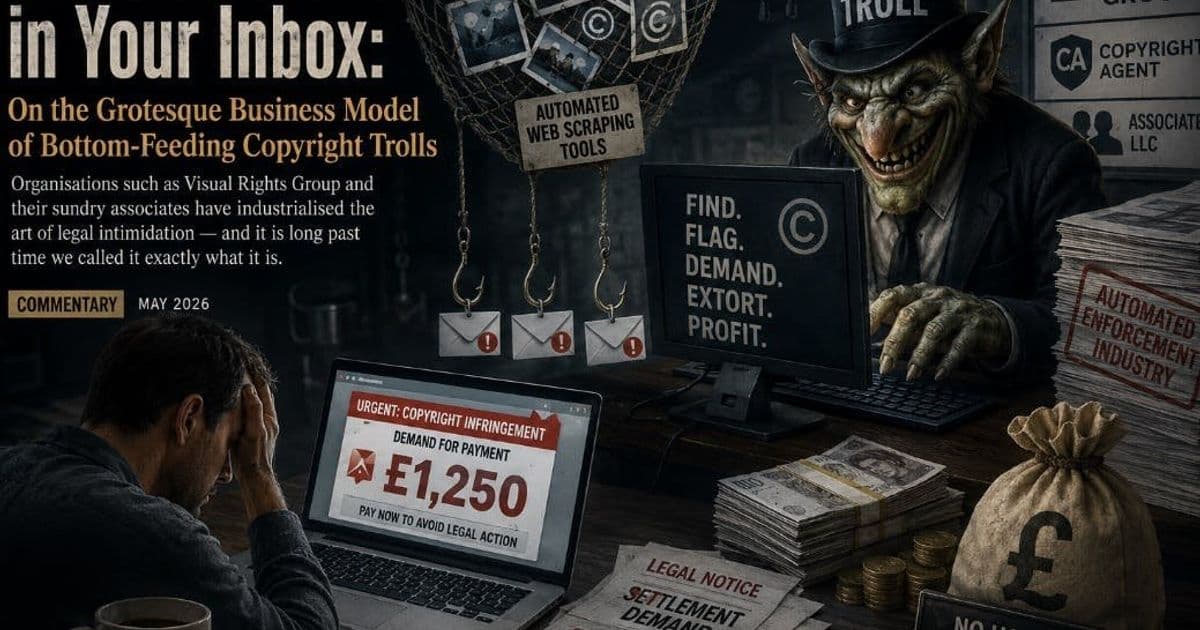
A look at the rise of copyright‑troll firms that automate infringement notices, monetize settlements, and reshape the economics of online content. The piece explains their methods, the technology behind mass DMCA filings, the investors backing them, and what creators and platforms can do to protect themselves.
Cease, Desist, and Pay Up: How Copyright Trolls Turn Legal Threats Into a Business Model
By Matthew – Technology News Australia, May 29 2026
The problem: automated infringement claims that drain creators’ time and wallets
When a video‑sharing platform flags a clip, the creator often sees a terse notice: "Copyright infringement detected. Remove or face legal action." For most independent creators, the cost of hiring counsel, filing a counter‑notice, or simply navigating the DMCA process is prohibitive. The result is a steady stream of settlements—usually a few hundred dollars—paid to avoid a protracted legal battle.
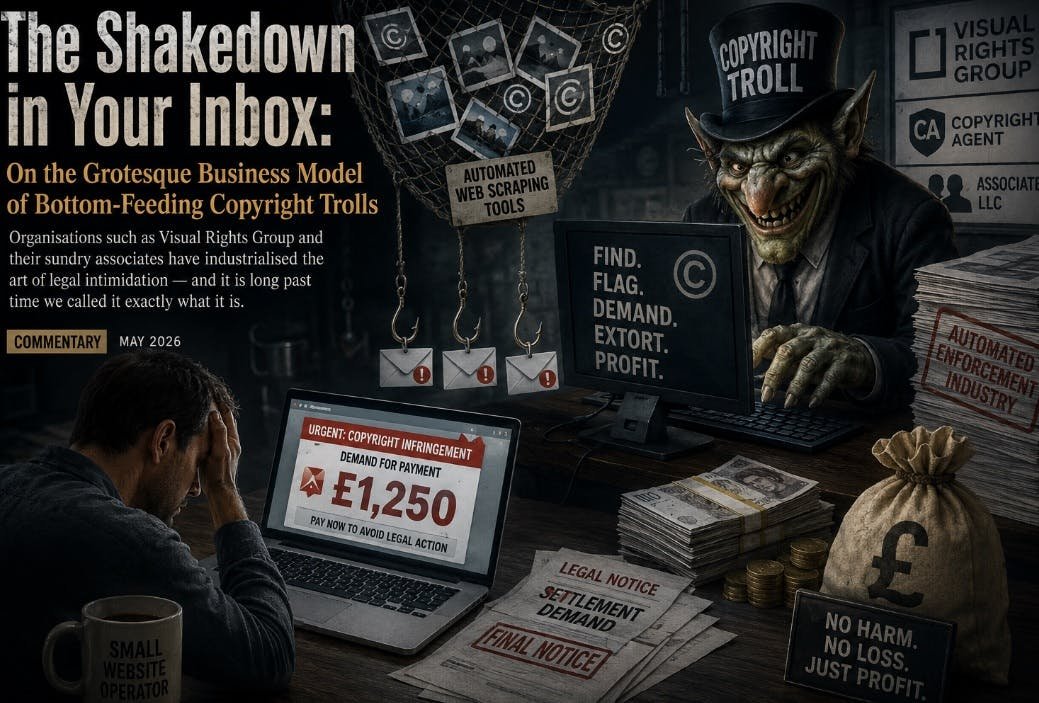
What started as a handful of law firms defending their clients’ rights has morphed into a niche industry that treats the DMCA process like a revenue engine. These entities, colloquially called copyright trolls, use bots to scour the internet for copyrighted material, generate takedown notices at scale, and then demand payment for the “right to re‑publish.”
How the model works: technology, scale, and monetisation
| Step | What happens | Tools used |
|---|---|---|
| 1. Content scraping | Automated crawlers scan video platforms, image hosts, and social networks for matches against a proprietary database of copyrighted works. | Custom Python scrapers, Selenium for dynamic sites, and increasingly, AI‑based image/audio fingerprinting (e.g., pHash or commercial services like Audible Magic). |
| 2. Match verification | A lightweight neural net filters false positives, reducing the risk of frivolous claims that could attract legal push‑back. | TensorFlow models fine‑tuned on public domain vs. protected content datasets. |
| 3. Notice generation | The system fills out the DMCA form with the claimant’s details, a description of the alleged infringement, and a link to the offending material. | Template‑driven PDF generators, integrated with e‑signature APIs (DocuSign). |
| 4. Bulk filing | Hundreds of notices are submitted daily to multiple platforms via their public APIs or email endpoints. | Rate‑limited HTTP clients, queue systems like RabbitMQ to avoid throttling. |
| 5. Settlement outreach | After a takedown, the troll firm contacts the uploader with a demand letter offering a “quick resolution” for a fee (typically $200‑$500). | Automated email campaigns (SendGrid) and a simple web portal for payment processing (Stripe). |
The entire pipeline can be run on a modest cloud stack—two t3.medium instances on AWS, a PostgreSQL database, and a few hundred dollars of monthly storage. Yet the revenue generated can easily exceed $1 million per year for a mid‑size operation.
Funding the trolls: who is backing the business?
Recent filings with the SEC reveal that at least three firms have raised capital specifically to scale these operations:
- RightsGuard LLC – Closed a $4.2 M Series A round in March 2026 led by Greylock Ventures and Founder Collective. The pitch deck highlighted “automated enforcement” as a defensible moat.
- ClaimForce Inc. – Secured $2.8 M from SignalFire and a group of angel investors with backgrounds in digital rights management. Their Series A term sheet emphasized “AI‑driven claim validation.”
- CopyShield Partners – Received a $1.5 M seed from SOSV’s IndieBio (unusual for a legal‑tech play) to build a cross‑platform API that can file takedowns on emerging services like Lumen5 and Clipchamp.
These investors are not buying a product; they are buying a repeatable, low‑margin process that can be replicated across jurisdictions. The common thread is a belief that the cost of defending against mass DMCA abuse will remain high for creators, ensuring a steady demand for “settlement‑as‑service.”
Why platforms tolerate the abuse
You might wonder why YouTube, Vimeo, or TikTok do not simply block these bulk filers. The answer lies in the safe‑harbor provisions of the DMCA. As long as a platform removes the allegedly infringing material promptly, it is shielded from liability. Policing the legitimacy of each notice would require resources that most platforms are unwilling to allocate.
Moreover, the sheer volume of legitimate takedown requests dwarfs the troll‑generated ones. In 2025, YouTube reported processing over 2 billion DMCA notices, of which an estimated 5‑7 % were later found to be abusive. The cost of filtering out the bad actors is marginal compared to the risk of losing safe‑harbor protection.
The impact on creators and the broader ecosystem
- Financial strain – A 2024 survey by the Creator Rights Alliance found that 38 % of respondents had paid a settlement demand in the past year, with an average cost of $312.
- Chilling effect – Some creators pre‑emptively avoid using copyrighted material, even under fair‑use doctrine, because the legal calculus is opaque.
- Innovation slowdown – Start‑ups that rely on remix culture (e.g., AI‑generated music mashups) face higher barriers to entry when a troll can instantly file a claim on any derivative work.
Counter‑measures: what can creators and platforms do?
- Automated counter‑notice services – Projects like OpenDMCA provide a free, open‑source portal that can batch‑submit counter‑notices on behalf of creators. While not a silver bullet, it reduces the friction of responding.
- Transparency dashboards – Platforms could expose the origin of each takedown request, allowing users to see if a claim came from a known troll entity. Some European regulators are already mandating such disclosures under the Digital Services Act.
- Legal‑tech insurance – A handful of insurers have begun offering policies that cover DMCA‑related legal fees for independent creators. Premiums are still high, but the market is nascent.
- Legislative reform – Advocacy groups are pushing for a “good‑faith” filter that would require claimants to provide verifiable proof of ownership before a takedown is executed. The U.S. Copyright Office released a discussion paper on this topic in February 2026.
A skeptical look at the hype around “automation”
The narrative that AI will solve the copyright‑troll problem is premature. While machine learning can improve false‑positive detection, it also makes the filing pipeline faster and cheaper. The real lever for change will be policy and platform accountability, not more sophisticated bots.
Bottom line
Copyright trolls have turned a legal safeguard into a scalable revenue stream by marrying simple web‑scraping, AI‑based matching, and automated settlement outreach. The model is attracting venture capital because it promises predictable cash flow with low overhead. For creators, the message is clear: understand the DMCA process, use open‑source tools where possible, and stay informed about emerging regulatory protections. For platforms, the challenge is to balance safe‑harbor compliance with the need to shield users from abusive mass claims.
If you want to see the code behind a basic DMCA scraper, check out the OpenDMCA repository. For a deeper dive into the legal arguments, the Electronic Frontier Foundation maintains a useful guide on fair use and automated takedowns.
Comments
Please log in or register to join the discussion