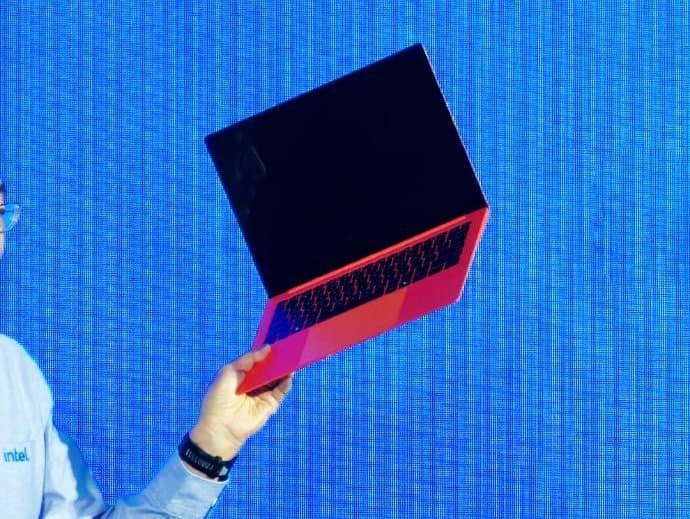
Intel’s Project Firefly repurposes smartphone‑grade manufacturing to lower the price of Wildcat Lake‑based laptops, promising thinner designs, modular components, and competition against Apple’s entry‑level MacBook Neo.
Project Firefly: Turning Smartphone Factories into Low‑Cost Laptop Foundries
Intel’s newest initiative, Project Firefly, is a direct response to the growing demand for ultra‑affordable Windows laptops that can rival Apple’s $589 MacBook Neo. By borrowing the high‑volume, low‑cost supply chain that powers smartphones, Intel hopes to bring the Wildcat Lake processor family to a price point previously reserved for budget Chromebooks and ARM‑based notebooks.
What’s new?
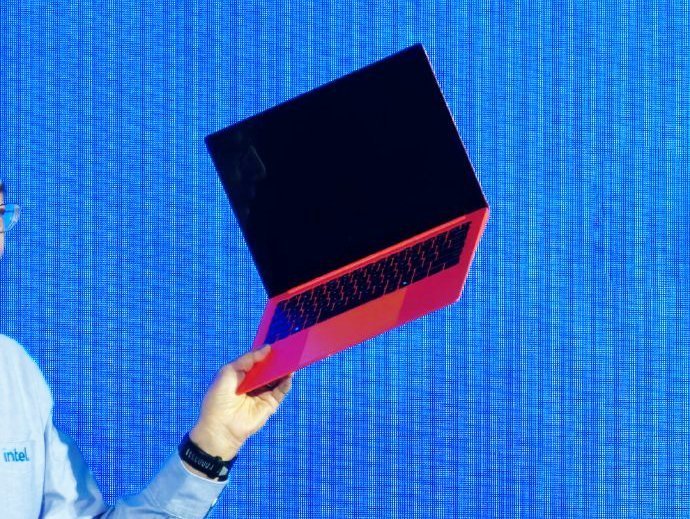
- Reference design with a 1.1 cm thin metal chassis – the prototype shown by Golden Pig Upgrade features almost borderless 16:10 displays, a massive glass‑covered trackpad, and a minimalist aesthetic that would normally cost well over $800.
- Modular mainboards and connectors – Intel is standardising the layout of the motherboard, power delivery, and battery interfaces so that a single assembly line can produce multiple laptop models with only minor cosmetic changes.
- Smartphone‑grade components – the design uses LPDDR5X‑7467 memory, integrated power‑management ICs, and Wi‑Fi 7 modules that are already mass‑produced for flagship phones.
- Target price – early adopters such as the Honor Notebook X14 and Chuwi UniBook are already listed below $600, undercutting the MacBook Neo. Intel expects the average retail price of a Wildcat Lake laptop to settle around $450‑$500 once the supply chain is fully optimised.
How it compares to the competition
| Feature | Intel Wildcat Lake (Project Firefly) | Apple MacBook Neo (A18 Pro) | Typical ARM‑based Chromebook |
|---|---|---|---|
| CPU Core Count | 4‑core Core i5‑320 (Turbo up to 4.3 GHz) | 8‑core A18 Pro (up to 3.2 GHz) | 8‑core MediaTek Dimensity |
| Memory | 8 GB LPDDR5X‑7467 (single‑channel) | 8 GB LPDDR5X (dual‑channel) | 8 GB LPDDR5 |
| Storage | 256 GB NVMe PCIe 4.0 | 256 GB NVMe PCIe 4.0 | 128 GB eMMC |
| Display | 14‑inch 2.8 K IPS, 90 Hz, 7 mm bezels | 13.3‑inch 2.8 K Retina, 60 Hz | 13.3‑inch 1080p, 60 Hz |
| Battery | 48 Wh, 10‑hour web browse | 52 Wh, 12‑hour web browse | 42 Wh, 8‑hour web browse |
| Weight | 1.25 kg | 1.24 kg | 1.30 kg |
| Starting Price | $449 (projected) | $589 | $399 |
The Wildcat Lake CPU is slower in raw single‑core performance than Apple’s A18 Pro, but the higher clock speeds and the ability to run full Windows 11 keep it viable for office suites, web browsing, and light content creation. Where the MacBook Neo pulls ahead is in GPU‑accelerated tasks; the integrated Intel Xe graphics are adequate for casual gaming but will lag behind Apple’s GPU cores.
Why the smartphone supply chain matters
Smartphone manufacturers ship hundreds of millions of units per year, meaning the tooling for PCB assembly, wafer testing, and final‑stage integration is already amortised across a massive volume. Intel’s plan to standardise form‑factors—using a fixed 12 mm motherboard thickness, a universal 8‑pin power connector, and a snap‑fit battery module—lets OEMs slot the Wildcat Lake board into existing phone‑factory lines with minimal re‑tooling.
The trade‑off is that the ultra‑thin metal chassis, while visually appealing, requires precision stamping and anodising that add a modest premium. However, the cost saved on component sourcing and assembly still outweighs the chassis expense, especially when production scales to 1 million units per year.
Who will benefit?
| User Type | What Project Firefly delivers |
|---|---|
| Students | Sub‑$500 laptop that runs Microsoft Office, Google Workspace, and Linux without the Apple ecosystem lock‑in. |
| Freelancers | Enough CPU headroom for Photoshop basics, video‑chat, and multi‑tab browsing, all on a battery that lasts a full workday. |
| OEMs in emerging markets | Ability to launch a Windows laptop with a premium look using the same production lines that build mid‑range smartphones, reducing time‑to‑market. |
| Tech enthusiasts | A reference platform that can be easily upgraded—swap the LPDDR5X module or replace the SSD without needing a proprietary tool. |
Potential pitfalls
- DRAM scarcity – The ongoing DRAM shortage keeps LPDDR5X prices high. Intel’s reliance on a single‑channel 8 GB configuration may limit future upgrades.
- Heat management – A 1.1 cm metal chassis leaves little room for large vapor chambers. Early prototypes show the CPU throttling under sustained loads above 70 °C.
- Project longevity – Intel has a history of canceling initiatives (e.g., the original Firefly project for low‑power Xeon). Continued investment will be crucial for the ecosystem to mature.
Bottom line
Project Firefly represents a pragmatic shift: instead of inventing a new manufacturing paradigm, Intel is re‑using what already works at massive scale. The result is a laptop that looks premium, costs less than a MacBook Neo, and delivers sufficient performance for everyday tasks. If Intel can keep the design modular and avoid the pitfalls of DRAM pricing and thermal constraints, the Wildcat Lake platform could become the go‑to choice for budget‑conscious users worldwide.
Sources: Golden Pig Upgrade (Weibo), Intel Project Firefly briefing documents, Notebookcheck internal testing.
Comments
Please log in or register to join the discussion