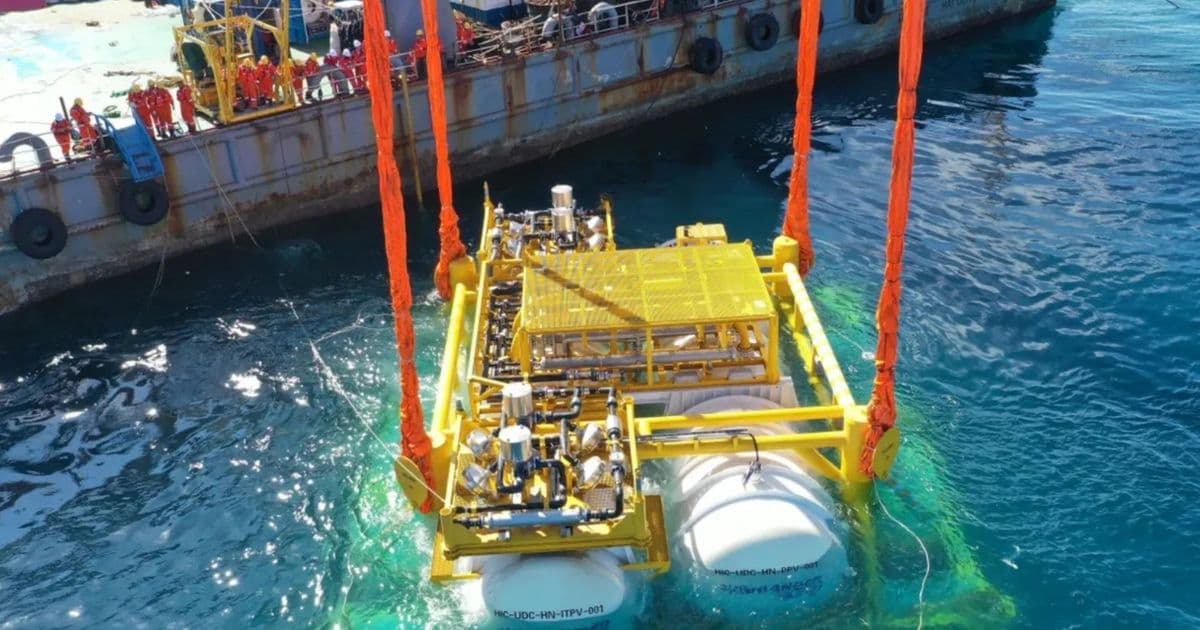
A 24 MW, 2,000‑server underwater facility off Shanghai’s coast has entered commercial service, using seawater for passive cooling and offshore wind for power, achieving sub‑1.15 PUE and highlighting new supply‑chain dynamics for AI workloads.
Announcement
China’s first offshore‑wind‑powered underwater data center (UDC) has moved from pilot to full commercial operation. The 24 MW facility, located about 35 m below the surface in Shanghai’s Lingang Special Area, now hosts roughly 2,000 servers and is slated to run AI inference, big‑data annotation, and 5G edge workloads. The project, a joint venture between the Shanghai municipal government, HiCloud Technology, and state‑backed telecom operators such as China Telecom, was officially commissioned in June 2025 and completed in October 2025. Full‑scale service began last week after a successful February trial period.
Technical specs and engineering trade‑offs
| Parameter | Value / Detail |
|---|---|
| Power envelope | 24 MW (peak) – supplied 60 % from a dedicated 30 MW offshore wind farm, the remainder from the mainland grid |
| Server count | ~2,000 units (GPU‑dense racks from China Telecom and LinkWise) |
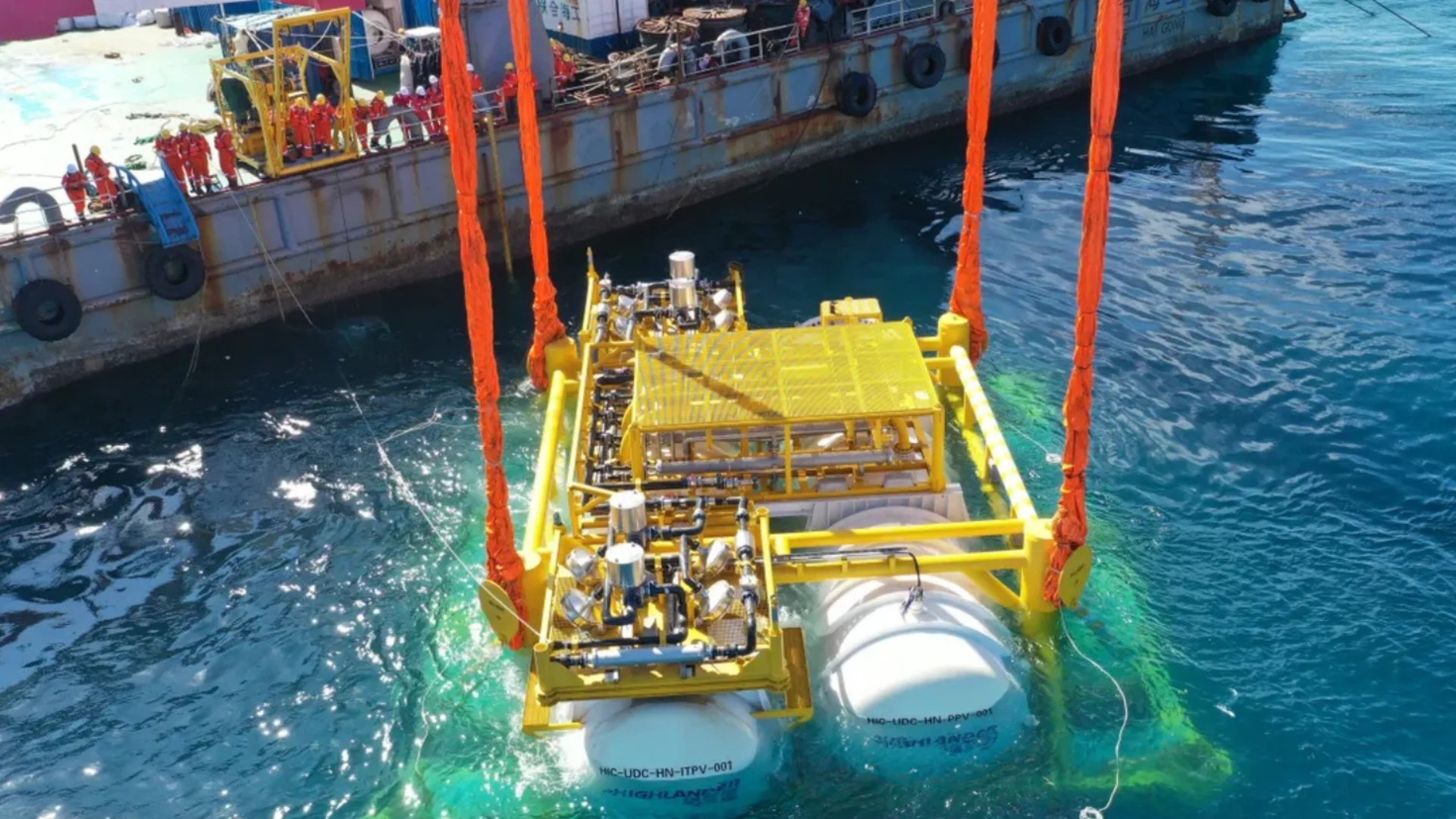
| Cooling method | Direct seawater heat exchange; sealed pressure‑resistant modules act as heat sinks, eliminating chillers |
| Depth | 35 m (≈115 ft) – stable temperature ~12 °C year‑round |
| PUE | < 1.15 (reported) – compared with 1.45–1.70 typical for land‑based hyperscalers |
| Footprint | 1.2 ha of seabed, modular pods each housing 100–150 servers |
| Network latency | 2–3 ms extra round‑trip to shore fiber, offset by proximity to coastal 5G edge sites |
| Capital cost | US$226 M (≈ 1.6 bn CNY) – 38 % of which is wind‑farm infrastructure |
| Design life | 10 years (with modular replacement cycles) |
Passive cooling advantage
Seawater at 12 °C can absorb roughly 4.2 kJ/kg·K. With an average server power draw of 500 W, each rack generates ~2 MW of heat. A 24 MW plant therefore needs to move ~48 MW of thermal energy. The submerged heat exchangers transfer this load directly to the surrounding ocean, cutting the cooling‑specific electricity draw from an estimated 5 MW (typical for a land‑based 24 MW AI facility) to under 1 MW. The resulting PUE drop from ~1.5 to < 1.15 translates to roughly 300 MWh / year of saved electricity, a cost reduction of US$30 M at current Chinese wholesale rates.
Renewable integration
The offshore wind farm delivers 18 MW of clean power on average (capacity factor ~60 %). Real‑time grid balancing is handled by a dedicated power‑electronics interface that can draw supplemental grid power during low wind periods, ensuring a 99.9 % uptime SLA. This hybrid model reduces the carbon intensity of AI compute to < 50 g CO₂/kWh, well below the 150–250 g CO₂/kWh typical of mainland data centers powered by coal‑heavy grids.
Supply‑chain implications
- Component sourcing – Pressure‑rated hulls are fabricated by Shanghai Shipbuilding Group, leveraging ship‑yard welding expertise. The heat‑exchanger cores use titanium alloys sourced from domestic smelters, reducing reliance on imported corrosion‑resistant metals.
- Server design – GPU modules are built to a sealed, no‑fan architecture, mirroring trends in edge AI boxes. This pushes vendors such as NVIDIA and AMD to certify their chips for operation in a high‑humidity, low‑temperature environment.
- Cable infrastructure – Subsea fiber and power cables are supplied by Huawei’s Oceanic division, which has been expanding its 150‑km high‑voltage direct‑current (HVDC) portfolio. The project’s success could accelerate orders for similar HVDC‑to‑DC converters in other coastal AI hubs.
- Maintenance logistics – Because physical access is limited to ROV‑assisted interventions, the design emphasizes hot‑swap modules and predictive‑failure analytics. This drives demand for AI‑based health‑monitoring platforms from firms like SenseTime, creating a feedback loop between the compute workload and its own reliability stack.
Market implications
- Cost competitiveness – The sub‑1.15 PUE and renewable‑energy offset bring the levelized cost of compute (LCOC) down to roughly US$0.045 per GPU‑hour, a 12 % reduction versus the best land‑based AI pods in the United States. Early adopters such as Baidu and Alibaba are already signing capacity‑reservation contracts, indicating a shift toward offshore‑green AI clusters for latency‑sensitive services.
- Regulatory signaling – The Shanghai municipal government’s direct involvement signals that Chinese policy will continue to favor co‑location of renewable generation and digital infrastructure. This could inspire similar public‑private pilots in Guangdong and Fujian, where offshore wind potential exceeds 30 GW.
- Global competitive pressure – Europe’s Project Natick‑style deployments (e.g., the Norwegian “Oceanic Compute” trial) have remained experimental. China’s commercial rollout puts pressure on hyperscalers like Microsoft and Google to accelerate their own subsea or floating data‑center programs if they wish to stay competitive on energy cost and carbon‑footprint metrics.
- Risk perception – While the PUE advantage is clear, the industry remains cautious about long‑term reliability. Salt‑water corrosion rates, module fatigue under cyclic pressure, and the need for specialized ROV crews add new layers to the total cost of ownership. If the Shanghai UDC can maintain > 99.5 % hardware availability over its first three years, it will set a benchmark that could unlock financing for larger‑scale subsea farms (potentially > 100 MW) in the next decade.
Outlook
The Shanghai offshore‑wind‑powered UDC demonstrates that integrating renewable generation, passive seawater cooling, and modular subsea engineering can produce a data center with a markedly lower PUE and carbon intensity. Its success will likely stimulate a wave of similar projects across coastal AI hotspots, reshaping the supply chain for pressure‑rated enclosures, titanium heat exchangers, and subsea HVDC links. As AI workloads continue to outpace traditional power grids, the industry may increasingly look to the ocean—not just as a heat sink but as a platform for renewable‑driven compute.
Sources: Shanghai Municipal Gazette, HiCloud Technology press release, China Telecom technical brief, offshore wind farm operator reports.
Comments
Please log in or register to join the discussion