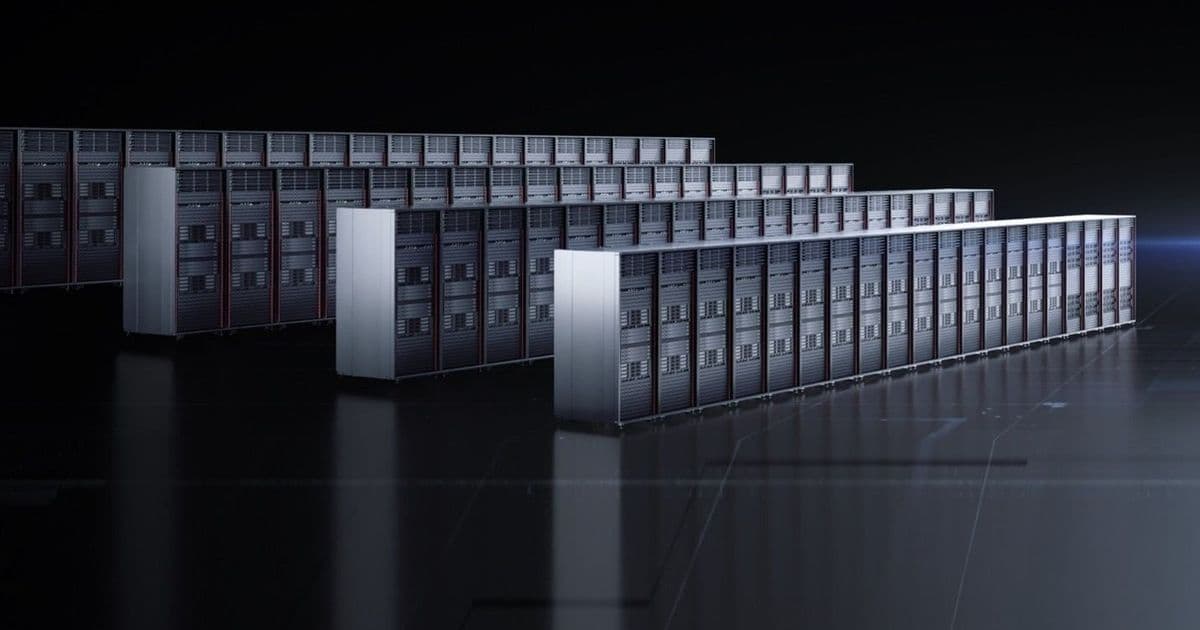
China’s AI ecosystem has moved from a “catch‑up” narrative to a self‑sustaining stack built around Huawei’s cluster‑plus‑SuperPoD hardware and the open‑source CANN framework. Real‑world token consumption, co‑designed models like DeepSeek V4, and a growing developer community suggest the stack can compete with the NVIDIA‑centric Western pipeline, though adoption will still hinge on trust and ecosystem lock‑in.
What’s being claimed
The article argues that China has stopped trying to match Western AI hardware and is now leading the field. It points to three pillars:
- Massive token consumption – Chinese models now dominate the OpenRouter leaderboard, processing roughly 140 trillion tokens per day.
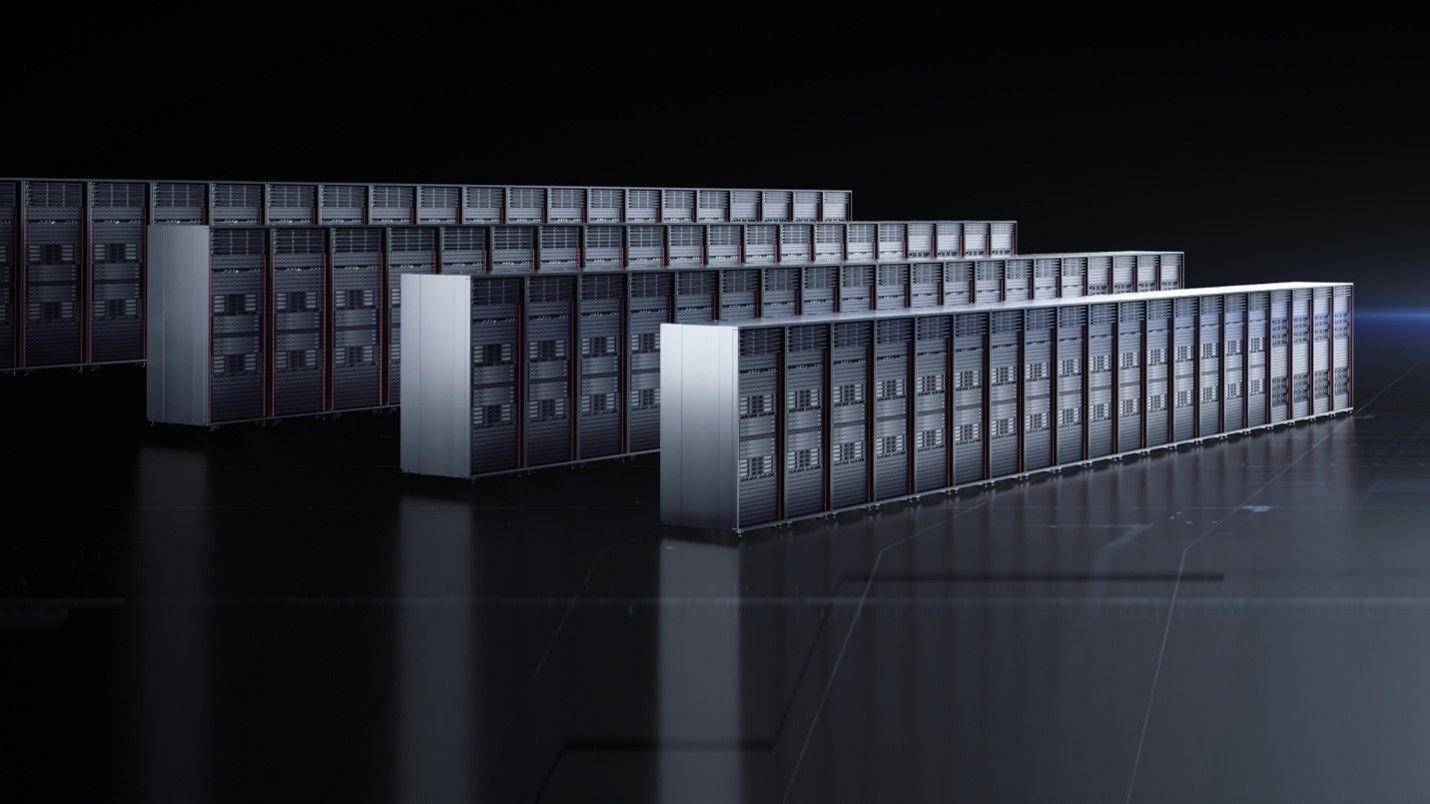
- Hardware‑model co‑design – Huawei’s Atlas 950 SuperPoD system was built together with DeepSeek V4, delivering up to 1.96× latency improvements over a comparable NVIDIA setup.
- Open‑source software stack – The CANN (Compute Architecture for Neural Networks) framework has been open‑sourced, supporting Ascend C, PyPTO, Triton, TileLang and more than 70 pre‑trained models. The piece frames these developments as a closed‑loop stack that rivals the NVIDIA‑CUDA ecosystem and could become the default platform for “Agentic AI” workloads.
What’s actually new
1. Real‑world usage metrics
The token‑consumption numbers come from OpenRouter’s public API logs. While the absolute figure (140 trillion tokens/day) is impressive, it reflects a mix of consumer chat apps, internal enterprise tools, and a few large‑scale language‑model APIs that have been aggressively marketed in China. The metric is a useful proxy for deployment breadth, but it does not directly translate to model quality or research leadership.
2. DeepSeek V4 + Atlas 950 SuperPoD
DeepSeek V4 is a 12‑billion‑parameter mixture‑of‑experts (MoE) model. Its Expert Parallel (EP) scheme splits MoE experts into overlapping waves, reducing idle cycles. The paper (see Section 3.1) reports:
- 1.5 ×–1.73 × higher throughput on Huawei Ascend NPUs vs. NVIDIA A100s.
- Up to 1.96 × lower latency on reinforcement‑learning rollouts. These gains stem from hardware‑aware model design rather than raw chip speed. The Atlas 950 SuperPoD integrates up to 8,192 Ascend cards via Huawei’s UnifiedBus, offering unified memory addressing that lets the MoE treat the whole cluster as a single memory space. This eliminates the explicit data‑sharding code that developers usually write for multi‑node training.
3. CANN ecosystem
CANN went fully open‑source in 2025. Its key features include:
- Compatibility layers for CUDA‑based frameworks (via PyPTO and Triton adapters).
- Over 1,500 primitive operators and 100+ fused kernels, comparable to NVIDIA’s cuDNN coverage.
- Integration with more than 90 external open‑source projects, from Hugging Face Transformers to TVM. Since the open‑source release, the community has added roughly 65 projects (≈1 every three days) and now hosts >3,000 active developers. While the numbers are modest compared with the CUDA ecosystem (which has >10,000 contributors), the growth rate is notable for a platform that started from a closed‑source base.
Limitations and open questions
| Area | Current state | Why it matters |
|---|---|---|
| Software maturity | CANN covers most operators, but tooling (debuggers, profilers) lags behind NVIDIA Nsight and PyTorch’s native support. | Developers still spend extra effort optimizing kernels, which can deter early adopters. |
| Ecosystem lock‑in | The stack is tightly coupled to Huawei’s Ascend hardware. Porting to other accelerators (e.g., AMD, Intel) would require substantial rewrites. | Companies that already invested in NVIDIA or AMD hardware may find migration costs prohibitive. |
| Supply chain risk | Ascend chips are produced primarily in Chinese fabs; export restrictions could affect global availability. | International customers may face procurement uncertainties, limiting the stack’s reach outside China. |
| Benchmark transparency | Reported speed‑ups are based on internal benchmarks; independent third‑party evaluations are scarce. | Without open benchmarks, it is hard to verify the claimed 1.9× latency gains across diverse workloads. |
| Model quality | DeepSeek V4’s performance on standard NLP benchmarks (e.g., MMLU, BIG‑Bench) is comparable to GPT‑3.5‑level models, not yet at GPT‑4 or Claude‑2 levels. | High throughput does not compensate for gaps in reasoning or safety capabilities when competing for high‑end use cases. |
Putting the claim in context
The Western narrative has indeed focused on “closing the gap” for years, but the gap is multidimensional: hardware performance, software tooling, model capability, and data governance. Huawei’s SuperPoD architecture addresses the hardware‑scale dimension by turning cluster efficiency into a first‑order design goal. CANN’s open‑source push tackles the software side, offering a path for developers to avoid the painful “write‑once‑run‑everywhere” problem that AMD’s ROCm historically faced.
However, the model side still lags behind the most advanced Western offerings. DeepSeek V4 shows that co‑design can yield tangible speed benefits, but the underlying architecture (MoE with 12 B parameters) is still a generation behind the 100 B‑plus models that dominate the research frontier. Token‑consumption growth indicates that Chinese firms are using AI at scale, but it does not automatically translate into leading AI research.
What this means for the global AI industry
- A viable alternative for large‑scale inference – Companies that need to run massive MoE workloads in production could consider the Atlas 950 SuperPoD if they are already sourcing hardware from Chinese vendors.
- Pressure on NVIDIA’s pricing and roadmap – If Huawei can deliver comparable throughput at a lower total‑cost‑of‑ownership, Western cloud providers may need to negotiate better terms or accelerate their own system‑level innovations (e.g., NVIDIA DGX SuperPod 2.0).
- Increased importance of open‑source frameworks – The success of CANN underscores that open tooling is a prerequisite for any hardware challenger. Expect more Chinese firms to open‑source their stack components, mirroring the PyTorch‑CUDA symbiosis.
- Geopolitical considerations – Adoption outside China will hinge on trust in the supply chain, export‑control regimes, and data‑sovereignty policies. The technical merits alone may not be enough to overcome these barriers.
Bottom line
China’s AI stack has moved from a “catch‑up” posture to a functionally complete ecosystem: a high‑bandwidth SuperPoD cluster, an open‑source software layer (CANN), and models that are co‑designed for the hardware. The stack now delivers real performance advantages for large‑scale inference, and its token‑consumption numbers show that it is being used extensively in production.
Nevertheless, the ecosystem still faces hurdles: software tooling is less polished, model capabilities trail the very top of the leaderboard, and geopolitical factors could limit global adoption. The claim that China is setting the pace is therefore accurate for cluster‑level efficiency and deployment scale, but premature when applied to overall AI research leadership.
Key resources
- Huawei Atlas 950 SuperPoD product page: https://www.huawei.com/en/atlas-950
- DeepSeek V4 technical report (PDF): https://deepseek.com/v4/report.pdf
- CANN open‑source repository: https://github.com/Huawei/CANN
- OpenRouter token‑usage dashboard: https://openrouter.ai/dashboard
Comments
Please log in or register to join the discussion