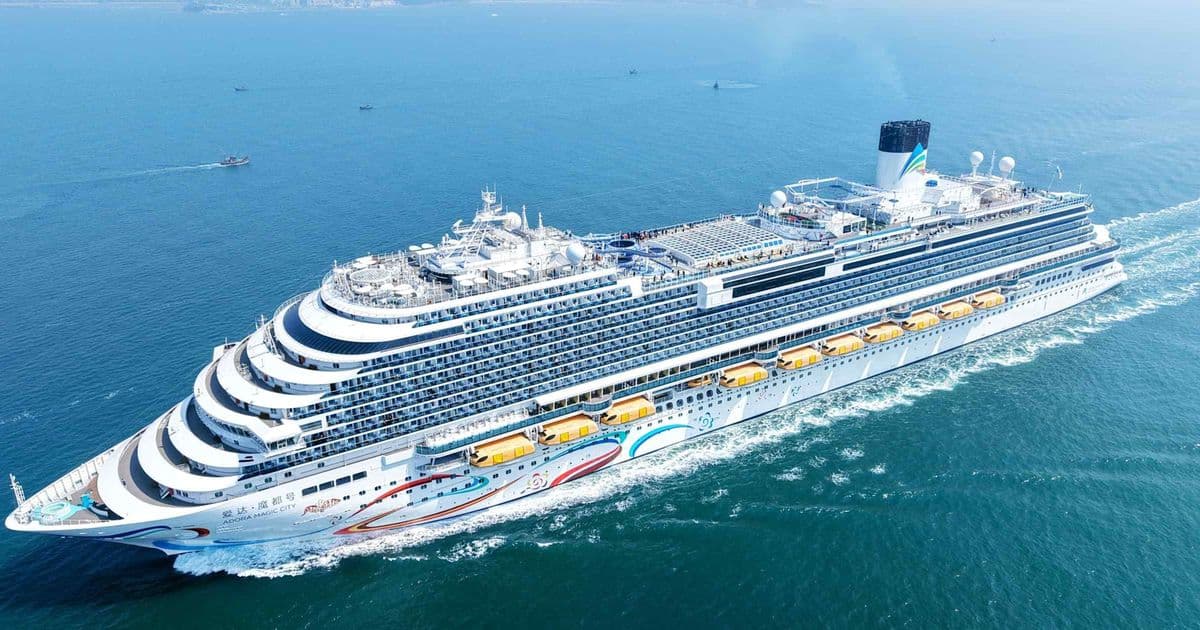
Beijing is treating large cruise ships as more than vacations. They are a consumption tool, a shipbuilding test case, and a way to spread tourist spending beyond overcrowded landmarks.
Business News
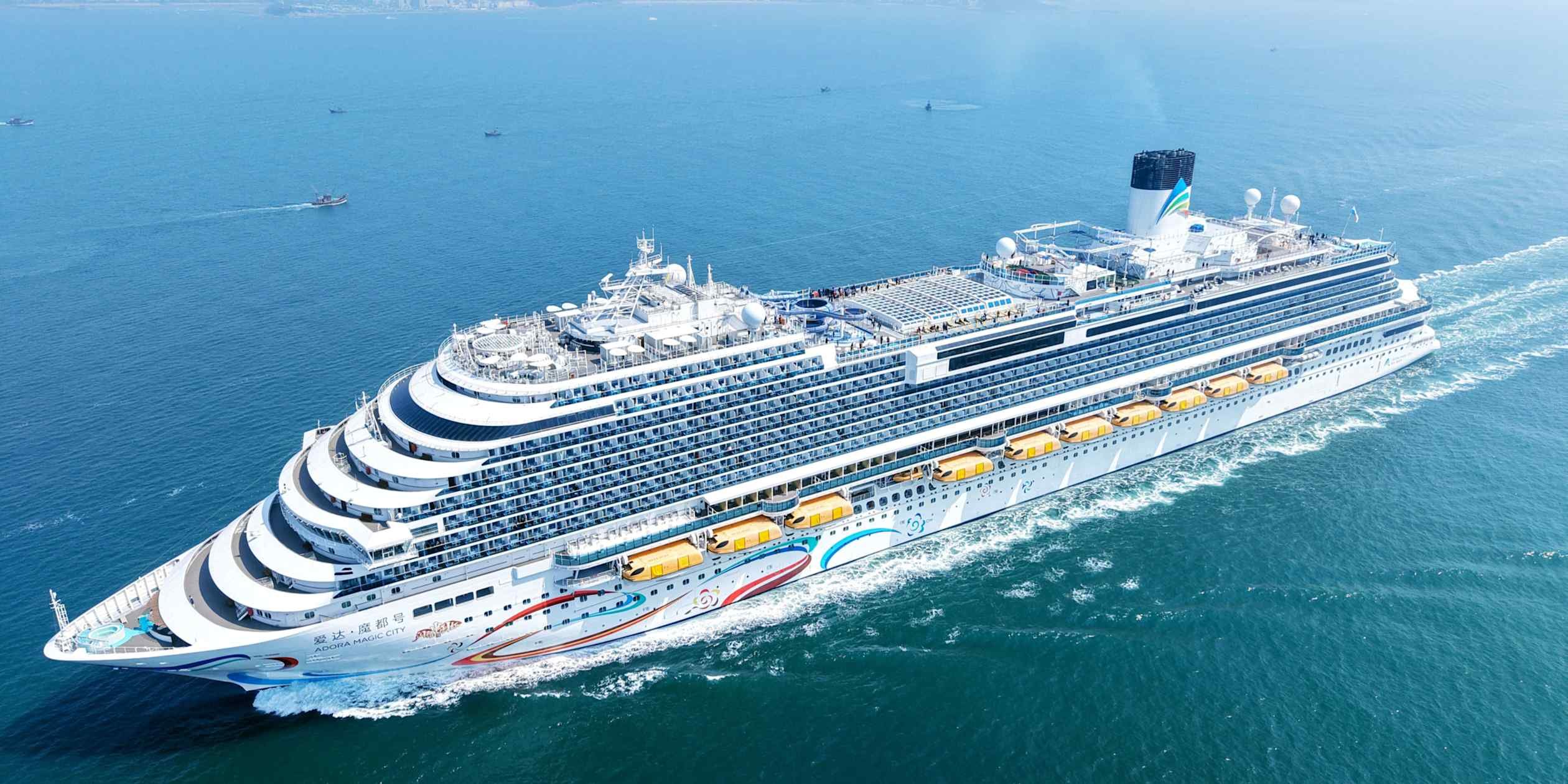
China is stepping up its promotion of cruise tourism as policymakers look for consumer spending that can scale without adding more pressure to the country's most crowded holiday destinations. The push centers on large vessels such as Adora Magic City, China's first domestically built large cruise ship, which can carry about 5,200 passengers and operates under Adora Cruises.
The economic logic is straightforward. A cruise concentrates transport, lodging, dining, entertainment, retail, and destination spending into one packaged product. For a government trying to support domestic demand, that makes cruises a useful format. A single sailing can move thousands of passengers through ports, restaurants, duty-free stores, excursion operators, and local transport providers without requiring every traveler to crowd into the same rail stations, scenic sites, and hotel districts during peak holiday windows.
The timing matters. China's economy hit its official 5% growth target in 2025, but the composition of that growth remained uneven. Exports and industrial production did more of the work, while household demand and property-linked spending stayed under pressure, according to reporting on National Bureau of Statistics data by the Financial Times. That makes tourism, especially higher-value tourism, an attractive policy lever. It converts discretionary income into services revenue, supports local employment, and gives cities a reason to invest in ports and waterfront districts.
Cruises also fit a broader global demand cycle. The Cruise Lines International Association has reported record passenger volumes, with global ocean cruise passengers reaching 37.2 million in 2025, up 7.5% from 34.6 million in 2024, according to recent industry coverage. In the U.S., Bank of America data cited by Axios showed cruise spending rising across income groups in early 2026, a sign that the category is benefiting from travelers seeking more predictable vacation pricing.
Market Context
For China, the cruise opportunity has two sides. The first is consumer demand. Cruise vacations can be priced as bundled experiences, which matters when households are cautious about open-ended travel budgets. The second is industrial strategy. Large cruise ships are among the most complex commercial vessels to build, requiring hotel-scale interiors, power systems, safety equipment, water management, entertainment infrastructure, and digital operations across thousands of passengers and crew.
That industrial angle is why Adora Magic City carries more weight than a normal tourism asset. The ship was built by Shanghai Waigaoqiao Shipbuilding, part of China State Shipbuilding Corp., and follows years of technology transfer and cooperation involving global cruise industry suppliers. Earlier plans for China-built Adora vessels were tied to a reported $1.5 billion contract structure for two ships, with options for more. The point is not only to sell tickets. It is to move China higher in the value chain of passenger ship construction, a segment long dominated by European yards such as Fincantieri, Meyer Werft, and Chantiers de l'Atlantique.
That distinction matters because cruise ships are not bulk carriers or container ships. A container vessel is an engineering and logistics asset. A cruise ship is also a floating hotel, mall, theater, power plant, and emergency-management system. The supplier base includes elevators, HVAC, fire suppression, kitchen systems, cabin modules, wastewater systems, satellite connectivity, and software for reservations, access control, and onboard payments. Building one at scale helps local suppliers climb into higher-margin marine technology categories.
The tourism economics are also different from simple passenger volume. A cruise terminal can become a spending hub if it is connected to excursions, retail, transport, and cultural venues. A port call creates a time-constrained flow of visitors who are likely to buy packaged tours, meals, local transport, and gifts. That makes cruise passengers valuable even when the stay is short. For local governments, the attraction is measurable traffic with scheduled arrival times, easier crowd planning, and a clearer link between infrastructure investment and visitor throughput.
China's overcrowding problem gives the model additional appeal. Golden Week and Lunar New Year travel often concentrate demand in the same famous cities and scenic sites. Cruises give planners another release valve. Instead of pushing more visitors into already dense inland destinations, ships can distribute demand through coastal routes and secondary port cities. Dalian, Tianjin, Shanghai, Xiamen, Guangzhou, and other port regions can use cruise calls to capture tourism receipts that might otherwise flow to a smaller set of saturated attractions.
What It Means
The cruise push shows how Beijing is trying to turn services consumption into a more structured growth engine. Rather than relying only on vouchers or one-off promotions, the government can support a sector where every added ship creates repeat spending cycles. Cabins are sold before departure, onboard spending adds margin, ports collect fees, suppliers win service contracts, and cities gain tourism traffic. That makes cruise tourism a more investable category than many forms of discretionary spending.
The strategic upside is larger if China can turn domestic cruise construction into a repeatable production line. One large cruise ship can cost hundreds of millions of dollars, and a multi-ship order book supports years of work for shipyards and suppliers. If Chinese yards prove they can deliver reliable passenger vessels, they can challenge Europe in a premium segment of shipbuilding rather than competing only on scale in cargo vessels. That would match the broader Chinese industrial playbook: start with domestic demand, build local capability, then compete internationally once production quality and supplier depth improve.
There are constraints. Cruise economics depend on high occupancy, disciplined pricing, port efficiency, and customer trust. A 5,200-passenger ship only works financially if cabins are filled at profitable yields and onboard spending remains healthy. Fuel costs, maintenance, crew costs, insurance, and environmental compliance can quickly pressure margins. Ports also need customs capacity, terminal handling, transport links, and excursion products that can absorb thousands of arrivals without creating the same overcrowding problem cruises are meant to reduce.
Environmental scrutiny is another risk. Large cruise ships face pressure over emissions, port pollution, wastewater, and the effect of mass tourism on coastal communities. China can reduce some of that friction if new terminals include shore power, tighter waste controls, and routing that spreads traffic across more destinations. Without those investments, cruise tourism could become another high-volume travel model that shifts congestion from train stations and landmarks to waterfront districts.
The near-term business signal is that China sees cruises as a three-part bet: stimulate cautious consumers, monetize coastal tourism infrastructure, and accelerate high-end shipbuilding capability. That is why Adora Magic City is economically significant even if its passenger count is small relative to China's total domestic travel market. It is a prototype for a larger model in which tourism policy, industrial policy, and local government investment reinforce one another.
If the model works, the payoff will not be measured only in ticket sales. It will show up in shipyard order books, supplier contracts, port revenue, coastal retail spending, and the ability of Chinese tourism operators to package travel in ways that feel controlled, premium, and easier to budget. For a country looking for new consumption engines while property remains weak, that makes the cruise sector a useful indicator of whether services can carry more of the growth burden.
Comments
Please log in or register to join the discussion