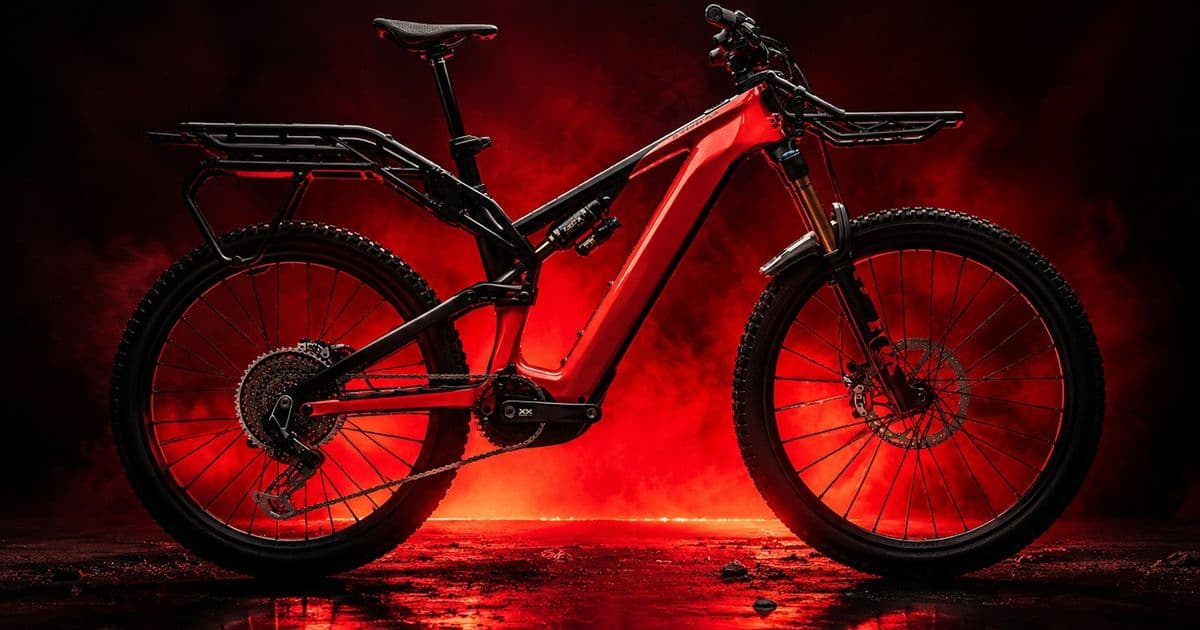
Specialized is turning its high-power Levo 4 platform into a long-range, load-carrying electric mountain bike for riders who want one machine for trail laps, bikepacking, and everyday hauling.
What's new
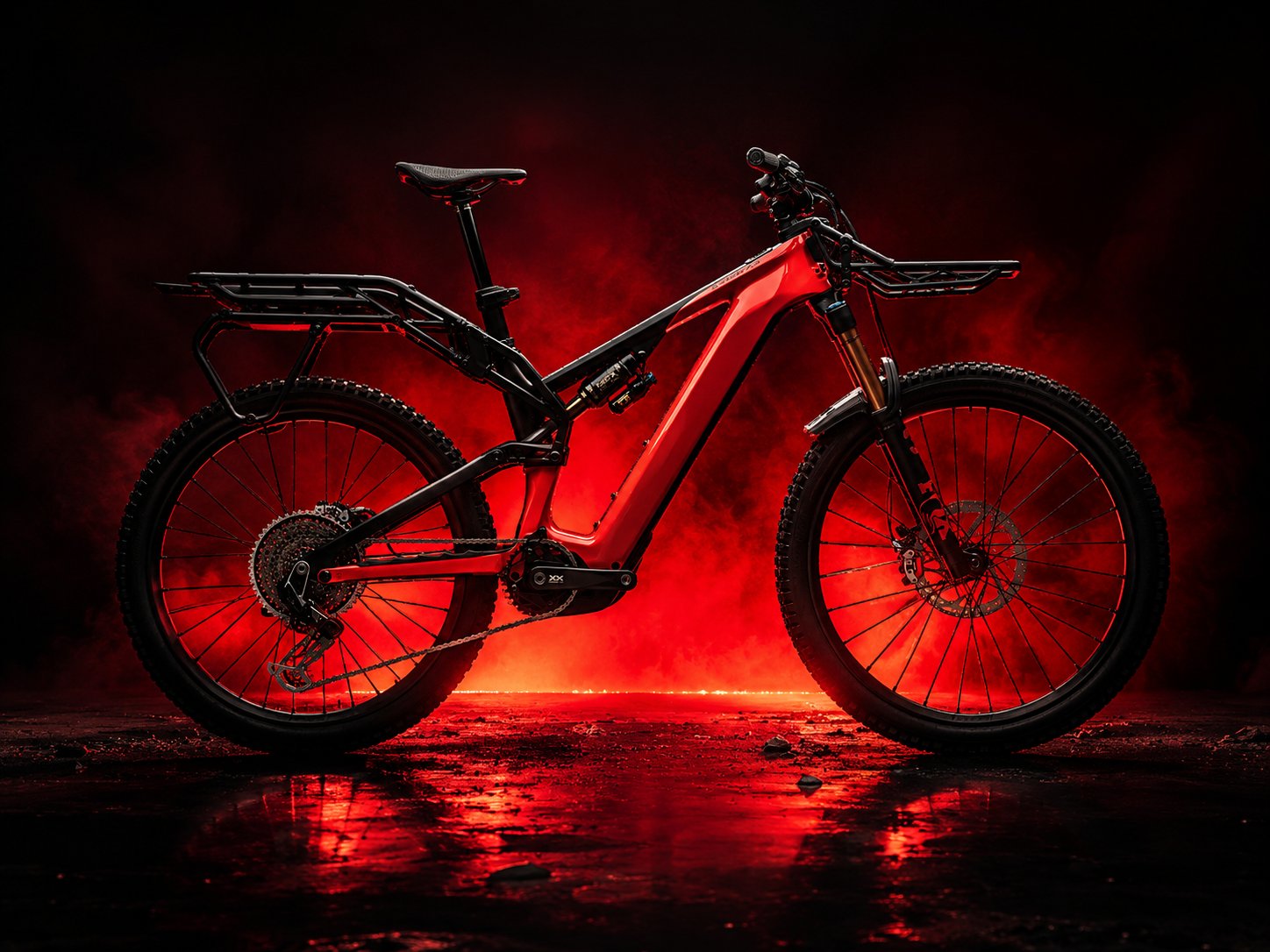
Specialized has launched the S-Works Levo 4 X, a premium full-suspension electric mountain bike that takes the Levo 4 platform and adds a serious utility angle. The headline spec is not just the 840 Wh battery or the 111 Nm motor output. It is the combination of those numbers with integrated front and rear cargo racks rated for 22 kg, which shifts the bike from pure trail machine toward electric overland, bikepacking, and high-end daily utility.
The core hardware is familiar if you have followed the current Levo family. Specialized uses its S-Works 3.1 mid-drive motor, rated at 111 Nm of torque and up to 850 W of peak power. That is a big number for technical climbing because torque matters more than headline wattage when you are trying to restart on a steep, loose pitch or crawl through rock steps without spinning the rear tire. Specialized claims up to 4.4 hours of ride time from the 840 Wh pack, though real range will depend heavily on rider weight, elevation gain, tire choice, assist mode, temperature, and how much cargo is bolted to the racks.
The suspension package is suitably expensive. Up front, the Levo 4 X gets a 160 mm Fox 38 Factory fork with GRIP X2 damper. Out back, it uses 150 mm of rear travel through a Fox Float X Factory shock with Specialized's GENIE shock technology. On paper, that puts it in the aggressive trail category rather than full enduro, but the spec is clearly meant for riders who will load the bike and still ride rough terrain at speed.
{{IMAGE:2}}
The frame is Specialized's FACT 11m carbon Levo 4 chassis with adjustable geometry, SWAT downtube storage, a side-entry battery, adjustable head angle, bottom bracket height, and chainstay length. The geometry baseline listed by Specialized includes a 64.5 degree head angle, 77 degree seat tube angle, 435 mm chainstays, and size-specific reach from 435 mm on S2 to 535 mm on S6. That is modern e-MTB geometry, stable enough for speed, but not a downhill sled unless you push the adjustments and component setup in that direction.
Component quality tracks the $11,999.99 price. The drivetrain is SRAM XX Eagle T-Type AXS with a 10-52t cassette, wireless electronic shifting, and a 34t T-Type chainring. Braking comes from SRAM Maven Ultimate four-piston brakes, with large rotors listed by Specialized as 220 mm up front and 200 mm at the rear. The wheel setup is mixed, with a 29 inch front wheel and 27.5 inch rear wheel, a layout that typically improves rollover up front while keeping the rear of the bike easier to place in tight turns.
At 27.25 kg, or about 60.1 lb in Specialized's S4 reference size, this is not a light e-MTB. That weight is the trade-off for the big battery, full-power motor, heavy-duty suspension, carbon wheels, powerful brakes, integrated racks, and cargo hardware. Anyone expecting a flickable trail bike should look elsewhere. Anyone who wants battery capacity, climbing support, and load-carrying ability in one premium build will understand why the scale reads high.
The electronics are equally modern. The bike includes a MasterMind TCU with a 2.2 inch display, Specialized app customization, Apple Find My support, and a 12 amp smart charger with Standard, Fast, Eco, and 80 percent charge-preservation modes. Specialized also says the charger can bring the battery from 0 to 80 percent in under an hour, which is meaningful for multi-ride days and travel use, assuming the rider has access to mains power between routes.
How it compares
The most direct internal comparison is the regular Levo 4. Specialized lists the Levo 4 with the same broad 160 mm front and 150 mm rear travel format, up to 850 W peak power, 111 Nm of torque, and 840 Wh battery. The Levo 4 X adds the defining cargo system and overland positioning, while the standard Levo 4 is the cleaner choice for riders who care more about singletrack handling and less about carrying capacity.
Compared with the Levo 4 EVO, the X is less descent-focused. Specialized lists the Levo 4 EVO with 180 mm front and 170 mm rear travel, plus up to 810 W and 105 Nm from its drive system. That makes the EVO the better pick for bike park days, steep descents, and riders who treat climbs as the way back to the top. The Levo 4 X gives up that longer-travel attitude in exchange for a stronger utility case, a bigger all-day mission profile, and a more balanced trail format.
The Levo SL is almost the opposite philosophy. Specialized lists the Levo SL around a much lighter platform with up to 320 W peak power, 50 Nm of torque, and a 320 Wh battery with optional range extender support. The SL is for riders who want the bike to feel closer to an acoustic trail bike and are willing to accept less assist. The Levo 4 X is for riders who want the motor to do real work, especially when climbing with gear.
Against a rival like the Santa Cruz Vala, Specialized is leaning harder into battery capacity and cargo integration. Santa Cruz lists the Vala as a 150 mm rear travel, mixed-wheel, Bosch-powered e-MTB with a 600 Wh battery, while current premium Vala builds climb into similar or higher price territory depending on trim. The Santa Cruz is the cleaner trail-bike comparison. The Levo 4 X answers a different question: how much full-suspension trail performance can remain when you add real carrying capacity.
That distinction matters because cargo on a full-suspension mountain bike is not as simple as bolting a rack to a commuter frame. Racks add mass above and around the wheels, and that changes how the bike reacts when the suspension cycles, the rear end moves under braking, or the rider yanks the bike through tight terrain. Specialized's pitch is that the racks are part of the system rather than an afterthought. I would still want to test it loaded on repeated impacts before treating it like a normal trail bike, but the integrated approach is the right engineering direction.
The 840 Wh battery also puts Specialized on the high-capacity side of the premium e-MTB market. A bigger pack gives riders more margin for elevation gain and heavier assist use, but it also adds weight and can make the bike feel less lively. For a normal one-hour trail loop, a smaller and lighter e-MTB may feel better. For long climbs, loaded routes, and days where Eco mode is not enough, capacity becomes the feature you feel most.
Pricing is where the buyer guidance gets sharp. At $11,999.99, the Levo 4 X sits firmly in flagship territory. You are paying for a carbon frame, S-Works motor spec, high-end Fox suspension, SRAM's top-tier wireless Transmission drivetrain, premium brakes, carbon wheels, integrated electronics, and the cargo system. If you only want a powerful e-MTB for trail laps, you can spend less. If you want this exact mix of full-power assist, high battery capacity, carbon chassis, and integrated racks, the options narrow quickly.
Who it's for
The Levo 4 X makes the most sense for riders who already know they will use the carrying capacity. Bikepackers, trail builders, photographers, guides, and riders who regularly combine pavement, gravel, and singletrack will get more from this bike than someone who wants the fastest local-loop machine. The rack rating is high enough for meaningful gear, not just a jacket and snack bag, and the big battery gives the platform enough electrical headroom to make that load practical.
It is also a compelling car-replacement bike for buyers who live close to trails. The same machine can handle errands, commuting, rough backroads, and weekend mountain routes without forcing the rider into a flat-bar cargo bike or a nervous hardtail e-MTB. That versatility is the point. The compromise is that you are moving a 60 lb premium mountain bike, and that is not trivial when loading it into a vehicle, carrying it upstairs, or muscling it through slow technical sections with no motor help.
For pure trail riders, I would be cautious. The Levo 4 X has excellent parts on paper, but weight and cargo hardware have consequences. A standard Levo 4, Levo SL, Santa Cruz Vala, Trek Rail, or another conventional full-suspension e-MTB will likely feel cleaner on tight singletrack and easier to live with if racks are not part of your normal ride. The X is not the automatic better bike because it has more utility. It is the better bike only if you will use that utility often.
The buyer who should look hardest at this is the experienced e-MTB rider who has already hit the limits of a normal trail build. If you have tried frame bags, seat packs, bar rolls, and aftermarket rack ideas, Specialized is offering a factory-integrated answer with serious motor and battery specs. If you are buying your first e-MTB, the price and weight make this a risky place to start unless your use case is already clear.
My practical read: the Levo 4 X is not a replacement for the Levo 4. It is a specialized version for riders who want an e-MTB to carry more, go farther, and still ride proper trails. The hardware looks expensive because it is expensive, but the spec sheet is coherent. The main test will be how composed the chassis feels with real cargo on rough descents, because that is where this bike either proves its point or becomes a very costly curiosity.
Comments
Please log in or register to join the discussion