
Japan’s latest H3 launch is less about one rocket reaching orbit than about whether a national space program can turn cost discipline into commercial bargaining power.
TOKYO, June 13, 2026. Japan’s successful H3 launch on Friday moved the country into the commercial price fight that SpaceX has defined for more than a decade. The mission, launched by the Japan Aerospace Exploration Agency from Tanegashima Space Center, placed multiple small satellites into orbit and marked the debut of the lower-cost H3-30 configuration, a version built around three liquid-fueled LE-9 engines and no solid rocket boosters.
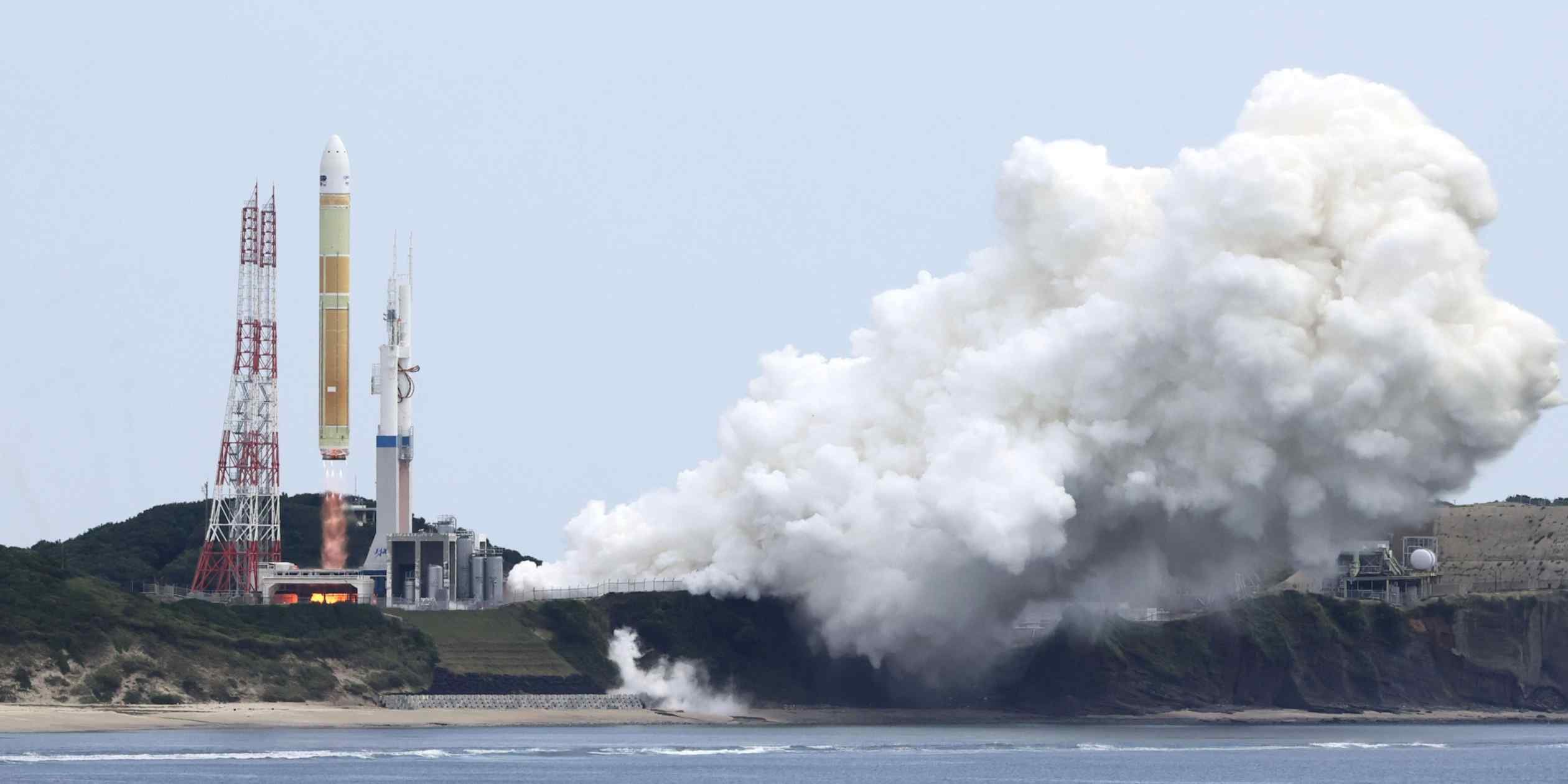
The business point is straightforward: Japan is trying to make sovereign launch capacity cheaper, more frequent and more marketable. The H3 was designed by JAXA and Mitsubishi Heavy Industries to replace the H-IIA family, but its larger ambition is commercial. Japanese planners have targeted a launch cost around 5 billion yen for the lower-cost configuration, roughly in the mid-$30 million range depending on exchange rates. That puts H3 closer to the price conversation around reusable Falcon 9 missions, even though Japan’s vehicle remains expendable.
SpaceX still sets the reference price. Falcon 9’s public commercial pricing is commonly cited in the low-$70 million range for a dedicated mission, while the company’s Smallsat Rideshare Program has pushed the entry price for smaller payloads far lower by selling capacity on scheduled missions. That model has changed buyer expectations. Satellite operators no longer compare rockets only by lift capacity. They compare cadence, reliability, insurance cost, schedule risk, integration flexibility and the total cost of getting a spacecraft into its operating orbit.
H3 is Japan’s answer to that shift. The lower-cost variant removes solid boosters, simplifies the stack and uses the LE-9 engine as the centerpiece of a cost-reduction strategy. In practical terms, JAXA and Mitsubishi Heavy are trying to reduce manufacturing complexity enough to narrow the gap with reusable launch economics without copying SpaceX’s booster recovery model. That is a hard trade-off. Reuse lowers marginal cost when flight rates are high, but it requires recovery systems, refurbishment infrastructure and enough demand to justify the capital cycle. Japan is betting that a simpler expendable rocket, produced consistently and operated commercially, can still win certain missions.
The Friday launch matters because H3 has had to earn back confidence. Its 2023 debut failed after the second-stage engine did not ignite, and later setbacks kept pressure on the program. For satellite buyers, one successful low-cost flight does not erase reliability concerns. Launch procurement is conservative because a single failure can destroy a spacecraft worth hundreds of millions of dollars and delay revenue for years. But a successful H3-30 flight gives Mitsubishi Heavy a stronger commercial story: lower price, domestic Japanese government demand as a base load, and a launcher family that can be configured for small satellite rideshares, institutional spacecraft and larger national missions.
Market context favors any credible non-SpaceX supplier. Demand for launch capacity is being pulled by broadband constellations, Earth observation, defense satellites, lunar missions and national security programs. At the same time, governments and commercial operators do not want a market where one provider controls schedule access. Europe is rebuilding around Ariane 6, United Launch Alliance is scaling Vulcan, Blue Origin is trying to prove New Glenn, and China has a growing mix of state and commercial rockets. Japan’s H3 joins that group as both an industrial policy tool and a commercial product.
The strategic implication for Mitsubishi Heavy is that launch services can move from national procurement work toward a more repeatable export business. MHI already has a role in Japan’s launch operations and markets services through its space systems business. If H3 can fly at a higher cadence, the company can pursue customers that value schedule diversity, Asia-based launch access and government-backed engineering credibility. That does not mean H3 will take large share from SpaceX quickly. It means buyers get another credible option, and that option may matter most when schedules tighten or geopolitical restrictions complicate launch planning.
For Japan, the financial case is broader than launch revenue. Domestic launch capability supports navigation, Earth observation, weather, defense communications and science missions. Keeping that capability inside Japan protects supply chains and reduces dependence on foreign launch windows. It also sustains high-value industrial work in propulsion, avionics, composite materials, systems integration and ground operations. Those are strategic assets, not just line items in a launch contract.
The cost gap remains the central question. SpaceX benefits from reuse, high flight volume and vertical integration. A rocket that launches dozens of times per year can spread fixed costs across more missions, improve operations through repetition and offer customers more schedule choices. H3’s economics will depend on whether Japan can raise annual cadence enough to make the 5 billion yen target commercially meaningful. A low unit-cost target is useful, but launch customers buy demonstrated performance, not projections.
The most likely near-term role for H3 is not to dethrone Falcon 9. It is to become a credible second source for missions where price, sovereignty and schedule assurance overlap. That includes Japanese government payloads, regional commercial satellites, science missions and customers that want to avoid overdependence on U.S. launch capacity. If Mitsubishi Heavy can turn H3-30 into a repeatable product rather than a one-off milestone, Japan’s launch program shifts from catching up to competing on defined niches.
Friday’s launch therefore changes the business conversation. Japan has shown that H3’s lower-cost configuration can reach orbit. The next test is whether it can do so regularly, at the advertised economics, with enough customer confidence to convert technical success into market share.
Comments
Please log in or register to join the discussion