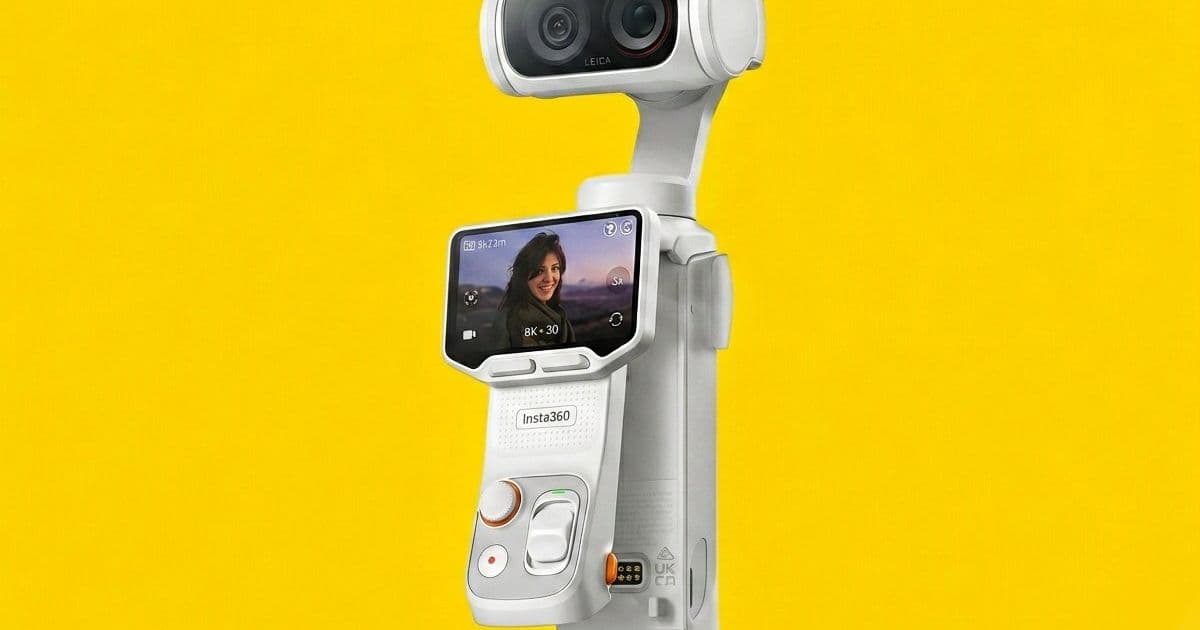
Insta360’s Luna Ultra launch has become a courtroom test of who controls the core mechanics of pocket gimbal cameras, and buyers should watch availability more than marketing claims.
What's new
Insta360 has answered DJI’s launch-day patent lawsuits with two countersuits of its own in the United States, turning the new Luna Ultra from a camera launch into a broader fight over compact stabilized video hardware. DJI went first on June 10, filing suits tied to the Luna Ultra’s launch and seeking a permanent injunction that could block the camera from the US market. Insta360’s response targets five utility patents and accuses DJI of using protected technology across major product lines, including the Osmo Pocket family, Ronin and RS stabilizers, Osmo Mobile phone gimbals, and Osmo 360.
The patents named in Insta360’s complaints cover practical camera features rather than cosmetic design: gimbal stabilization, directional controls, smooth camera stabilization, telemetry overlays, and panoramic video stabilization. That list matters because these are not fringe features. They are the main reasons creators buy small gimbal cameras instead of just using a phone, an action camera, or a mirrorless camera on a separate stabilizer.
Insta360 founder JK Liu framed the countersuits as a defense of the company’s own engineering, saying the company prefers to let products speak but will protect its intellectual property. Insta360 also rejects DJI’s claim that Luna Ultra copies the Osmo Pocket architecture. The company says Luna Ultra came from internal work dating back to 2020 and grew out of earlier devices such as the modular ONE R, the Link webcam line, and Flow smartphone gimbals.
For buyers, the timing is the real story. This did not arrive months after the product had settled into the market. DJI filed on launch day, right as Luna Ultra began its US push. Insta360 claims that timing was intended to disrupt sales and reduce consumer choice in the handheld gimbal category.
Luna Ultra specs and pricing
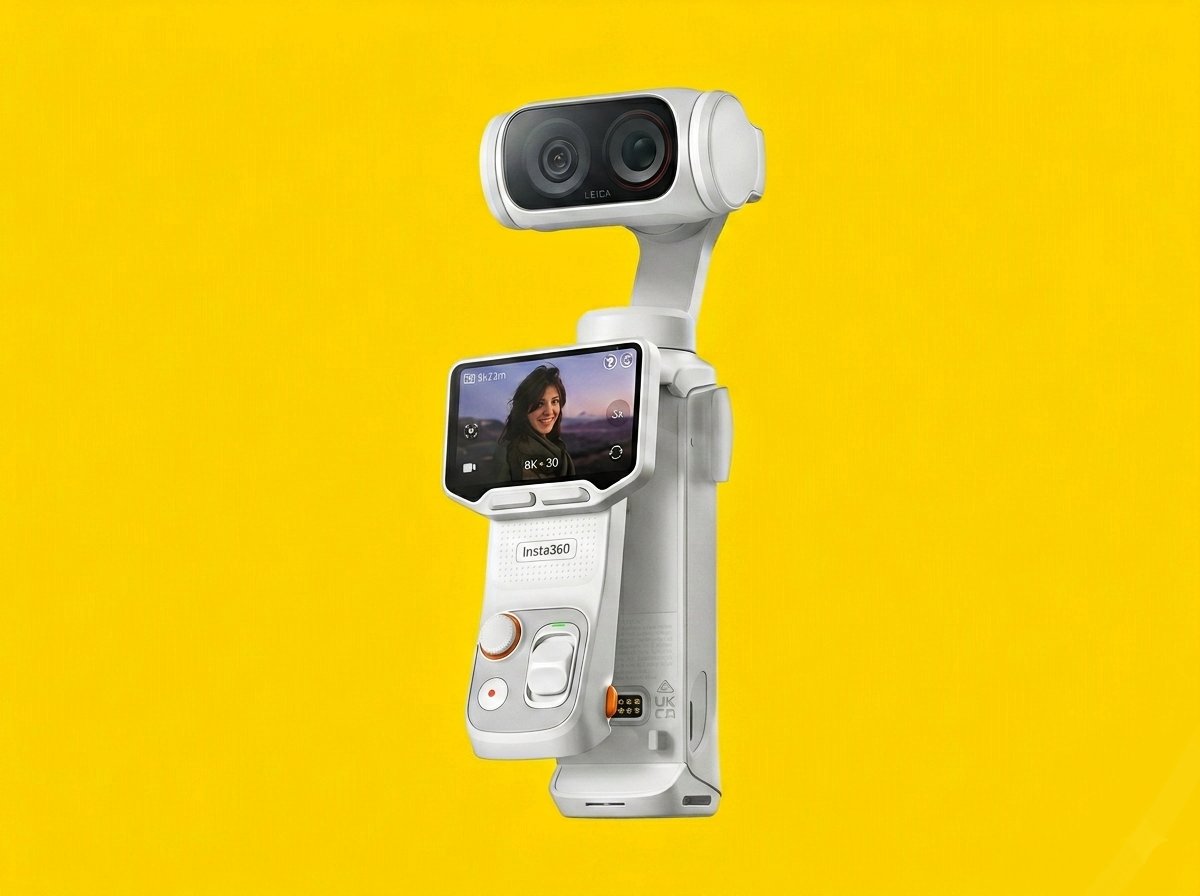
The lawsuit is getting attention because Luna Ultra is not a minor accessory. It is aimed directly at high-end solo creators, vloggers, travel shooters, and small production teams that want gimbal-stabilized footage without building a rig. Recent launch coverage puts the Luna Ultra at $769.99 in the US, with availability through Insta360’s own store and major retailers. Reports describe it as a compact stabilized camera with dual 8K-capable cameras, a 3-axis gimbal, Leica-branded optics, and creator-focused controls.
The key hardware pitch is the dual-camera system. Luna Ultra pairs a 1-inch main sensor capable of 8K recording at up to 30 fps with a secondary camera used for telephoto-style reach, reportedly offering up to 12x zoom. That gives it a very different personality from the classic DJI Pocket formula, which has usually prioritized a single stabilized camera with strong autofocus, simple operation, and very small size.
Other reported Luna Ultra features include Dolby Vision HDR, 10-bit I-Log capture, Leica color profiles, high-frame-rate recording at lower resolutions, built-in storage, expandable storage, and a detachable 2-inch OLED control module that can be used wirelessly. Accessories such as the POV Head Tracker point toward a system approach rather than a single self-contained camera.
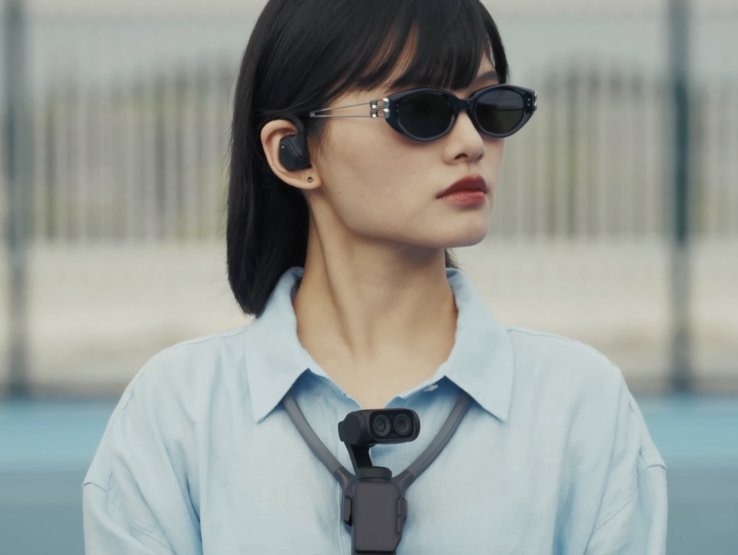
That accessory strategy is relevant to the lawsuit. If a head tracker, gimbal body, detachable screen, telemetry overlay, and tracking stack all work together, then the product is not just competing on resolution. It is competing on the full creator workflow: framing, stabilization, remote operation, motion data, and repeatable shots.
How it compares
Against DJI’s Osmo Pocket line, Luna Ultra appears to be chasing a more ambitious spec sheet. The DJI Osmo Pocket 3 became popular because it is small, quick to use, and built around a strong 1-inch sensor, a 3-axis mechanical gimbal, a rotating touchscreen, ActiveTrack subject tracking, and 10-bit color modes. It is a pocket camera that behaves more like a tiny crew member than a traditional camcorder.
Luna Ultra pushes harder on resolution and lens flexibility. An 8K main camera gives editors more room to crop, reframe, stabilize in post, and deliver 4K output with extra detail. The secondary camera adds reach that a single-lens Pocket-style camera cannot match without digital cropping. For travel, events, product shots, and creator work where you cannot physically move closer, that matters.
The trade-off is size, complexity, and trust. DJI’s strongest advantage has never been only the spec sheet. It is the maturity of its controls, autofocus behavior, tracking reliability, app integration, accessories, batteries, and repair ecosystem. If you shoot daily, those smaller operational details decide whether a camera stays in the bag or becomes the default tool.
Compared with smartphone gimbals such as the DJI Osmo Mobile series, Luna Ultra is a more integrated capture device. A phone gimbal benefits from the phone you already own, but it also inherits phone limitations: thermal throttling, notification interruptions, awkward storage management, variable app behavior, and less predictable lens switching. A dedicated gimbal camera gives you a cleaner shooting tool, but it adds another device to charge, update, pack, and insure.
Compared with larger stabilizer systems such as DJI Ronin, Luna Ultra is much less flexible but far faster to deploy. A mirrorless camera on a Ronin or RS stabilizer still wins for interchangeable lenses, larger sensors, shallow depth of field, external audio, and pro monitoring. Luna Ultra is for moments where setup time would kill the shot.
The legal claims also show how much overlap now exists between these categories. A pocket gimbal, a phone gimbal, a 360 camera, and a professional stabilizer all need similar control logic: motors need to interpret movement, software needs to smooth operator input, tracking systems need to keep a subject framed, and metadata needs to follow the footage. When companies patent pieces of that stack, a fight over one product can spill across an entire catalog.
Why the patents matter to buyers
Patent fights can sound abstract, but this one is tied to features creators can feel immediately. Gimbal stabilization affects walking shots, pans, tilt moves, low-angle footage, and fast framing corrections. Directional controls affect whether the camera feels precise or floaty. Smooth stabilization affects whether small wrist movements become visible jitter. Telemetry overlays matter for action, motorsports, aviation-style content, and technical footage where speed, orientation, or movement data adds context. Panoramic video stabilization matters for 360-style capture and wide-field footage where horizon behavior can make or break the image.
If Insta360’s countersuits gain traction, DJI could face pressure around product lines that have defined the category for years. If DJI’s original claims gain traction, Luna Ultra could face availability problems in the US. Neither result is guaranteed. Patent lawsuits move slowly, claims can narrow, settlements are common, and injunctions are not automatic. Still, the practical risk is clear: creators buying into a new system should think about warranty support, accessory supply, firmware updates, and retailer return policies.
That does not mean Luna Ultra is a bad buy. It means early buyers should treat it like any first-generation pro-leaning camera with legal noise around it. The hardware may be compelling, but the purchase decision is not only about resolution, battery life, or zoom. It is also about whether the product remains easy to buy, service, and expand over the next year.
Who it's for
Luna Ultra is most interesting for creators who already know why they want more than a phone. If you shoot travel videos, product reels, solo talking-head footage, behind-the-scenes clips, or hybrid documentary work, the dual-camera setup and 8K capture could give you more editing room than a typical pocket gimbal. The detachable control module and POV Head Tracker also make sense for solo operators who need framing control without standing behind the camera.
It is less obvious for casual users who just want stable family clips or short social videos. A phone plus a simple gimbal, or a proven pocket camera such as DJI’s Osmo Pocket series, may be easier and cheaper. DJI’s products also have a long record in stabilization, tracking, and mobile workflow. That matters if you need gear that behaves predictably under pressure.
For current DJI Pocket owners, Luna Ultra looks like a spec-heavy alternative rather than a simple upgrade. The reasons to switch are 8K capture, dual-lens flexibility, wireless control, and Insta360’s broader experience with reframing and 360-style workflows. The reasons to wait are legal uncertainty, first-generation behavior, and the need for independent testing on autofocus, heat, stabilization artifacts, battery life, low-light performance, audio, and app reliability.
For buyers cross-shopping compact creator cameras, the smartest move is to separate the courtroom drama from the shooting requirements. If you need the smallest proven stabilized camera, DJI still has the safer track record. If you need more resolution, more reach, and a more modular solo-shooting setup, Luna Ultra is the more aggressive spec play. If you shoot paid work and cannot risk downtime, wait for longer reviews and see whether the US availability question settles.
Practical buying take
The countersuits make this more than a brand fight. Insta360 is trying to show that DJI does not own the category, while DJI is trying to protect the product architecture that made pocket gimbal cameras mainstream. The market result could be better cameras, more defensive patent filings, or a licensing deal that keeps both sides selling hardware.
Right now, buyers should focus on three things. First, check real availability from major retailers before planning a project around Luna Ultra. Second, watch for firmware updates and independent tests, especially around autofocus, tracking, heat, and battery claims. Third, compare the whole kit price, including the POV Head Tracker, mounts, storage, batteries, microphones, and protection plan.
The Luna Ultra looks like the first serious attempt in a while to pressure DJI’s pocket-camera dominance on specs. The lawsuits show DJI sees that pressure too. For creators, that competition is useful only if the product stays on shelves and performs outside a launch demo.
Comments
Please log in or register to join the discussion