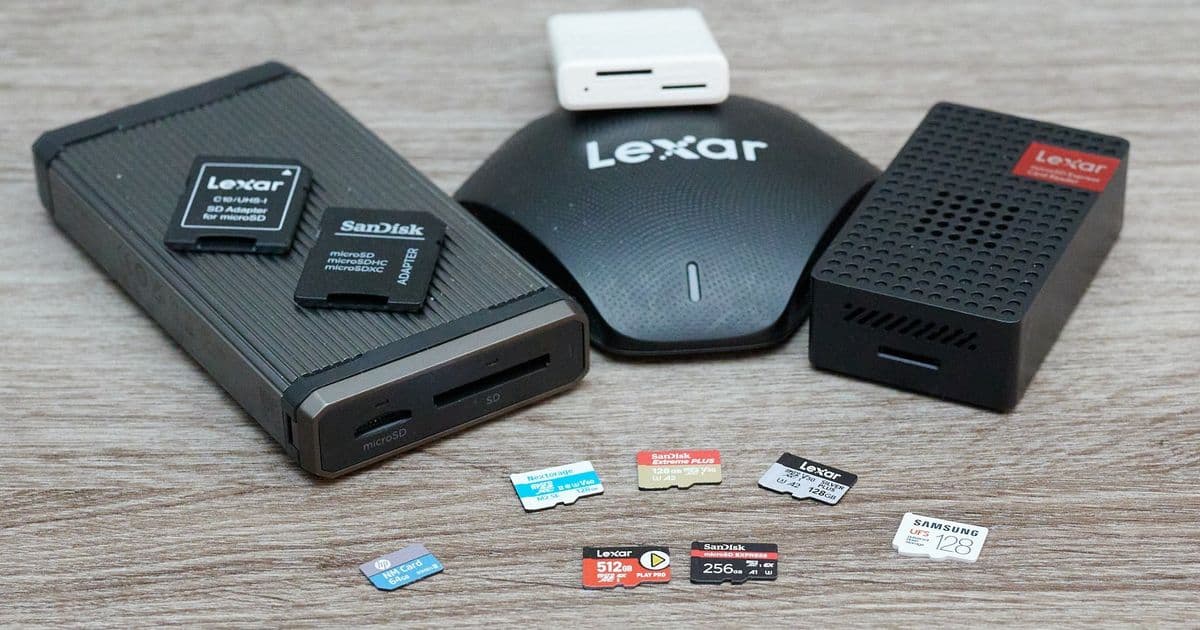
The fastest legacy microSD cards now cost roughly twice as much as microSD Express, which changes the storage math for handheld gaming PCs.
What's new
Acer’s new Predator Atlas 8 gaming handheld has put an awkward storage split back under the microscope. According to Notebookcheck’s market check, the handheld uses microSD cards with UHS-II support, while the newer microSD Express market is getting cheaper, faster, and more visible thanks to devices such as the Nintendo Switch 2 and upcoming gaming handhelds.
The pricing gap is the main story. In Europe, 256 GB microSD Express cards are commonly sitting around 50 to 60 euros. Comparable 256 GB UHS-II microSD cards are far harder to find and much more expensive. Notebookcheck found the Nexstorage UHS-II model at about 120 euros, Lexar’s Professional Gold near 115 euros, and Sabrent’s Rocket slightly above 120 euros. In practical buyer terms, a fast UHS-II 256 GB card now costs about as much as a 512 GB microSD Express card.
That is a strange inversion. UHS-II used to be the premium removable storage option for cameras and niche high-speed workflows. It adds a second row of contacts and raises the theoretical bus ceiling to 312 MB/s, far beyond UHS-I’s 104 MB/s limit. But microSD Express changes the class of device entirely by using PCIe and NVMe signaling. The SD Association’s SD Express standard is closer in concept to a tiny removable SSD than a traditional SD card.
The catch is compatibility. A microSD Express card in a true Express slot can deliver far higher sequential throughput than UHS-II. In an older UHS-I reader, it falls back to slower legacy behavior. A UHS-II card, meanwhile, is the right buy only when the device actually has a UHS-II reader. That makes Acer’s slot choice matter more than it first appears. Storage cards are no longer interchangeable commodities once handhelds start expecting PC-like load times and large game installs.
How it compares
For buyers, the cleanest comparison is capacity per euro and performance per euro. On both counts, microSD Express is winning right now.
A 256 GB microSD Express card at 50 to 60 euros gives Switch 2 owners and compatible handheld buyers a fast, modern storage path at a price that now looks normal rather than exotic. Cards such as Samsung’s P9 Express, covered by Tom’s Hardware with 256 GB and 512 GB capacities, advertise up to 800 MB/s sequential reads, far beyond what UHS-II can provide in theory and far beyond what most UHS-I cards can manage in practice. Even if real-world performance varies with thermals, controller quality, file size, and host implementation, the bus advantage is obvious.
UHS-II still has one practical advantage: it works at its best in UHS-II hosts. If you own a camera, recorder, or handheld that specifically supports UHS-II and not microSD Express, a microSD Express card will not magically unlock Express speeds. It will usually behave like a UHS-I card in that device. For an Acer Predator Atlas 8 owner, that means buying microSD Express for the card’s headline speed would be the wrong move unless the handheld also supports Express, which the Notebookcheck report says it does not.
That is where the buyer frustration starts. Acer’s handheld may support the fastest legacy microSD path, but the market around that path has thinned out. UHS-II microSD is now a niche within a niche. Fewer models are available, and the cards that remain are priced like specialist media. Notebookcheck’s examples show almost no meaningful price competition at 256 GB. Once three cards define the market and all hover around 115 to 120 euros, shoppers have little room to optimize.
By contrast, microSD Express is benefiting from platform pressure. Nintendo’s Switch 2 gives the format a mass-market reason to exist, and Asus is also moving toward microSD Express in its new handheld work. That matters because storage standards often need a popular host device before card makers produce enough volume to lower prices. The original Switch helped normalize large microSDXC cards for game storage. Switch 2 appears to be doing the same for microSD Express.
The comparison with UHS-I is almost more damning. Notebookcheck observed that some fast 256 GB UHS-I gamer-branded cards are now priced close to microSD Express cards. UHS-I can still be fine for screenshots, media, ROM libraries, indie games, and lower-bandwidth uses, but paying Express-like money for UHS-I performance is hard to defend unless a specific console bundle, warranty, or availability issue forces the choice.
Thermals are the main technical caveat for Express. Tiny cards pushing PCIe and NVMe speeds have less surface area and less thermal mass than an M.2 SSD. Sustained writes can heat the card and reduce performance. That matters for long file transfers, capture workloads, and repeated installs. For game loading, which often mixes burst reads with decompression and shader work, the higher ceiling still helps, but it does not turn every handheld into an SSD-class machine in every situation.
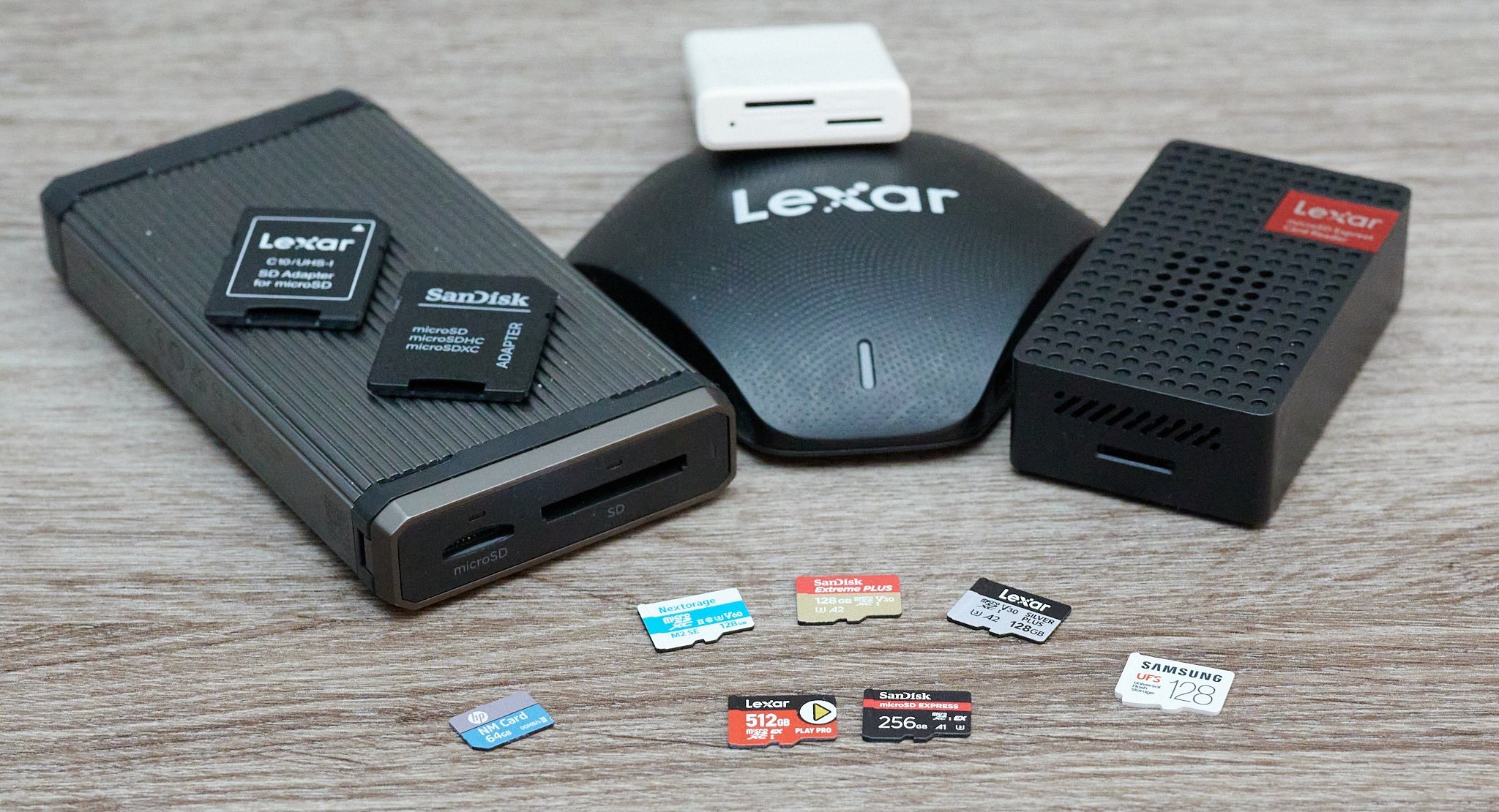
Reader support is the other weak point. microSD Express readers remain rare, and Notebookcheck notes that some are sold out. Users with older readers will see UHS-I fallback speeds from Express cards. More useful hybrid readers that can handle both SD Express and UHS-II are expected later, which should reduce the current penalty for owning mixed media.
Who it's for
If you are buying a Nintendo Switch 2 or another device with a microSD Express slot, the recommendation is straightforward: buy microSD Express and ignore expensive UHS-II cards. At current European pricing, a 256 GB Express card around 50 to 60 euros is the sensible baseline, while 512 GB near the 115 to 130 euro range is the better long-term buy if you install large games.
If you are considering Acer’s Predator Atlas 8 specifically, budget for storage before judging the handheld’s total cost. A UHS-II slot is better than plain UHS-I, but the card market makes it expensive. Paying around 120 euros for 256 GB is poor value when the faster competing format can offer twice the capacity for similar money. That does not make the Acer a bad handheld by itself, but it does mean its removable storage path looks less future-proof than rivals moving to Express.
If you already own UHS-II camera gear, the calculation is different. Reusing existing cards in a UHS-II handheld could be convenient, especially if you already paid for high-end media. But buying new UHS-II microSD cards in 2026 is harder to justify unless your workflow specifically needs that compatibility.
For laptop buyers, this is worth watching closely. More laptops with SD Express slots would push the market toward faster removable storage and make Express cards useful beyond one console ecosystem. That would also pressure accessory makers to ship better readers and docks. If full-size SD Express adoption grows alongside microSD Express, UHS-II could become the expensive compatibility option rather than the premium performance option.
My buyer’s read: microSD Express is the format to invest in for new gaming hardware, while UHS-II microSD is now a device-specific purchase. Check the slot before buying the card. The label on the package matters less than the host controller inside your handheld, laptop, or reader.
Comments
Please log in or register to join the discussion